Spirit Animal
Leopard Spirit Animal
Leopard spirit animal meaning: stealth, authority and patience. Traced from the modern stealth-and-power reading back through Ted Andrews's Animal Speak to the Egyptian sem priest's spotted garment, the Oba of Benin as leopard of the home, and the Greek word pardalis.
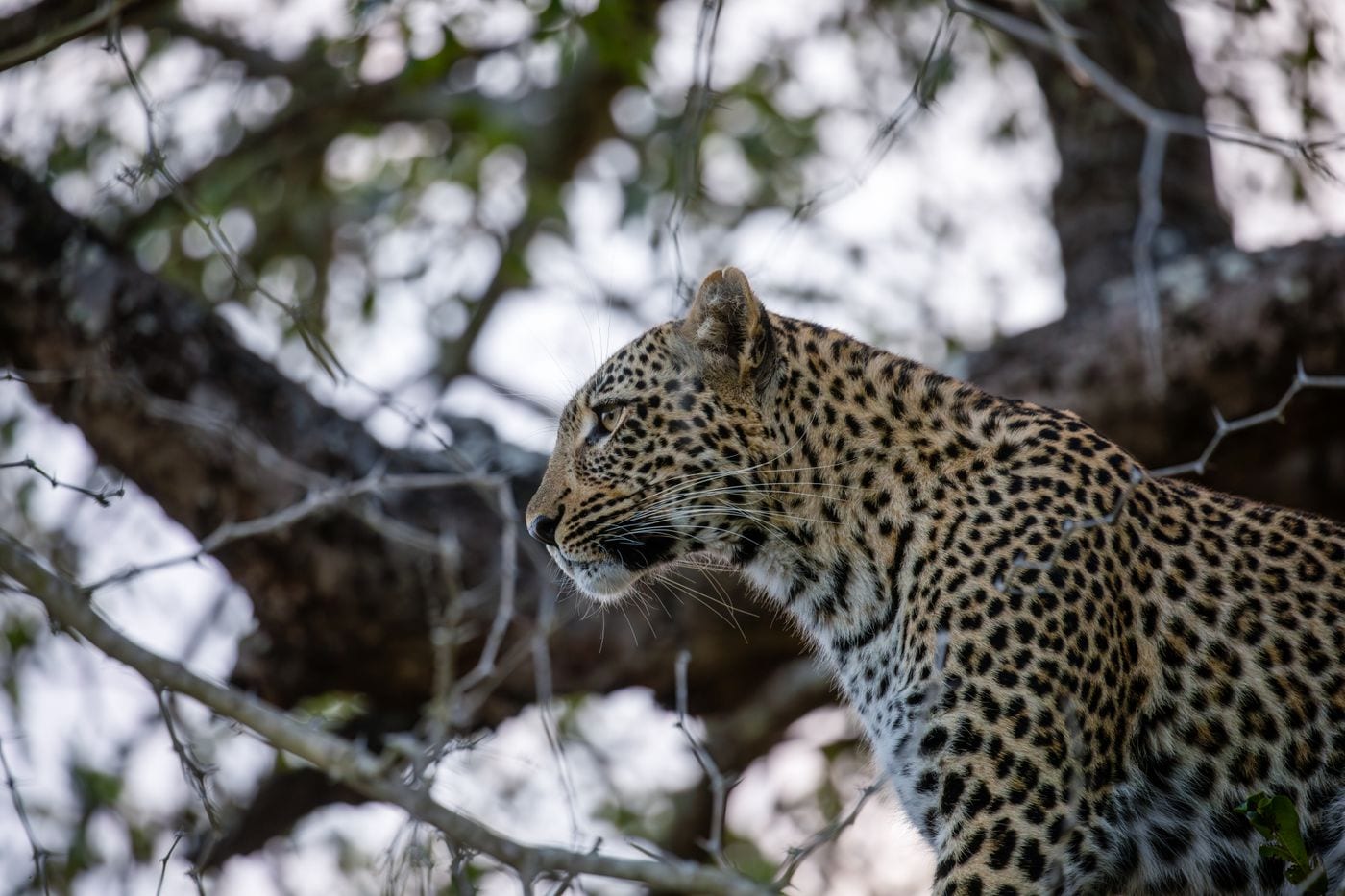
In modern usage the leopard signals stealth, patience, and reclaiming personal power, a reading that traces to Ted Andrews's Animal Speak (Llewellyn, 1993), where leopard, jaguar and panther share one entry. The documented record is more specific: Egyptian sem priests wore a spotted skin to perform the Opening of the Mouth, and in Benin the Oba is called the leopard of the home.
Ancient Egyptian had two words for a big spotted cat, and the difference between them was geographic. One was glossed narrow, the other broad. Egyptologists have generally taken the narrow one for the cheetah and the broad one for the leopard, and Elisa Castel’s survey in Trabajos de Egiptología (2002) exists because the two get swapped constantly in the modern literature anyway.
That is the honest starting point for this animal. The leopard has one of the deepest documented records of any cat in human ritual, and a good part of that record is tangled up with a different cat entirely.
What the Egyptians actually did with a leopard
Not much of it is symbolic in the way a spirit-animal page means. The leopard shows up in Egypt as a garment, and the garment has a job.
The sem priest wore a spotted hide over one shoulder, the paws falling forward across the chest, the head hanging at the front. He wore it to perform the Opening of the Mouth, the rite that restored the dead person’s ability to breathe, speak, eat, and take offerings. Originally this was done by the king’s eldest son or the designated heir, so the skin was doing something closer to constitutional work than spiritual work: it marked the man entitled to make the dead king functional again.
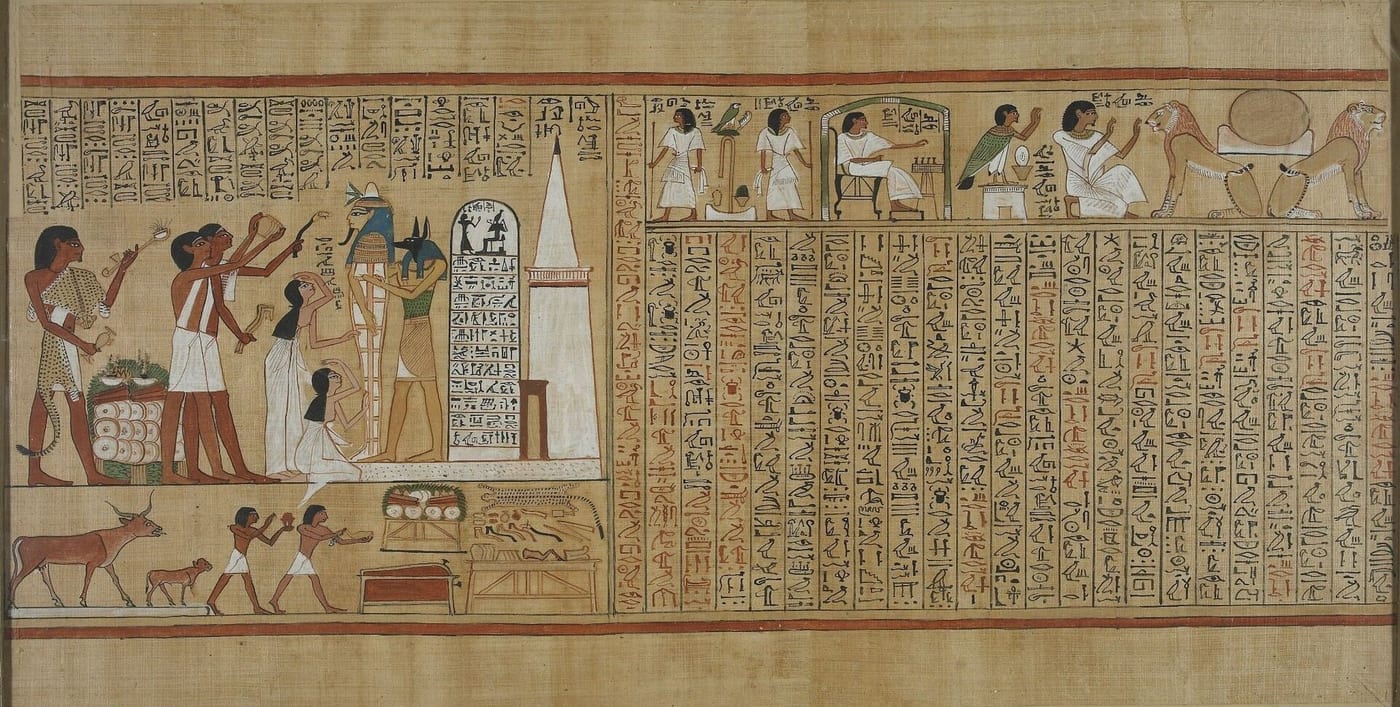
The costume survives, not just its picture. Howard Carter’s object records from Tutankhamun’s tomb, now held by the Griffith Institute in Oxford, list a real spotted skin worked with gilt stars and a linen imitation of one, plus gilded wooden leopard heads that were fixed to garments of that kind. One of those heads has the king’s cartouche cut between the eyes.
So when a page tells you the leopard “represented divine authority in ancient Egypt,” it is compressing something more particular. The skin conferred a right to officiate. It sat on a specific man at a specific moment in a specific rite.
Why the Oba of Benin is called the leopard of the home
Benin gives the animal a different job again, and this one is explicitly political.
The Oba’s praise names include one that translates as the leopard of the home. It is half of a pair. The leopard is king of the bush; the Oba is king of the home; each is sovereign over a domain, and the phrase asserts that they are the same kind of thing rather than that the king resembles a cat. Paula Ben-Amos laid out that structure in Man in 1976, reading Benin’s royal animals as a chart of where royal authority stops being domestic and starts being wild.
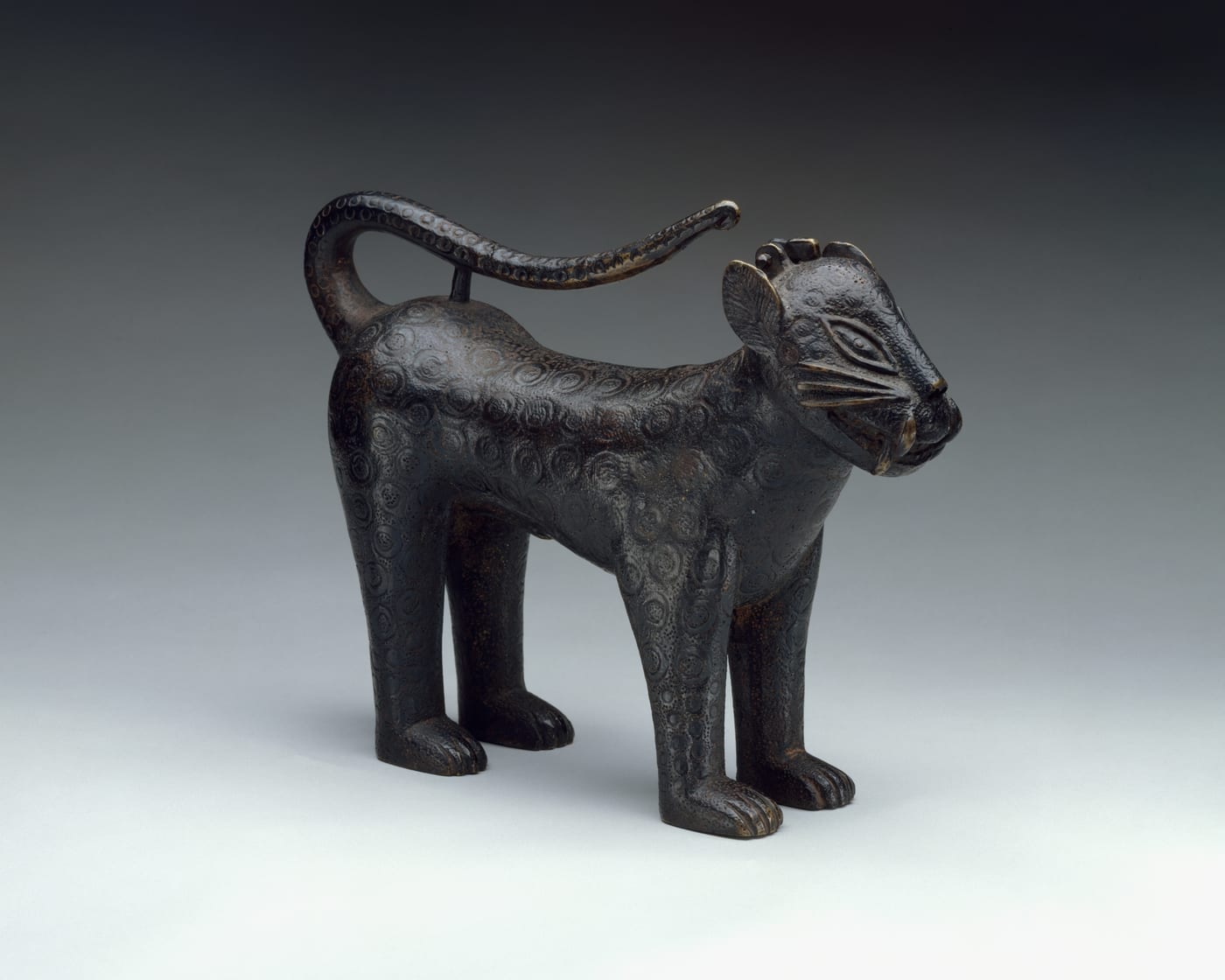
The objects follow the logic exactly. When the Oba sat in state he was flanked by leopards in cast brass or carved ivory. At the ceremony honouring his paternal ancestors, water was poured over his hands from a vessel shaped as a leopard. Leopard hides and teeth went to war commanders, and what came with them was the delegated right to take life.
Two things are worth flagging here. First, this is a hereditary court prerogative, not something anybody claims by feeling drawn to leopards. Second, a great deal of Benin’s royal art sits in European and American museums because it was taken during the British punitive expedition of 1897, and that fact belongs alongside any use of the objects.
Was the Greek panther a leopard?
Probably, sometimes, and the sources do not care as much as we would like.
Pardalis is the older Greek word and is used from Homer onward for a big spotted cat. Panther turns up beside it and is usually read as a loan from further east. The two blur into each other, and the false etymology that read panther as all-beast produced centuries of bestiary nonsense downstream.
The god the cat belongs to is Dionysos. He rides one, is drawn by a pair, and the nebris, the spotted skin his followers wear, is the same garment idea Egypt used for something completely different. In the late fourth-century BCE pebble mosaic from the House of Dionysos at Pella, he sits on a spotted cat with a thyrsos raised in one hand.
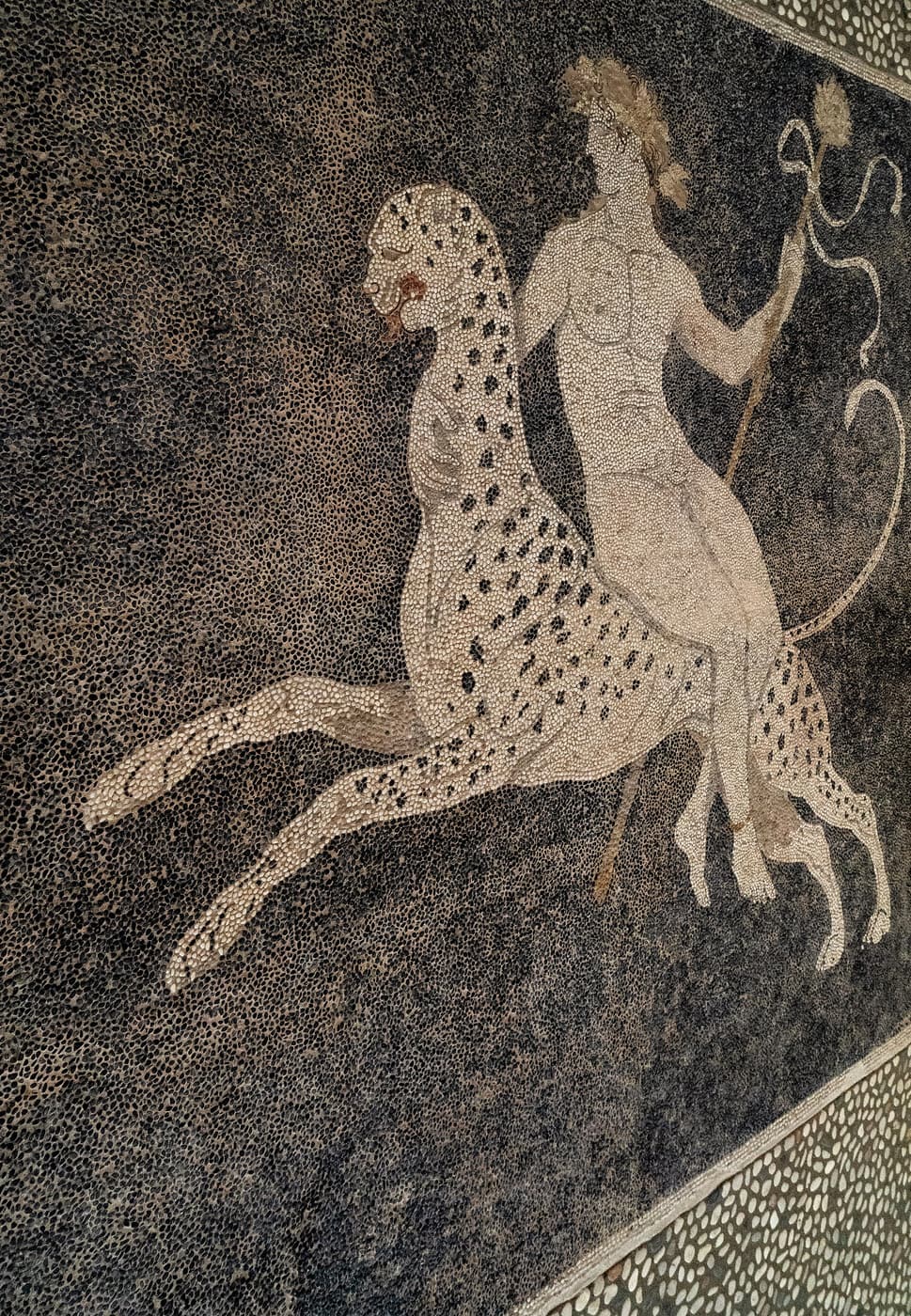
This is where the modern habit of saying “the ancient Greeks associated the leopard with Dionysos” overreaches slightly. The association is real and heavily attested. The identification of the cat as Panthera pardus specifically is an inference we make, not a claim the Greeks were interested in making.
The two cats keep getting swapped, and it is not only an ancient problem
European art repeated the confusion for centuries with better information available. Cheetahs were kept and coursed across the Near East and India, they were shipped to European courts as gifts, and painters who saw one still tended to draw whatever cat their training supplied.
George Stubbs is a useful control case here, because he had access to menagerie animals and drew them from life. He made a study of a sleeping leopard in 1791, and separately painted a coursing cheetah with its two Indian handlers. His leopard’s markings are blotches rather than the clean rosette rings on a real coat, and that is worth noticing in a painter this careful: the animal was asleep, the light was low, and the print medium flattens everything into tone.
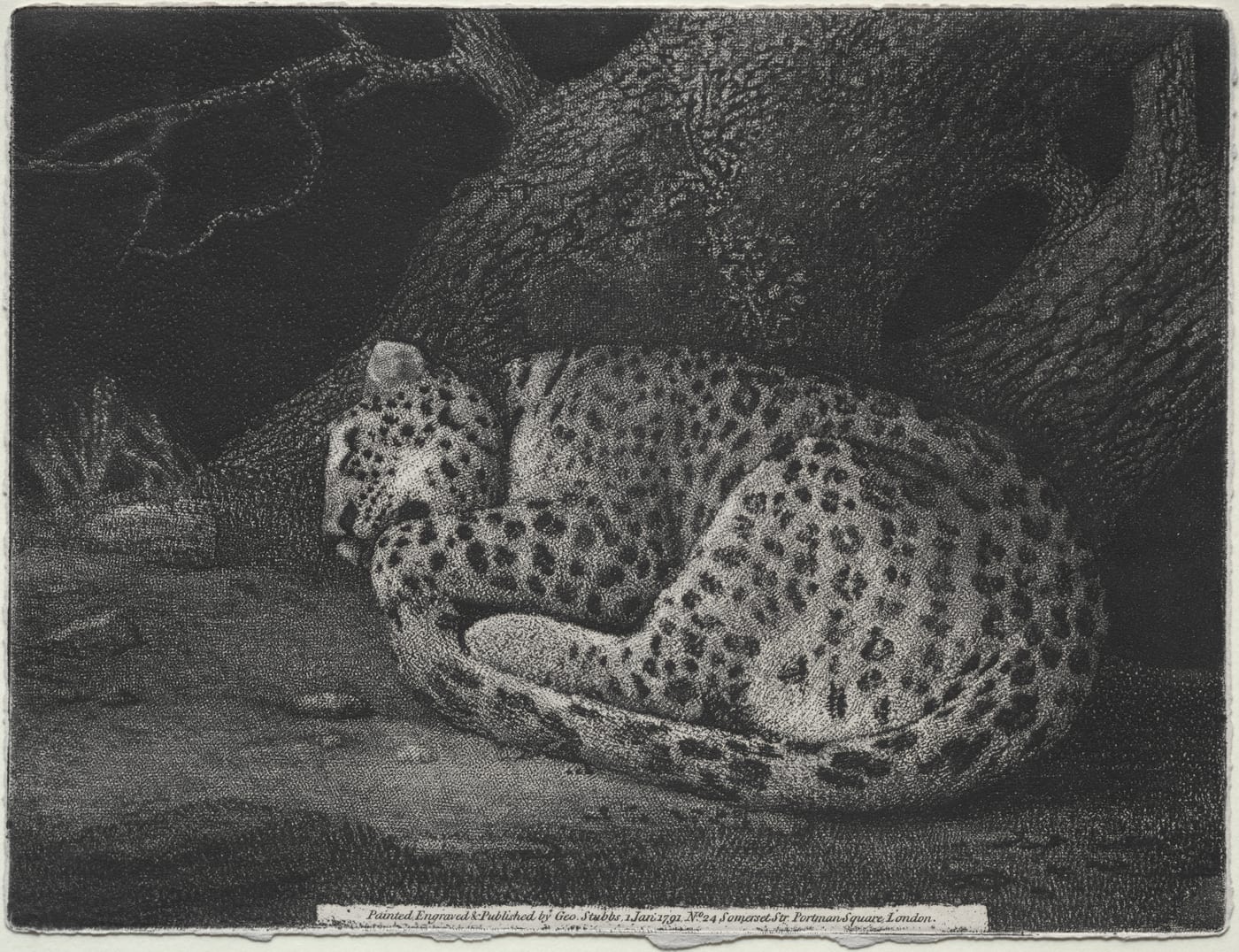
The practical rule, if you want to check an image yourself: a leopard’s markings are rosettes, broken rings of dark pigment around a lighter centre. A cheetah’s are solid round dots, and it carries a black line running from the inner eye down to the mouth. Jaguar rosettes have one or more spots inside the ring. Anything in an ancient image rendered as plain dots may be either of the first two, and usually cannot be resolved.
Where the modern meaning comes from
If you have read that the leopard means stealth, silence, and reclaiming your own power, you have read Ted Andrews, whether or not the page said so.
Animal Speak (Llewellyn, 1993) gives no leopard entry. It gives one entry covering panther, leopard and jaguar together, keynoted reclaiming one’s true power, with a note that the cougar also gets called a panther. That is an editorial choice about how to build a dictionary, and it is the reason so many pages assign identical meanings to an African cat, a Central and South American cat, and a North American one.
The reading is not worthless. Leopards genuinely are secretive, largely solitary, and remarkable at moving unseen, and a symbol built on that is not a lie about the animal. But it is thirty years old, it comes from one author, and it flattens three species into one. The Egyptian priest’s skin and the Benin king’s leopard are both older, both better documented, and both about something else: the right to act on behalf of the dead, and the right to take life. Neither one is available to a reader who only meets the animal through the pop dictionary.
Across traditions
Ancient Egypt (the sem priest's spotted garment)
The clearest documented use of a leopard anywhere in the ancient world is not a symbol at all. It is a piece of clothing with a job. The sem priest, the officiant who performed the Opening of the Mouth on the deceased, wore a spotted hide draped over one shoulder and falling across the chest, with the animal's head hanging at the front. The role was originally the king's eldest son or designated heir, which is the point: the garment marked the person entitled to perform the rite that made the dead man able to eat, speak and see again.
The evidence is unusually good, because the costume is both depicted and physically preserved. The Papyrus of Hunefer (British Museum EA9901, Nineteenth Dynasty, around 1275 BCE) shows the ritual in progress with the spotted-skin officiant at the left of the scene. Howard Carter's object records from the tomb of Tutankhamun, catalogued by the Griffith Institute in Oxford, list both a real spotted skin decorated with gilt stars and a linen imitation of one, along with gilded wooden leopard heads that were attached to such garments. One of those heads carries the king's cartouche incised between the eyes.
- PRIMARY Papyrus of Hunefer, British Museum EA9901 . Nineteenth Dynasty, ca. 1275 BCE. Sheet 5 shows the Opening of the Mouth.
- ARCHIVE Griffith Institute, Tutankhamun: Anatomy of an Excavation . Howard Carter's excavation object cards, University of Oxford.
- PEER-REVIEWED Elisa Castel Ronda, Panthers, leopards and cheetahs. Notes on identification . Trabajos de Egiptologia / Papers on Ancient Egypt 1 (2002): 17-28.
Edo, Kingdom of Benin (the Oba as leopard)
In the Kingdom of Benin, in what is now southern Nigeria, the leopard is the animal of the king and of nobody else. One of the Oba's praise names translates as the leopard of the home, and the pairing it belongs to is a structural opposition rather than a compliment: the leopard is king of the bush, the Oba is king of the home, and the two are matched sovereigns of two matched domains. Paula Ben-Amos set out the logic of that pairing in Men and Animals in Benin Art (Man, New Series 11, no. 2, 1976, 243-252), reading Benin's royal animals as a map of where the king's authority meets the wild.
The material record is dense. Cast brass and carved ivory leopards flanked the Oba when he sat in state. Leopard aquamaniles, vessels shaped as the animal, poured water over his hands during ceremonies honouring his ancestors; the Metropolitan Museum holds several, cast by the Igun Eronmwon brass-casting guild that worked for the court. Leopard hides and teeth were given to war commanders, conferring a delegated right to take life. Note what this does not resemble: a personal totem, a spirit guide, or an inner quality. It is a constitutional claim about who may kill.
- PEER-REVIEWED Paula Ben-Amos, Men and Animals in Benin Art . Man, New Series 11, no. 2 (June 1976): 243-252.
- MUSEUM Leopard Aquamanile, Edo peoples, The Metropolitan Museum of Art . Accession 1991.17.53. Brass, 16th-19th century. Igun Eronmwon guild.
Greek and Roman (pardalis and the Dionysian cat)
Greek has two words in play. Pardalis (πάρδαλις) is the older and is used from Homer onward for a large spotted cat; panther (πάνθηρ) arrives alongside it and is generally taken to be a borrowing from further east. The two were not held strictly apart, and the folk etymology that read panther as pan plus ther, all-beast, generated a long tail of medieval fables that have nothing to do with the animal.
Dionysos is the god the cat attaches to. He rides one, is drawn by a pair, and his followers wear the nebris, a spotted skin. The Hellenistic pebble mosaic from the House of Dionysos at Pella, dated to the late fourth century BCE, shows him mounted on a spotted cat with a thyrsos in his hand. What the mosaic does not do is settle the species. Its spots are solid dark blobs rather than the leopard's broken rings, which is partly a limit of pebble work and partly a sign that the artist was not being asked to identify an animal. The Dionysian cat is a cat of the wild east, and Greek art is comfortable leaving it there.
- MUSEUM Pebble mosaic, House of Dionysos, Archaeological Museum of Pella . Dionysos riding a panther, ca. 325-300 BCE.
- REFERENCE Liddell and Scott, A Greek-English Lexicon, s.v. pardalis, panther . pardalis used of a large spotted cat from Homer onward.
Ted Andrews (1993, the pop-concept's source)
The modern reading arrives through Ted Andrews's Animal Speak (Llewellyn, 1993), and the structural detail matters more than the wording. Andrews does not write a leopard entry. He writes one combined entry covering panther, leopard and jaguar, with the keynote reclaiming one's true power, noting in passing that the cougar also gets called a panther. Three species from three continents, one paragraph of meaning.
That pooling is inherited wholesale. When a spirit-animal page tells you the leopard means reclaiming your power and the jaguar means much the same thing, it is not reporting a convergence between two traditions. It is repeating a decision one author made in one paperback about how to organise a dictionary. Neither the Egyptian priestly garment nor the Benin royal leopard appears in that entry.
- REFERENCE Ted Andrews, Animal Speak: The Spiritual & Magical Powers of Creatures Great and Small . Llewellyn, September 1993. Combined Panther / Leopard / Jaguar entry; keynote reclaiming one's true power.
Working with the Leopard
If you want a regular practice rather than a one-time read, an oracle deck is the standard tool: you draw a card and sit with whatever animal comes up. Our ranked guide to spirit animal oracle decks compares the field.
Sources
- PRIMARY Papyrus of Hunefer, British Museum EA9901 . Nineteenth Dynasty, ca. 1275 BCE.
- ARCHIVE Griffith Institute, Tutankhamun: Anatomy of an Excavation . Carter object cards, University of Oxford.
- PEER-REVIEWED Elisa Castel Ronda, Panthers, leopards and cheetahs. Notes on identification . Trabajos de Egiptologia / Papers on Ancient Egypt 1 (2002): 17-28.
- PEER-REVIEWED Paula Ben-Amos, Men and Animals in Benin Art . Man, New Series 11, no. 2 (1976): 243-252.
- MUSEUM Leopard Aquamanile, Edo peoples, The Metropolitan Museum of Art . Accession 1991.17.53.
- REFERENCE Liddell and Scott, A Greek-English Lexicon . s.v. pardalis, panther.
- REFERENCE Ted Andrews, Animal Speak . Llewellyn, September 1993.