Spirit Animal
Jaguar Spirit Animal
Jaguar spirit animal meaning: power, transformation and night. Traced through the sixty-year scholarly argument over the Olmec were-jaguar, the Maya balam and the Popol Vuh, Andean feline imagery at Chavin, the Mexica ocelotl, and Ted Andrews's Animal Speak.
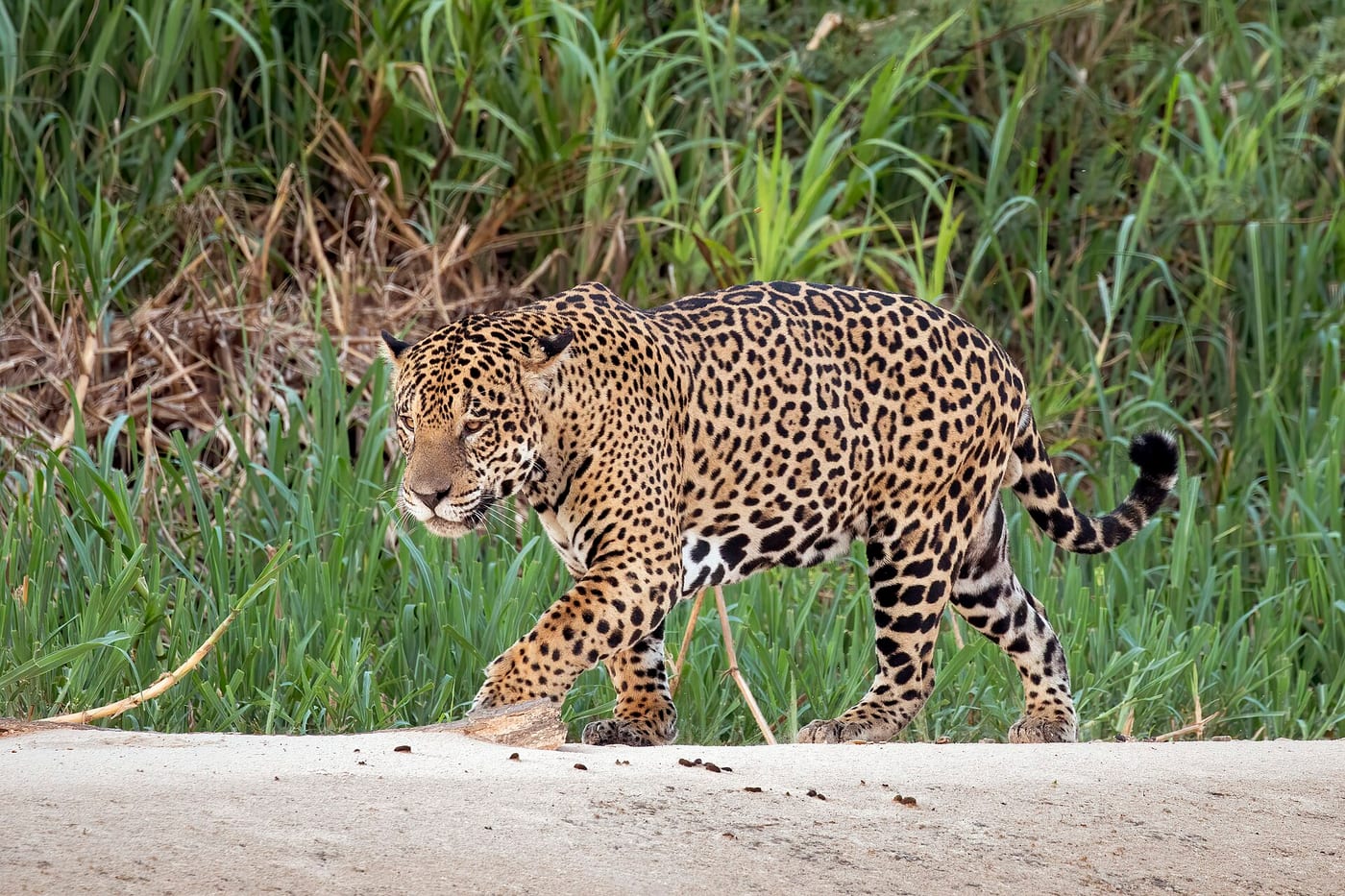
The jaguar has the deepest documented record of any cat on this site. Olmec sculpture, Maya scripture and Andean ceramics all give it a central place, though scholars have argued since the 1950s about what the Olmec pieces show. The modern spirit-animal reading is separate and much newer, and comes through Ted Andrews's Animal Speak (Llewellyn, 1993).
The single most repeated fact about the jaguar in ancient America is that the Olmec worshipped a were-jaguar, a being born from a jaguar and a human woman.
That sentence contains a word coined in the 1950s by an archaeologist, describing an interpretation that other archaeologists began dismantling in 1978 and have been arguing over ever since. It is the clearest example on this site of a scholarly hypothesis escaping into popular writing, losing its question mark on the way out, and settling in as a fact.
Which is a shame, because the actual record here is the richest of any animal we cover.
What the Olmec were-jaguar argument is really about
Matthew Stirling gave the term to a recurring Olmec face: almond eyes, a cleft running down the top of the head, a heavy infantile body, and a snarling mouth with the corners pulled sharply down. He proposed in the 1950s that these figures were the children of a jaguar and a woman, reading that story out of a handful of Gulf Coast monuments.
Whitney Davis took the monuments apart in American Antiquity in 1978. The figures are clothed. Their gender is not discernible. The positions are not sexual positions. What the scenes more plausibly show, he argued, is a fight, with the human already dead or dying. Peter Joralemon had earlier, in his 1971 iconographic study for Dumbarton Oaks, split what everyone had been calling one being into a set of distinct supernaturals. And Karl Taube proposed in 1996 that the cleft head is not a feline feature at all: it is a maize seed splitting open, which makes many of these faces a maize god rather than a cat.
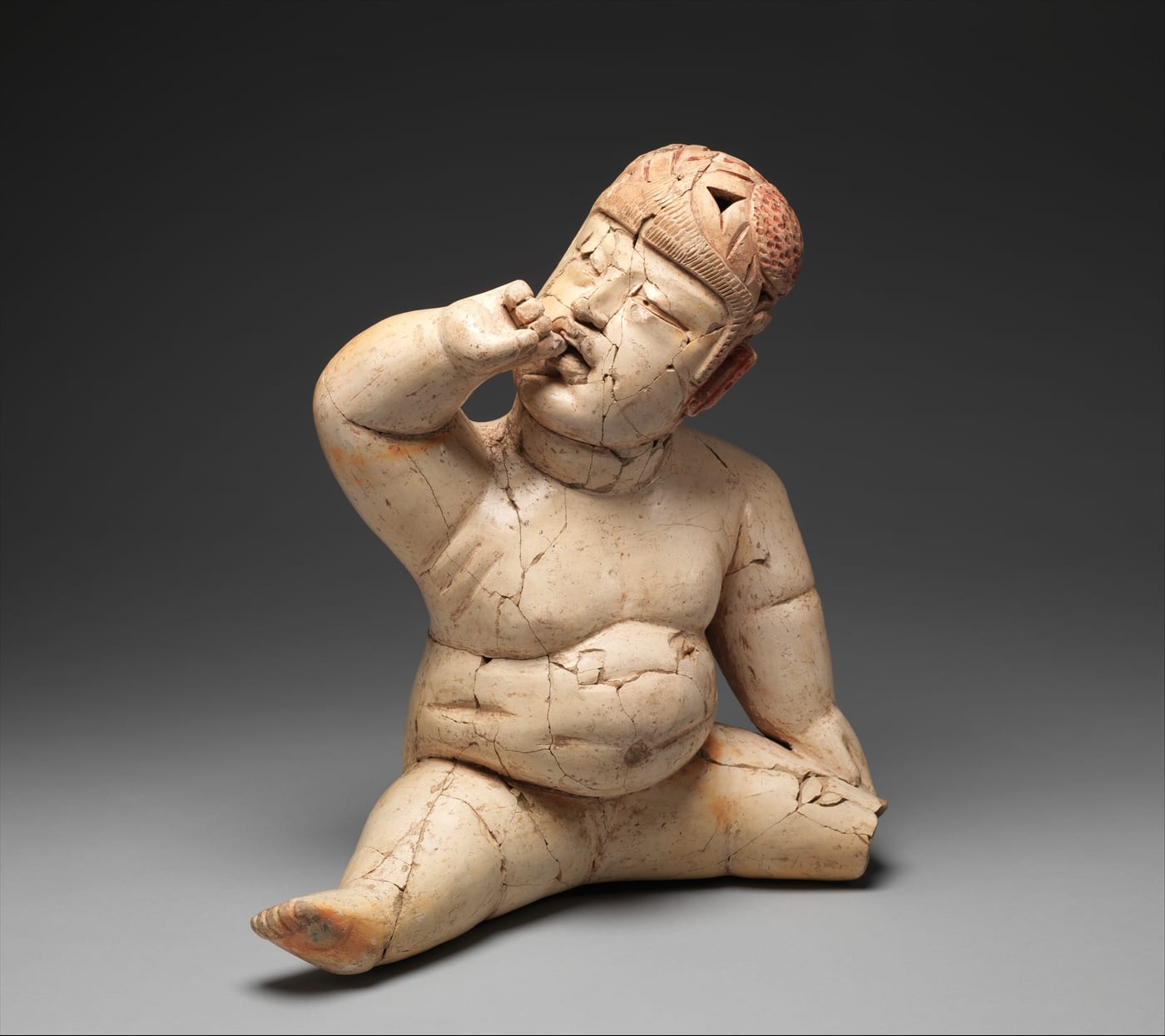
None of this says the Olmec ignored jaguars. Jaguar imagery in Olmec art is real and unmistakable in plenty of pieces. What it says is that one label was stretched across a large and varied body of material, and the specialists have been narrowing it back down ever since. Any page that reports the jaguar-woman story flatly is decades behind its own sources.
The Maya put the jaguar into people’s names
Move east and forward and the evidence gets much less ambiguous, because it is written.
Balam is jaguar in Maya languages. In the Popol Vuh, the K’iche’ account of creation preserved through Francisco Ximenez’s early eighteenth-century copy, the first four men made from maize are Balam Quitze, Balam Aqab, Mahucutah and Iqui Balam. Three of those four names carry the jaguar in them. Dennis Tedlock’s translation prints them as Jaguar Quitze, Jaguar Night, Mahucutah and True Jaguar, which makes visible what the standard transliterations quietly hide.
The word keeps working after the conquest. The Yucatec Maya manuscripts called the Books of Chilam Balam take their name from chilam, an interpreter or spokesman, and balam: the jaguar priest, a class of prophet.
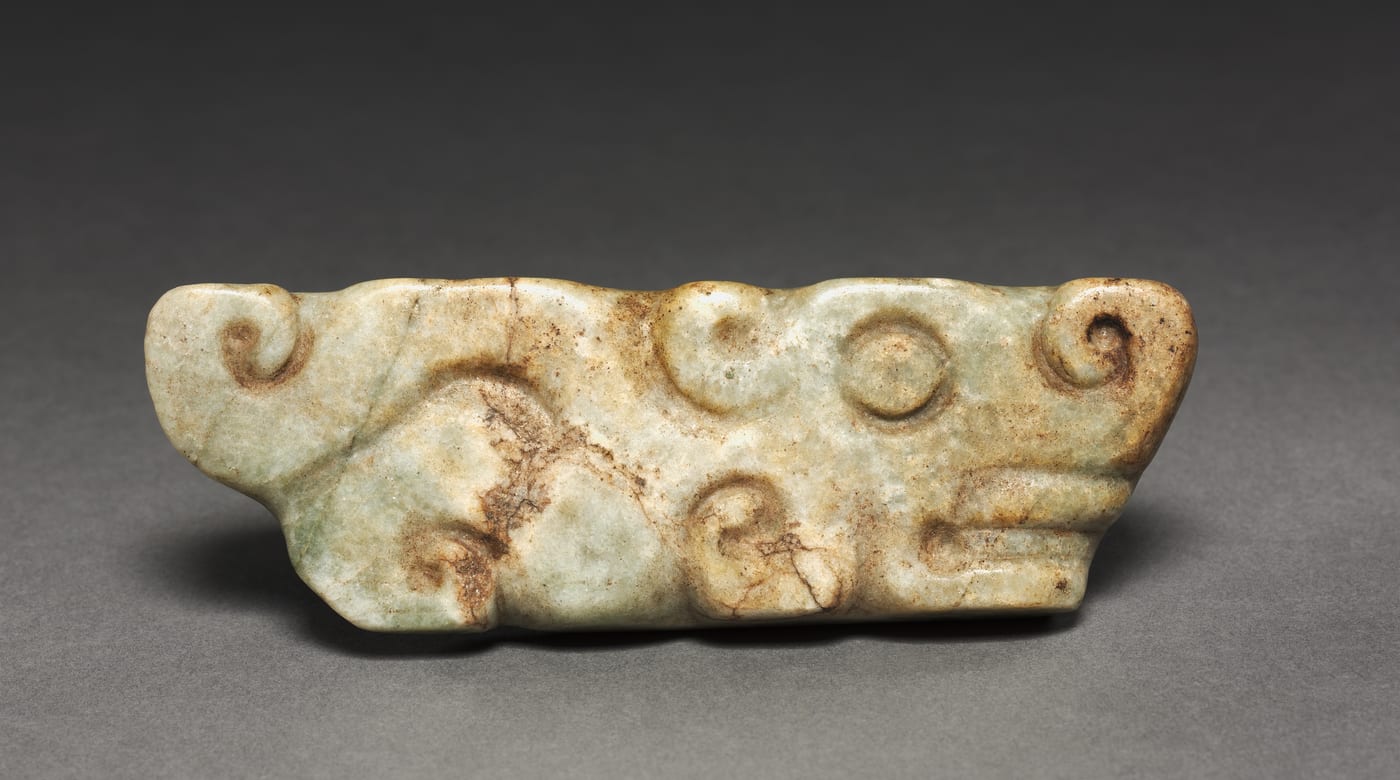
Maya art also carries a specific Jaguar God of the Underworld, recognisable by jaguar features and a twisted cruller motif between the eyes, and rulers took jaguar names and were shown seated on jaguar pelts. Founding ancestor, prophet, underworld deity, royal seat: four separate jobs. A single word like transformation cannot hold them.
The Andes are a different tradition, not the same one further south
Popular writing runs Mesoamerica and the Andes together constantly, and they are not one thing.
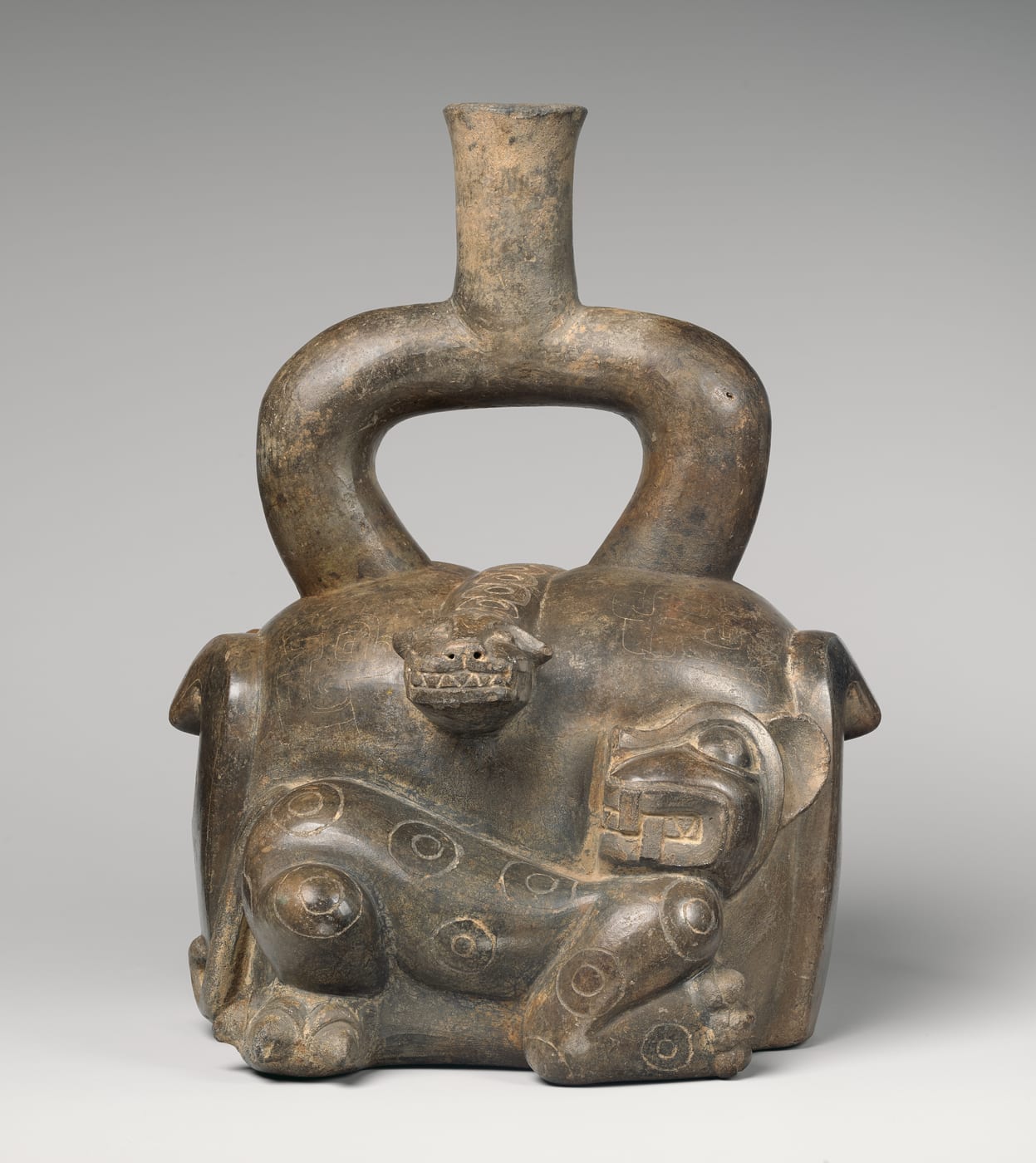
By 1200 BCE, Cupisnique potters on the north coast of Peru were modelling fanged felines onto stirrup-spout bottles, rendering the coat as concentric rings. At Chavin de Huantar in the highlands, the carved monuments including the Lanzon fuse human bodies with feline jaws and fangs, in a style John H. Rowe later sorted into phases building on Julio C. Tello’s earlier work.
The awkward fact worth knowing: Chavin de Huantar is high in the Andes, well outside jaguar range. The felines carved there, and the caimans and harpy eagles carved beside them, are lowland Amazonian animals. So the imagery is evidence of long-distance connection and imported knowledge, not of a people depicting the animal in their own valley. Whether any given Chavin feline is a jaguar or a puma gets argued piece by piece, and the blanket phrase Chavin jaguar cult claims more than the stone does.
The Mexica word for jaguar is the reason we call a different cat an ocelot
Among the Mexica, the Nahuatl word for the jaguar is ocelotl. Spanish took that word, and it ended up attached to Leopardus pardalis, a much smaller spotted cat. So the English word ocelot is a jaguar’s name that got reassigned, and this trips up readers of colonial sources regularly.
The ocelotl runs through Mexica life in ways Bernardino de Sahagun and his Nahua collaborators recorded in the Florentine Codex, compiled across roughly 1545 to 1590. It names one of the twenty day signs of the 260-day count. It names one of the two elite military orders, the jaguar warriors, paired with the eagle warriors; a man who reached the top rank was a cuauhtlocelotl, eagle-jaguar. And the jaguar appears in the divine register as Tepeyollotl, heart of the mountain, commonly identified as an aspect of Tezcatlipoca and associated with caves, echoes and the interior dark.
That last association is worth pausing on, because it is the one thing the traditions on this page genuinely share. The jaguar is a night animal that swims, climbs, and hunts in dense cover, and across Mesoamerica it attaches repeatedly to the underworld, the cave, and the dark. Different peoples, different centuries, similar conclusion, drawn independently from watching the same animal.
Where the modern meaning comes from
If you have read that the jaguar means reclaiming your power, moving through darkness, and stepping into your true self, you have read Ted Andrews.
Animal Speak (Llewellyn, 1993) has no jaguar entry. It has one entry covering panther, leopard and jaguar together, keynoted reclaiming one’s true power, with an aside that the cougar gets called a panther too. That is why a page can hand you the same meaning for an African cat and an Amazonian one and never notice it has done anything odd.
Andrews was not writing badly. Grouping the big spotted cats is a defensible way to build a dictionary for a general reader in 1993, and the qualities he lists are not inventions. But the grouping is the whole reason this animal’s pop meaning is so much thinner than its record, and the record is sitting right there. The Popol Vuh is in print in several English translations. Davis’s 1978 paper is four pages long. The Met and the Cleveland Museum of Art have put their Olmec, Maya and Cupisnique holdings online with photographs and accession numbers. You can check any of it in an afternoon, and what you will find is not one jaguar but a dozen, each doing a different job for a different people.
Across traditions
Olmec (the were-jaguar, and sixty years of argument about it)
The word were-jaguar is not Olmec. It is a modern coinage, proposed by the archaeologist Matthew Stirling in the 1950s to describe a recurring Olmec face: almond eyes, a puffy infantile body, a cleft in the top of the head, and a distinctive downturned snarling mouth. Stirling's explanation was that these figures depicted the offspring of a union between a jaguar and a human woman, an idea he read out of a small number of monuments from the Gulf Coast.
That explanation has been under sustained attack for almost fifty years. Whitney Davis argued in So-Called Jaguar-Human Copulation Scenes in Olmec Art (American Antiquity 43, no. 3, 1978, 453-457) that the monuments in question do not show copulation at all: the figures are clothed, gender is not discernible, and the postures read more plausibly as violence, with the human dead or dying. Peter David Joralemon's A Study of Olmec Iconography (Dumbarton Oaks, 1971) had already broken the single were-jaguar into a set of distinct supernaturals rather than one being. Karl Taube then argued in The Olmec Maize God: The Face of Corn in Formative Mesoamerica (RES 29/30, 1996, 39-81) that the cleft head is maize sprouting from a seed, which makes a good number of these faces agricultural rather than feline.
None of this means the Olmec were uninterested in jaguars. It means the label were-jaguar was applied broadly, then hardened into a fact, and the specialists have spent decades pulling it apart again. A page that tells you the Olmec worshipped a jaguar god is repeating a 1950s reading that its own field no longer holds unanimously.
- PEER-REVIEWED Whitney Davis, So-Called Jaguar-Human Copulation Scenes in Olmec Art . American Antiquity 43, no. 3 (1978): 453-457.
- PEER-REVIEWED Peter David Joralemon, A Study of Olmec Iconography . Studies in Pre-Columbian Art and Archaeology 7, Dumbarton Oaks, 1971.
- PEER-REVIEWED Karl A. Taube, The Olmec Maize God: The Face of Corn in Formative Mesoamerica . RES: Anthropology and Aesthetics 29/30 (1996): 39-81.
- MUSEUM Seated hollow figure with helmet, Olmec, The Metropolitan Museum of Art . Accession 1979.206.1134, 1200-800 BCE, Puebla, Mexico.
K'iche' and Yucatec Maya (balam)
In Maya languages the word for jaguar is balam, and it is embedded in the Maya record at the level of naming rather than decoration. The Popol Vuh, the K'iche' Maya account of creation copied out in the early eighteenth century by Francisco Ximenez from an older source, names the first four men made of maize. Three of the four carry the word: Balam Quitze, Balam Aqab, and Iqui Balam, alongside Mahucutah. Dennis Tedlock's translation renders them straight into English as Jaguar Quitze, Jaguar Night and True Jaguar, which makes the pattern visible in a way the transliterations hide.
The word runs on through the colonial Yucatec manuscripts known as the Books of Chilam Balam, where chilam is an interpreter or spokesman and balam is the jaguar: the jaguar priest. Maya art also carries a distinct Jaguar God of the Underworld, identifiable by a cruller between the eyes and jaguar features, and rulers took jaguar names and sat on jaguar pelts.
What is worth holding on to is how specific this is. The jaguar here is not a generalised power animal. It is a lineage name for founding ancestors, a title for a class of prophet, and a deity associated with night and the underworld. Those three are not the same idea, and a single keyword cannot carry all of them.
- EDITION Popol Vuh, translated by Dennis Tedlock . Simon & Schuster, revised edition 1996. Renders the first men as Jaguar Quitze, Jaguar Night, Mahucutah and True Jaguar.
- EDITION Popol Vuh, translated by Allen J. Christenson . Literal translation with the K'iche' text, via FAMSI.
- MUSEUM Jaguar Pendant, Maya, The Cleveland Museum of Art . Accession 1953.273, jade, 250-900 CE.
Andean (Cupisnique and Chavin feline imagery)
South America has its own long feline record, and flattening it into the Mesoamerican one is a common mistake. On the north coast of Peru, Cupisnique potters were putting fanged felines on stirrup-spout bottles by 1200 BCE, rendering the coat as concentric rings rather than as spots. At Chavin de Huantar in the Peruvian highlands, the carved stone monuments including the Lanzon combine human bodies with feline mouths and fangs, and the style was mapped into stylistic phases by John H. Rowe, building on the earlier work of Julio C. Tello. Richard Burger's Chavin and the Origins of Andean Civilization (Thames and Hudson, 1992) is the standard synthesis.
Here is the complication that most popular writing skips. Chavin de Huantar sits high in the Andes, outside jaguar country. The felines carved there, along with the caimans and the harpy eagles that appear beside them, are lowland and Amazonian animals, which means the imagery is evidence of long-distance connection rather than of a local animal a local people lived alongside. Whether a given Chavin feline is a jaguar or a puma is argued case by case, and calling all of it jaguar imagery imports a certainty the material does not supply.
- MUSEUM Stirrup-spout bottle with feline and snake, Cupisnique, The Metropolitan Museum of Art . Accession 67.239.17, 1200-800 BCE, North Coast, Peru.
- PEER-REVIEWED Richard L. Burger, Chavin and the Origins of Andean Civilization . Thames and Hudson, 1992.
Ted Andrews (1993, the pop-concept's source)
The modern reading comes through Ted Andrews's Animal Speak (Llewellyn, 1993), and as with the leopard the structural fact matters more than the phrasing. Andrews gives no standalone jaguar entry. He writes one entry covering panther, leopard and jaguar together, keyed to reclaiming one's true power, and notes that the cougar is also called a panther in North America.
Four continents' worth of cats, one paragraph. Nothing from the Olmec argument, the Popol Vuh, the Chavin material or the Mexica military orders is in it. When a spirit-animal page assigns the jaguar and the leopard the same meaning, that identity is not a discovery about two traditions. It is the shape of a single 1993 dictionary entry, copied forward.
- REFERENCE Ted Andrews, Animal Speak: The Spiritual & Magical Powers of Creatures Great and Small . Llewellyn, September 1993. Combined Panther / Leopard / Jaguar entry; keynote reclaiming one's true power.
Working with the Jaguar
If you want a regular practice rather than a one-time read, an oracle deck is the standard tool: you draw a card and sit with whatever animal comes up. Our ranked guide to spirit animal oracle decks compares the field.
Sources
- PEER-REVIEWED Whitney Davis, So-Called Jaguar-Human Copulation Scenes in Olmec Art . American Antiquity 43, no. 3 (1978): 453-457.
- PEER-REVIEWED Peter David Joralemon, A Study of Olmec Iconography . Dumbarton Oaks, 1971.
- PEER-REVIEWED Karl A. Taube, The Olmec Maize God: The Face of Corn in Formative Mesoamerica . RES: Anthropology and Aesthetics 29/30 (1996): 39-81.
- EDITION Popol Vuh, translated by Dennis Tedlock . Simon & Schuster, revised edition 1996.
- PRIMARY Bernardino de Sahagun, Florentine Codex: General History of the Things of New Spain . Compiled ca. 1545-1590 with Nahua collaborators. Anderson and Dibble translation, School of American Research.
- MUSEUM Seated hollow figure with helmet, Olmec, The Metropolitan Museum of Art . Accession 1979.206.1134.
- MUSEUM Stirrup-spout bottle with feline and snake, Cupisnique, The Metropolitan Museum of Art . Accession 67.239.17.
- MUSEUM Jaguar Pendant, Maya, The Cleveland Museum of Art . Accession 1953.273.
- PEER-REVIEWED Richard L. Burger, Chavin and the Origins of Andean Civilization . Thames and Hudson, 1992.
- REFERENCE Ted Andrews, Animal Speak . Llewellyn, September 1993.