Spirit Animal
Elk Spirit Animal
Elk spirit animal meaning: stamina, strength and confidence. Traced from the modern stamina-and-confidence reading back through Ted Andrews's Animal Speak to Lakota elk dreamers and the siyotanka courting flute, the Crow elk-tooth dress, and the Yurok elk-antler purses of Kroeber's 1925 Handbook of the Indians of California.
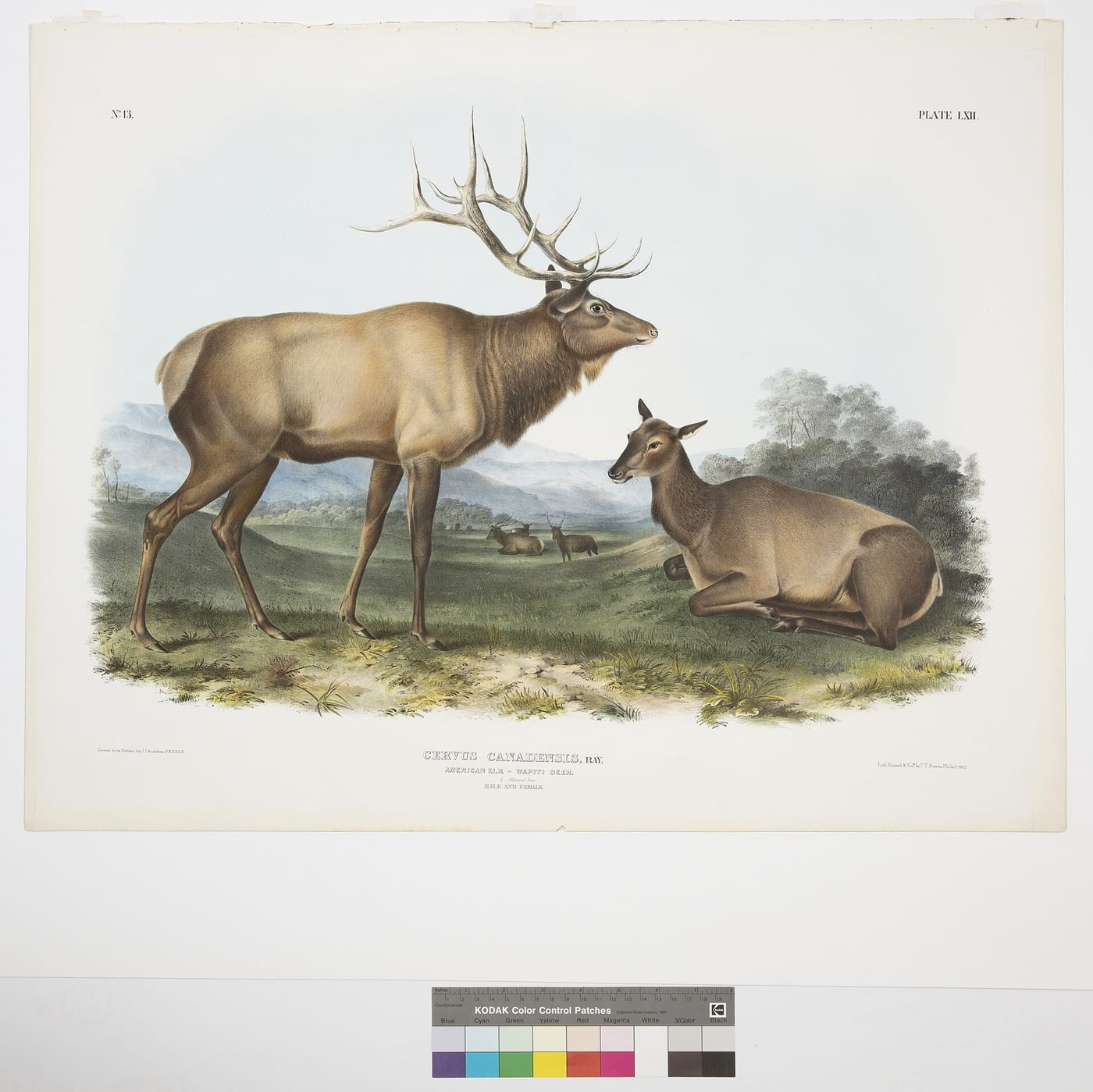
In modern American "spirit animal" usage, the elk (Cervus canadensis, often called wapiti to keep it distinct from the European elk, a different animal known in North America as the moose) most often stands for stamina, strength, nobility, confidence, and a masculine courtship energy. That reading comes through Ted Andrews's Animal Speak (Llewellyn, 1993). Older, specific traditions treat the animal very differently from one another. Among the Teton Sioux (Lakota), a man who dreamed of the elk received hehaka wakan, elk medicine believed to draw a woman's attention, carried into the siyotanka courting flute and documented by Frances Densmore in Teton Sioux Music (Bureau of American Ethnology Bulletin 61, 1918). Among the Crow (Apsáalooke), a woman's dress sewn with real elk ivory teeth, only two per animal, measured a family's hunting wealth, recorded by anthropologist Robert H. Lowie in 1912. And on California's Klamath River, the Yurok, Hupa, and Karuk carved elk antler into purses for dentalium shell money, illustrated by Alfred Kroeber in his 1925 Handbook of the Indians of California.
Frances Densmore spent parts of 1911 through 1914 hauling a wax-cylinder recorder around Standing Rock and the other Sioux reservations, asking Lakota men and women to sing into a horn that would fix their music on a medium nobody in the room fully trusted yet. Among the hundreds of songs she brought home, four belonged to something she labeled the Elk Society. One of them, song 107, translates simply: “An elk am I.” It sits in a government bulletin now, catalogued next to a plate of a hoop an elk dreamer carried and a hair ornament he wore, filed under Bureau of American Ethnology Bulletin 61 like a specimen.
That is one elk tradition, with a catalog number and a recording date. Most “elk spirit animal” pages online carry none of it, and most of them are also, without saying so, describing a different animal than the one this page is about.
The animal this page is actually about
English gets this wrong at the source. The animal called an elk in Europe is a moose, Alces alces, the same animal this site covers on its own page. The animal called an elk in North America is Cervus canadensis, a much larger relative of the red deer, standing up to five feet at the shoulder with antlers that can spread four feet across. To keep the two straight, naturalists and hunters in North America often use wapiti, a word borrowed from Shawnee or Cree meaning roughly “white rump,” the animal’s most visible field mark at a distance. Audubon’s own 1845 plate hedges the same way, captioning the animal both “American Elk” and “Wapiti Deer” in the same breath, because he knew perfectly well what the word elk meant back in Europe. Every tradition below concerns the wapiti: the animal Lakota, Crow, Yurok, Hupa, and Karuk peoples actually hunted, dreamed about, and carved.
What the pop reading actually inherited
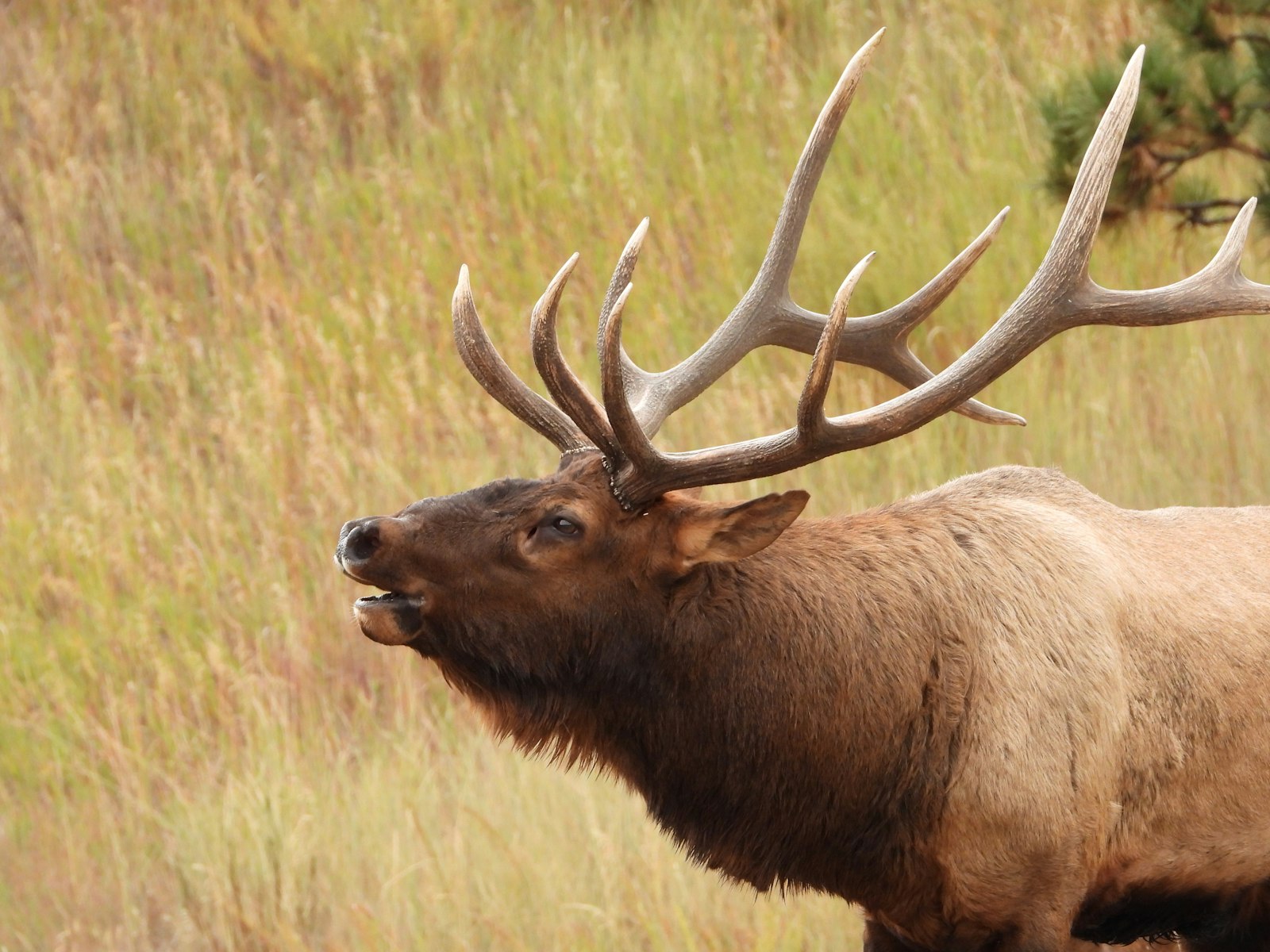
Ted Andrews’s Animal Speak came out of Llewellyn in September 1993, the same paperback synthesis behind most of the internet’s bear, wolf, deer, and moose entries. His elk is built around stamina and nobility: an animal that paces a long migration, “hits its stride,” and endures where a sprinter would collapse. He reads its herding instinct as a lesson in community, particularly among the same gender, and its rack of antlers as an uncomplicated symbol of personal power. It is a serviceable read on wildlife behavior. It is not sourced to any of the cultures that actually lived alongside wapiti and left records of what the animal meant to them.
Three traditions, three completely different economies of the animal
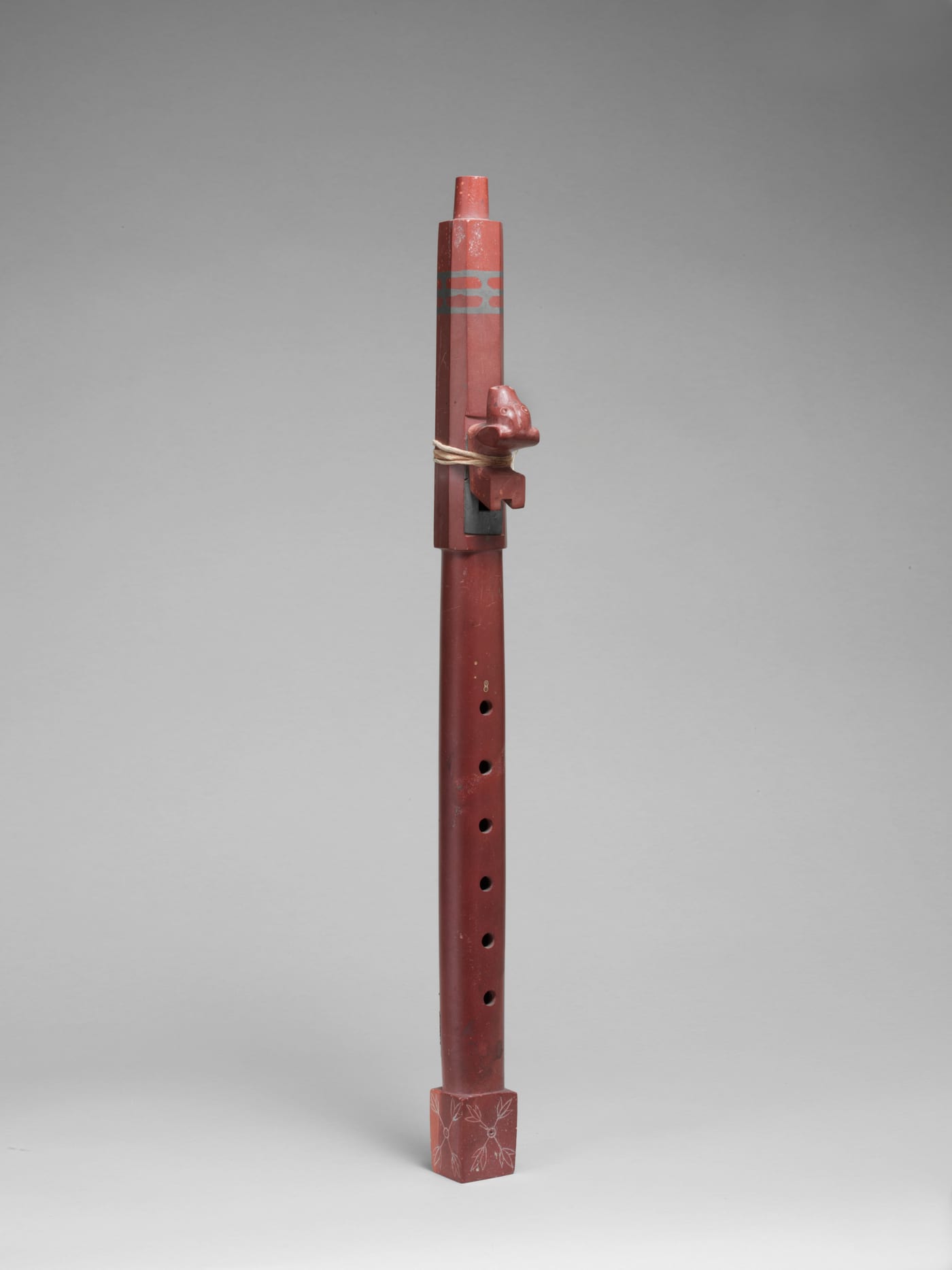
Lakota elk medicine and the courting flute. A Teton Sioux man who dreamed of the elk received what Densmore’s informants called hehaka wakan, elk medicine, understood as the bull’s power to draw a herd of females through presence and voice alone. The Elk Society Densmore documented in 1918 kept its own songs and its own regalia, a hoop and a hair ornament photographed as plates in her bulletin. The medicine’s most lasting physical form is the siyotanka, the courting flute: an elk dreamer was believed to receive, along with the medicine itself, a melody capable of drawing a specific woman’s attention, and the flute was often carved or painted with an elk’s likeness to channel that power directly. Royal Hassrick’s 1964 survey of Lakota life places this inside a courtship system with real stakes, where a young man also had to earn war honors and bring gifts before a family would accept him. A red pipestone example of exactly this kind of flute, dated to roughly 1850 to 1900, has been in the Metropolitan Museum of Art’s collection since 1889.
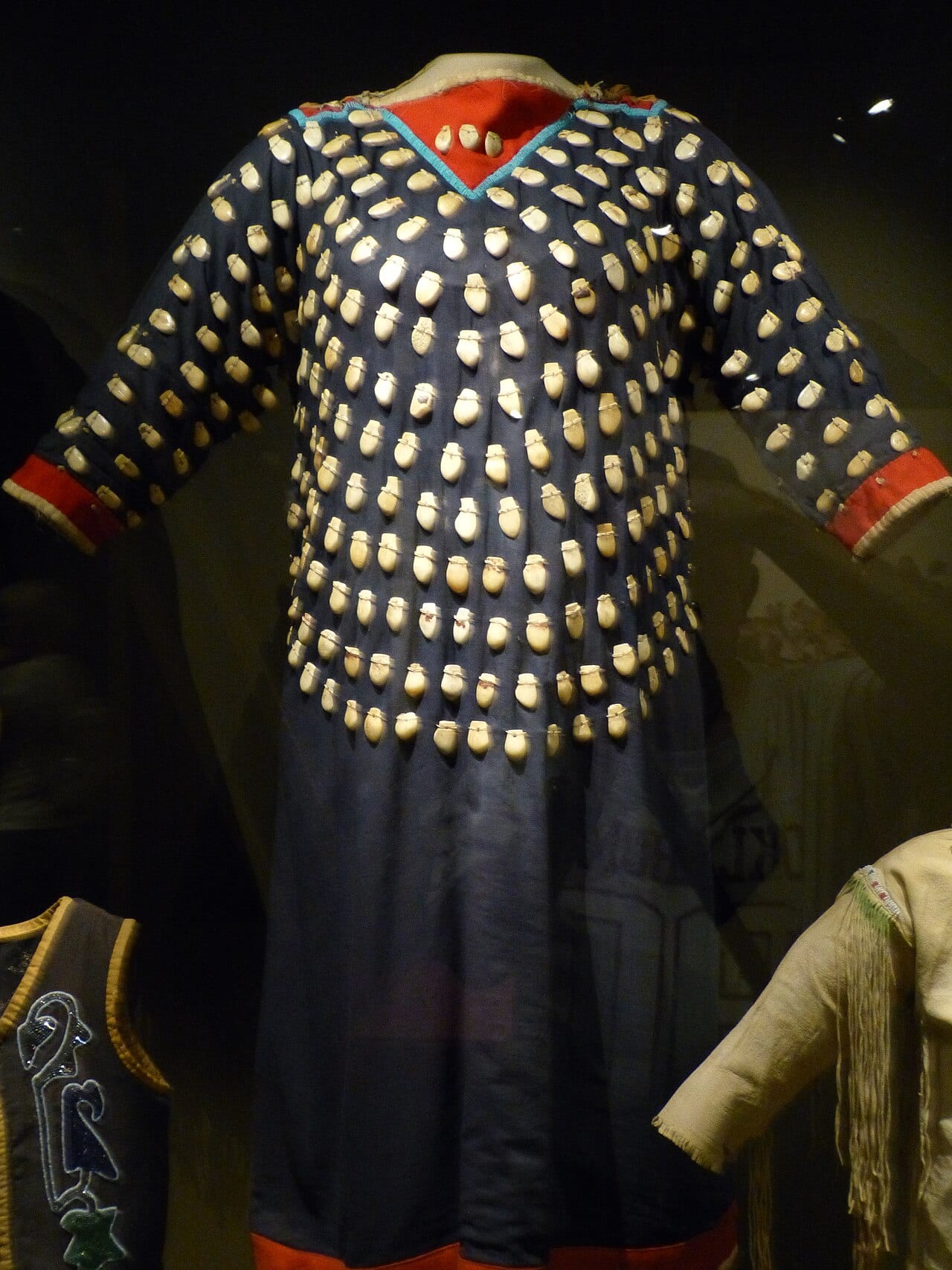
The Crow elk-tooth dress. Move from the Lakota’s love medicine to the Crow’s material economy and the elk stops being about attraction entirely. Every bull elk carries exactly two ivory canine teeth, and nothing else worth calling ivory. A Crow woman’s dress sewn with hundreds of them was not decoration in the ordinary sense; it was an inventory, a visible record of how many elk the men of her family had killed, traded for, or inherited across generations. Robert Lowie’s 1912 fieldwork among the Crow for the American Museum of Natural History recorded that a hundred elk teeth could buy a good horse, and that the heaviest dresses, sometimes almost too heavy to wear, were reserved for ceremony precisely because they were a family’s wealth made wearable. Fewer than a dozen dresses made entirely of real elk ivory are known to survive intact today, scattered across museums including the Buffalo Bill Center of the West and the National Cowboy and Western Heritage Museum.
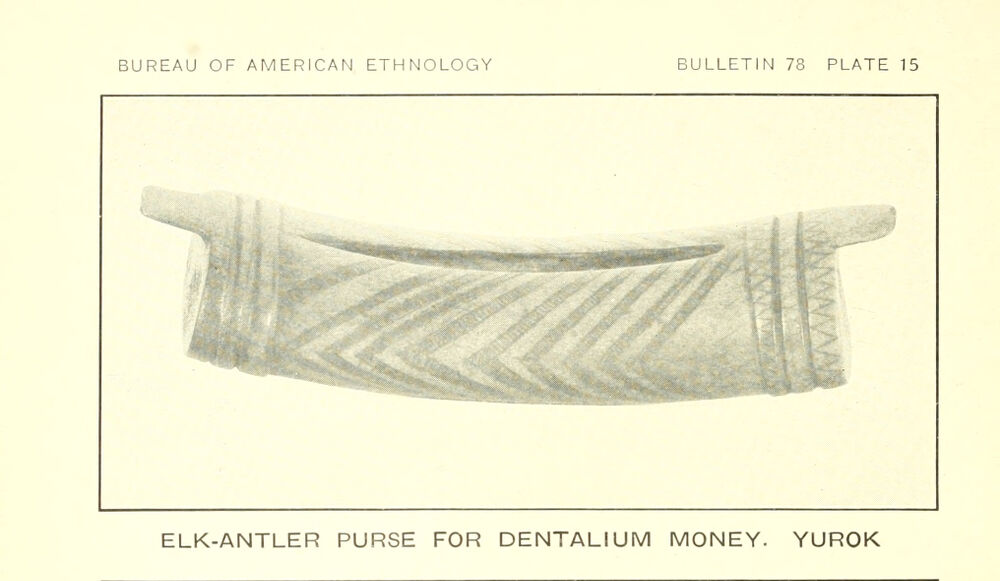
Yurok, Hupa, and Karuk elk-antler purses. On the Klamath and Trinity rivers of far northern California, elk mattered for a third, entirely different reason: its antler was the right material for a lockable container. Dentalium shell, traded down the coast from as far as Vancouver Island and graded strictly by length, functioned as the region’s currency, valuable enough that a single fine string could be priced against a redwood dugout canoe. Those strings were stored in purses carved from elk antler, incised with the zigzag patterns typical of Yurok design, with a lid sprung under a carved projection and lashed shut with a thong. Alfred Kroeber illustrated exactly this object as Plate 15 of his 1925 government handbook, captioned in block capitals: “Elk-Antler Purse for Dentalium Money. Yurok.” There is no dreaming here and no family inheritance measured in teeth, only a practical judgment that elk antler carves better and holds up longer than the deer antler some poorer households made do with instead.
What they share and what they don’t
What they share is proximity to a genuinely large, genuinely difficult animal, one whose bugle carries for miles and whose antlers can weigh forty pounds. Every tradition above comes from people who hunted wapiti directly and built a real system, not a mood, around that relationship.
What they don’t share is almost everything else. The Lakota elk is a private medicine, dreamed rather than chosen, aimed at a single person’s heart. The Crow elk is a public ledger, its teeth counted and traded like currency in their own right. The Yurok elk is a raw material, valued for how well its antler carves into a container for someone else’s currency. Compress all three into “the elk represents confidence,” and the actual, documented differences between a love charm, a wealth display, and a piece of hardware all disappear into the same vague adjective.
Across traditions
Lakota / Teton Sioux (Elk Dreamers and the Courting Flute)
Among the Teton Sioux (Lakota), a man who dreamed of the elk was understood to receive hehaka wakan, elk medicine: the bull elk's power to draw a herd of females to himself through presence and voice alone. Frances Densmore, who recorded Lakota songs on wax cylinders at Standing Rock and other reservations between 1911 and 1914, devoted a subsection to "Dreams concerning the elk" in Teton Sioux Music (Smithsonian Institution, Bureau of American Ethnology, Bulletin 61, 1918), and catalogued a separate Elk Society with its own repertoire, including songs titled "Something sacred I wear" and "An elk am I." The society's ceremonial objects, a hoop and a hair ornament worn by an elk dreamer, are illustrated as plates in the same volume.
The most enduring object to come out of Lakota elk medicine is the siyotanka, the courting flute. An elk dreamer was understood to have received, along with his medicine, a melody believed capable of drawing a chosen woman's attention, and the flute itself was often carved or painted with a bull elk's likeness to invoke that power directly. Royal B. Hassrick's ethnographic survey The Sioux: Life and Customs of a Warrior Society (University of Oklahoma Press, 1964) situates elk-dreamer love medicine within a highly structured Lakota courtship system, in which a suitor also had to prove himself through war honors and gift-giving before a woman's family would accept him. The Metropolitan Museum of Art holds a Sioux courting flute of red pipestone dated to roughly 1850 to 1900, acquired in 1889 as part of the Crosby Brown Collection of Musical Instruments.
- PRIMARY Frances Densmore, Teton Sioux Music . Smithsonian Institution, Bureau of American Ethnology, Bulletin 61, 1918.
- PEER-REVIEWED Royal B. Hassrick, The Sioux: Life and Customs of a Warrior Society . University of Oklahoma Press, 1964.
- MUSEUM Courting flute (siyotanka), The Metropolitan Museum of Art . Crosby Brown Collection of Musical Instruments, 1889; ca. 1850-1900.
Crow / Apsáalooke (the Elk-Tooth Dress)
Among the Crow, elk canine teeth (the two ivory eyeteeth every bull elk carries, and no other tooth in its body) became one of the most concentrated wealth displays in Plains material culture. A woman's dress sewn with real elk ivories advertised the hunting record of the men in her family: because only two teeth come from each animal, a dress of several hundred teeth represented several hundred kills, or generations of trade and inheritance. Anthropologist Robert H. Lowie, who worked among the Crow for the American Museum of Natural History in the early twentieth century, recorded in Social Life of the Crow Indians (Anthropological Papers of the American Museum of Natural History 9, no. 2, 1912) that a man's wealth and standing were measured in part by the number of elk teeth on his wife's and daughters' dresses, and that a hundred teeth could be traded for a good horse.
The dresses were heavy, sometimes too heavy for ordinary wear, and reserved for ceremonial occasions. Surviving examples made entirely of real elk ivory (as few as ten or twelve are known intact) are now held by institutions including the Buffalo Bill Center of the West, the Spencer Museum of Art, and the National Cowboy and Western Heritage Museum. This is an elk tradition built on the animal's teeth and a hunter's skill, with no reference to love, courtship, or dreaming at all.
- PRIMARY Robert H. Lowie, Social Life of the Crow Indians . Anthropological Papers of the American Museum of Natural History 9, no. 2 (1912): 179-253.
- MUSEUM Crow elk-tooth dress, ca. 1920, catalog no. 1983.06.13 . National Cowboy & Western Heritage Museum, Oklahoma City.
Yurok, Hupa, and Karuk (Northwest California Elk-Antler Wealth)
On the lower Klamath and Trinity rivers of far northern California, the Yurok, Hupa, and Karuk built an economy around dentalium, a tooth-shaped mollusk shell traded down from as far as Vancouver Island and graded by length, with the finest strings valued high enough to purchase a redwood dugout canoe. The shell strings were kept in purses carved from elk antler and incised with the zigzag and triangle patterns typical of Yurok decorative art. Alfred L. Kroeber illustrated one such purse as Plate 15 in Handbook of the Indians of California (Smithsonian Institution, Bureau of American Ethnology, Bulletin 78, 1925), captioned "Elk-Antler Purse for Dentalium Money. Yurok," alongside a cylindrical antler box "from 1 to 4 feet in length" used to store larger valuables.
Kroeber's field notes describe purses that averaged six to seven inches, with a lid sprung under a carved projection and held by a thong wrap; deer-antler versions existed but were smaller and less prized. There is no dreaming, no courtship, and no clan inheritance in this tradition. The elk is valuable here for a practical reason: its antler is dense enough to carve into a lockable container, and a container for the region's most important currency was worth carving well.
- PRIMARY A. L. Kroeber, Handbook of the Indians of California . Smithsonian Institution, Bureau of American Ethnology, Bulletin 78, 1925, Plate 15.
Ted Andrews (1993, the pop-concept's source)
Ted Andrews's Animal Speak (Llewellyn, 1993) gives elk medicine a cluster of qualities built around stamina, strength, nobility, pride, and survival: an animal that paces itself over a long migration, "hits its stride," and endures. Andrews reads the elk's herding behavior as a lesson in community, especially fellowship among the same gender, and treats its size and antlers as a straightforward emblem of personal power and confidence.
None of the Lakota love-medicine complex, the Crow wealth economy, or the Yurok antler-purse tradition appears in his synthesis by name. The elk he describes is assembled from general wildlife-observation writing rather than from any single documented culture, which is exactly the gap most downstream spirit-animal pages inherit without noticing.
- REFERENCE Ted Andrews, Animal Speak: The Spiritual & Magical Powers of Creatures Great and Small . Llewellyn, September 1993.
Working with the Elk
If you want a regular practice rather than a one-time read, an oracle deck is the standard tool: you draw a card and sit with whatever animal comes up. Our ranked guide to spirit animal oracle decks compares the field.
Sources
- PRIMARY Frances Densmore, Teton Sioux Music . Smithsonian Institution, Bureau of American Ethnology, Bulletin 61, 1918.
- PEER-REVIEWED Royal B. Hassrick, The Sioux: Life and Customs of a Warrior Society . University of Oklahoma Press, 1964.
- MUSEUM Courting flute (siyotanka), The Metropolitan Museum of Art . Crosby Brown Collection of Musical Instruments, 1889; ca. 1850-1900.
- PRIMARY Robert H. Lowie, Social Life of the Crow Indians . Anthropological Papers of the American Museum of Natural History 9, no. 2 (1912): 179-253.
- MUSEUM Crow elk-tooth dress, National Cowboy & Western Heritage Museum . Catalog no. 1983.06.13, ca. 1920.
- PRIMARY A. L. Kroeber, Handbook of the Indians of California . Smithsonian Institution, Bureau of American Ethnology, Bulletin 78, 1925, Plate 15.
- REFERENCE Ted Andrews, Animal Speak . Llewellyn, September 1993.