Spirit Animal
Pig Spirit Animal
Pig spirit animal meaning traced to real sources: the twelfth branch of the Chinese zodiac, Zhu Bajie in Journey to the West, what Leviticus 11 and Deuteronomy 14 actually say and do not say, the Thesmophoria piglets, and the peer-reviewed record on pig cognition.
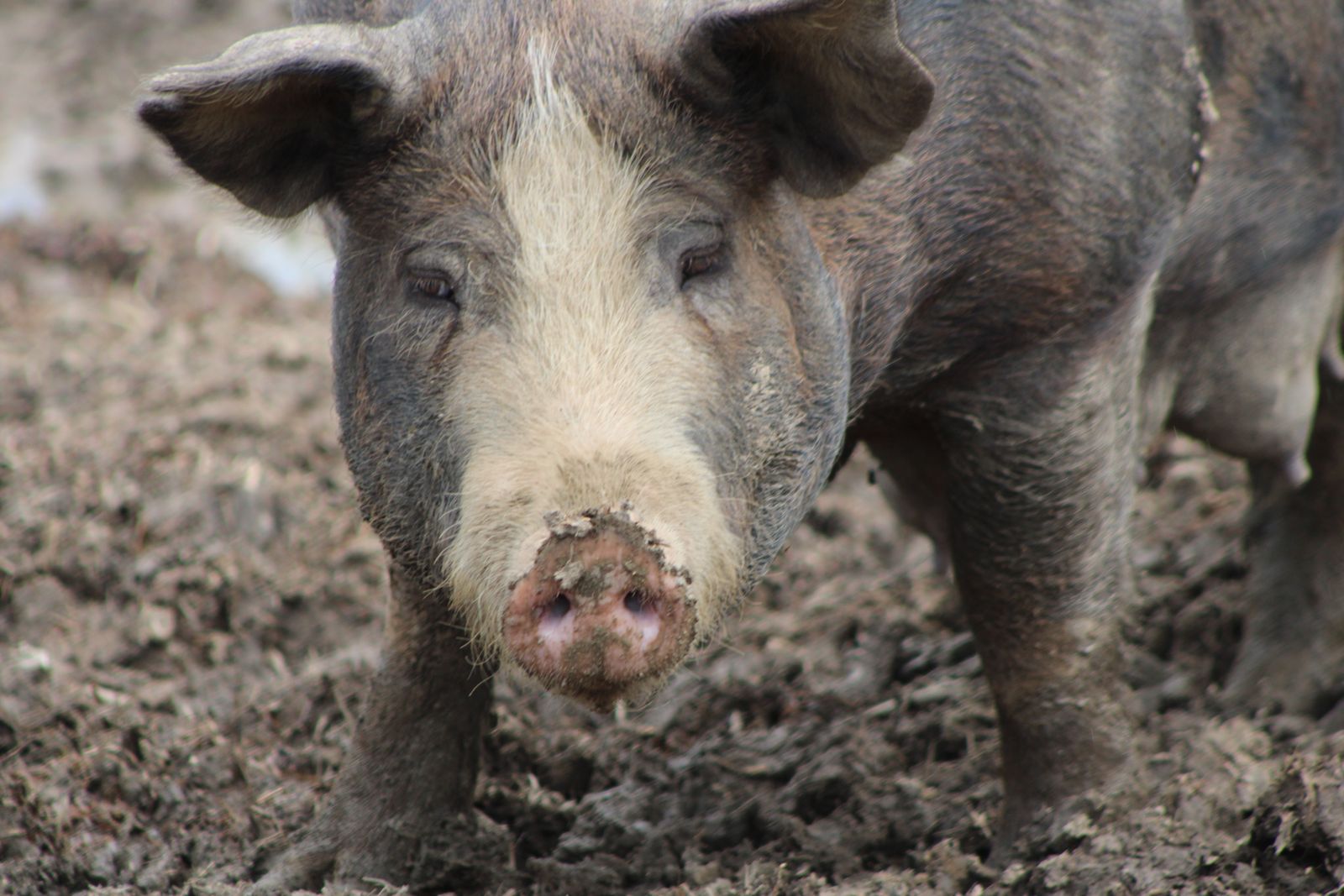
The pig carries the widest split on this site. In China it closes the zodiac and means prosperity, honesty and good fortune. In the Hebrew Bible it is the standard example of an unclean animal, and later a byword for appetite. Both readings are ancient, neither is a corruption of the other, and the animal underneath is among the most intelligent species we have domesticated.
No animal on this site is read more differently by different people than the pig.
In one tradition it closes the zodiac and means prosperity, honesty and an easy life. In another it is the standing example of what may not be eaten, so much so that the word became a general term of contempt in every European language that inherited the idea. Both readings are old. Neither is a corruption of the other. They come from communities that were looking at the same animal and asking different questions about it.
Underneath both sits a species that turns out, when anybody bothers to test it, to be among the more capable animals humans have domesticated. That gap between the symbol and the animal is wider here than anywhere else in this collection, and it is the most interesting thing about the subject.
Why is the pig last in the Chinese zodiac?
Because the twelfth Earthly Branch, hai, is where the cycle ends, and the pig has been paired with it since the list was first written down. Wang Chong’s Lunheng in the first century CE gives the complete twelve.
The familiar explanation, that the pig came last in the Jade Emperor’s race because it stopped to eat and then had a nap, is a folk story attached afterwards to an order that already existed. It is a good story and it tells you what people thought of pigs. It does not tell you why the calendar is arranged as it is.
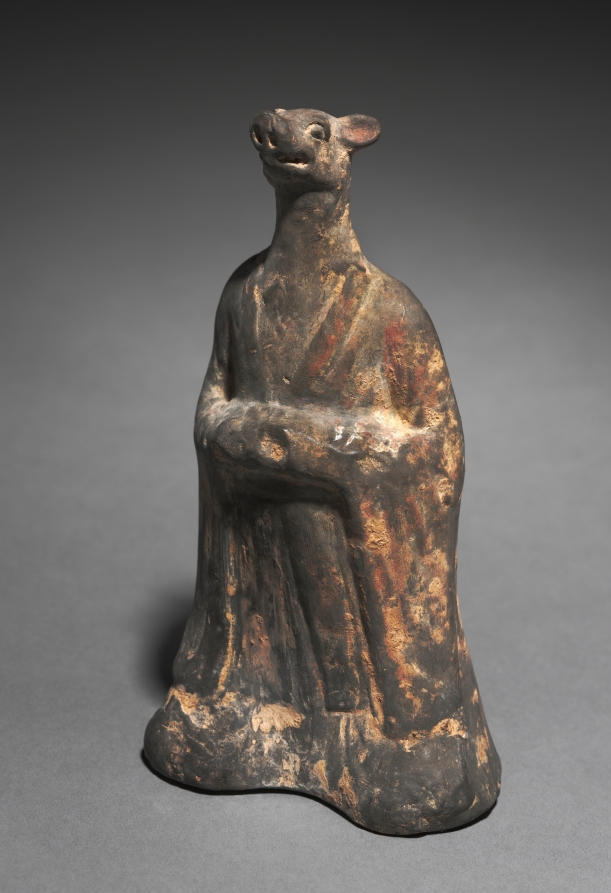
The associations attached to the sign are warm throughout: abundance, generosity, straightforwardness, a certain willingness to be taken advantage of. There is one piece of hard evidence underneath the sentiment. The character for home, jia, is written as a roof with a pig beneath it. A household with a pig in it was a household that was going to eat.
The English-language personality profile, sociable, trusting, indulgent, financially fortunate, is a twentieth-century product like the rest of them, and Theodora Lau’s 1979 handbook is the book most of it descends from.
Who is Zhu Bajie, and why is the pig the funny one?
Zhu Bajie is the second disciple in Journey to the West, the novel printed anonymously in 1592, and he is the reason a great deal of East Asian popular culture treats the pig with affection rather than contempt.
His backstory is a joke about consequences. He was Marshal Tianpeng, commander of the celestial naval forces, thrown out of heaven for drunkenly propositioning the moon goddess. Sent to be reborn on earth, he landed in the wrong womb and came out of a sow, which left him with a pig’s head and body and his own mind intact. He carries a nine-toothed rake. He eats without limit, complains without pause, chases women, and proposes abandoning the pilgrimage at roughly weekly intervals.
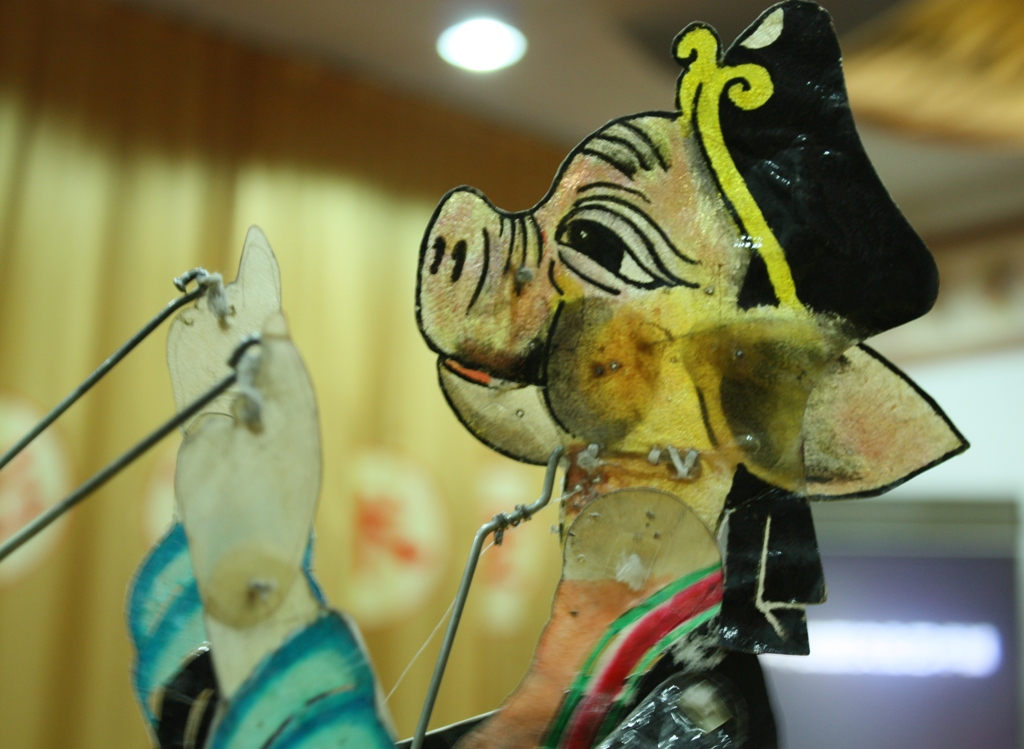
He is also the only one of the four travellers whose failings are ordinary. The monkey is too powerful to be relatable, the monk is too holy, the third disciple barely speaks. Zhu Bajie is tired and hungry and would like to go home, and readers have been fond of him for four hundred years for exactly that reason. Whatever the pig means in the abstract, this is where most of its warmth in Chinese-speaking cultures actually comes from.
What does Leviticus actually say about pigs?
Less than almost everyone assumes, and the gap between what it says and what people believe it says is the whole story.
Leviticus 11:7 and Deuteronomy 14:8 both state the same thing. A land animal is permitted if it has a divided hoof and chews the cud. The pig has the divided hoof and does not chew the cud, so it is not permitted. That is the reason given. There is no other.
The camel fails the test from the other direction, having the cud and not the hoof, and so do the hyrax and the hare. All are named in the same passage. The pig is not singled out and is not described as worse than the others. It became the emblem of the whole category later, and for historical rather than textual reasons: it was the animal the surrounding peoples raised and ate, so refusing it became a visible marker of who belonged to the community and who did not. Under the Seleucids that refusal became a matter people were willing to die over, which fixed the pig’s meaning permanently.
Every explanation beyond the criteria was supplied afterwards. Maimonides, writing in the twelfth century and practising medicine, argued for a health rationale. When trichinosis was traced to undercooked pork in the nineteenth century, that was read as vindication of him, although no evidence establishes pork as uniquely hazardous among meats and the text makes no health claim. Mary Douglas, in Purity and Danger in 1966, argued the opposite direction: the forbidden animals are the ones that fall between categories, and the pig is the textbook anomaly. She revised parts of that reading herself in later editions, which is worth knowing before quoting it as the last word.
Reading the prohibition as a symbol of the pig’s moral character is the one reading the text does not support. It is a classification rule, stated as such.
Why did Greek women throw piglets into pits?
Because a decomposed pig, mixed into seed grain, was understood to make the next harvest work.
The Thesmophoria was an autumn festival of Demeter and Kore held all over the Greek world, restricted to married women and closed to men. That last detail is why we know so little about it: the people who wrote things down were excluded.
The fullest surviving description of its central rite is not a religious text but a marginal note. A commentator on Lucian’s Dialogues of the Courtesans records that piglets were thrown into underground chambers called megara, along with dough cakes shaped as snakes and phalli and with pine cones. Later, women who had kept three days of ritual purity went down and brought the rotted remains back up. They were placed on altars and mixed with the seed for sowing.
The commentator supplies an origin story. When the earth opened and took Kore, a swineherd named Eubouleus went down with his pigs, and the piglets in the pits are for him. Whether you take the story or the agriculture, the pig here is not degraded. It is the thing the community puts into the ground so that something comes back out.
How intelligent is a pig?
Genuinely, and the literature is more careful than the headlines built on it.
Lori Marino and Christina M. Colvin reviewed the field in the International Journal of Comparative Psychology in 2015, covering discrimination learning, spatial memory, time perception, the recognition of individual pigs and individual humans, and the evidence bearing on self-awareness. Their own verdict includes the caveats: much of the work runs on small samples and narrow behavioural measures, and the full picture is not established.
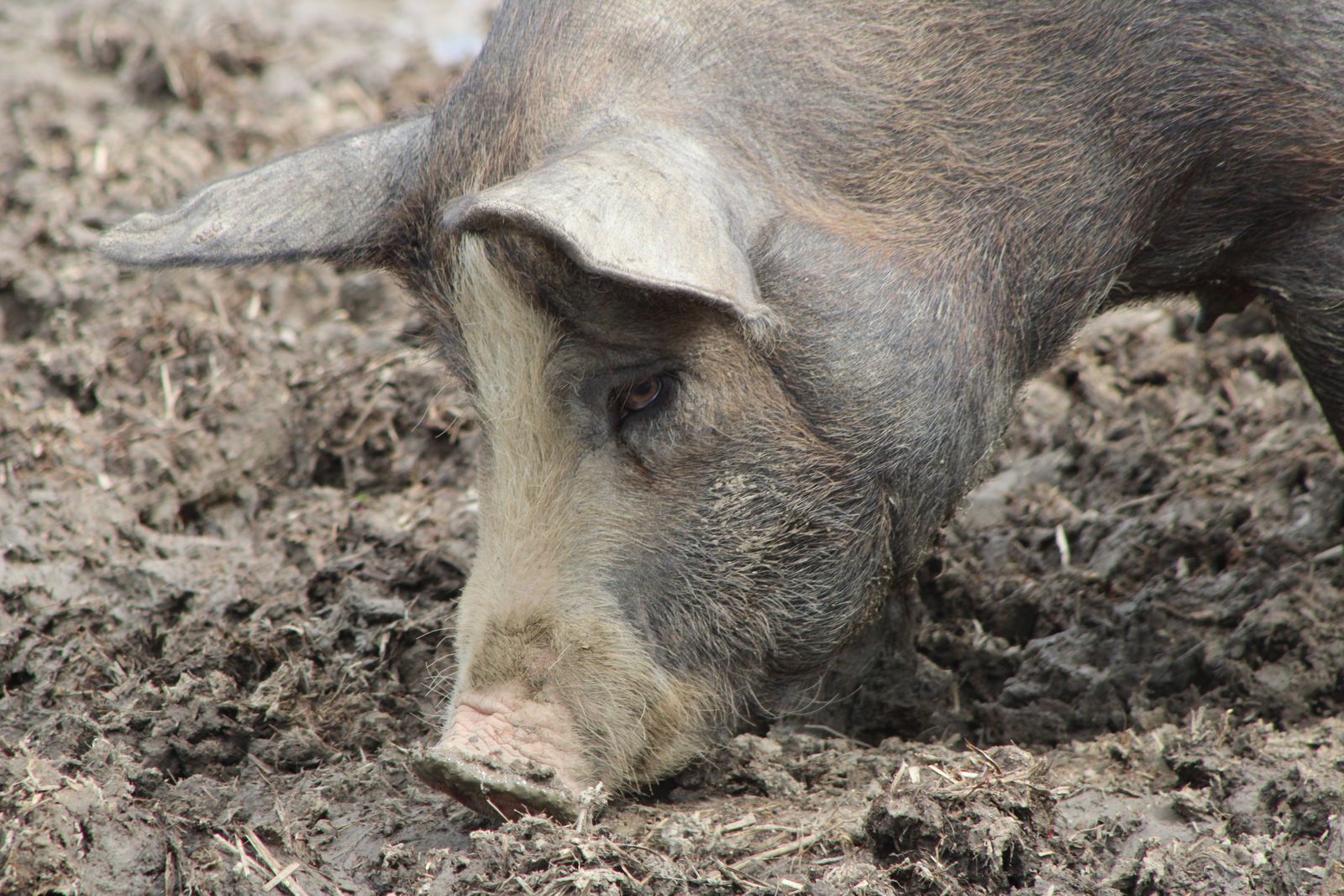
The experiment everyone cites is Broom, Sena and Moynihan, published in Animal Behaviour in 2009. Young pigs spent five hours with a mirror, then were shown a food bowl reflected in it but hidden behind a solid barrier. Seven of eight turned away from the mirror, went around the barrier and found the bowl, taking about 23 seconds on average. Pigs with no mirror experience looked behind the mirror.
Two things get lost when that result is repeated. First, using a mirror to locate an object is not the same as recognising yourself in one, and the mark test that measures self-recognition is a different experiment that this was not. Second, a close replication published in Applied Animal Behaviour Science in 2014, using two groups of eleven piglets and following the original procedure, found only two animals locating the bowl and concluded the pigs had not understood what the reflection represented. The question is open. Anybody telling you flatly that pigs recognise themselves in mirrors has read one paper of the two.
What happened at Gadara, or Gerasa, or wherever it was?
The best-known pig story in the New Testament also has the best-known geography problem in it, and the two are related.
A man possessed by many demons meets Jesus in the country across the lake. The demons, named Legion, ask to be sent into a herd of about two thousand pigs. They are, and the herd runs down the steep bank into the water and drowns. The account is in Mark 5, Matthew 8 and Luke 8.
The problem is the place name, which the manuscripts do not agree on. The best readings give Gerasenes in Mark and Luke, Gadarenes in Matthew, and Gergesenes in a family of manuscripts that Origen preferred in the third century. Gerasa is roughly fifty kilometres from the Sea of Galilee, which makes a stampede into it impossible. Gadara is about ten. Kursi, identified with Gergesa, sits on the lake shore itself and has the steep slope the story needs. Origen noticed the difficulty and proposed the reading that solves it, which is exactly the circumstance in which a textual critic should be watched carefully.
For the pig, the detail worth keeping is that a large commercial herd was being kept there at all. This is the Decapolis, gentile territory, where pork was ordinary. The animals in the story are not a symbol of uncleanness dropped into the scene. They are somebody’s livelihood, and the account does not say what happened to whoever owned them.
So what does the pig mean?
Whatever your grandparents’ culture decided, which is unusually visible in this case.
There is no compiler to blame here. I could not verify a pig entry in Animal Speak, and Medicine Cards has no pig either. The readings in circulation arrived in English through four separate doors: a Chinese calendar and the personality literature attached to it, a sixteenth-century novel, a body of religious law and the polemic that grew around it, and a Greek festival known mainly through a footnote.
They do not reconcile and there is no reason they should. What they have in common is that all four were talking about a specific, expensive, useful animal that lives alongside people and eats what they eat, which is the same closeness that makes a species either a blessing or a taboo and rarely anything in between.
The part none of them were describing is the part the laboratory keeps finding: an animal with a nose that reads the ground, a memory for individuals, and enough going on that the researchers studying it write cautious papers about what it might know.
Across traditions
Chinese zodiac (the twelfth branch, hai) and Journey to the West
The pig is the twelfth and final Earthly Branch, hai 亥, closing the cycle before it restarts with the rat. The full twelve-animal list first appears in Wang Chong's Lunheng in the first century CE, and the popular tale of the Jade Emperor's race, in which the pig arrives last because it stopped to eat and sleep, is a much later folk explanation for an order that already existed.
The associations are warm: prosperity, abundance, straightforwardness, good fortune. Pigs are wealth in an agricultural society, and the character for home, jia 家, is written as a roof over a pig. That is a real orthographic fact and it is worth more than most of the symbolism built on it.
The pig's literary embodiment is Zhu Bajie, the second disciple in Journey to the West, printed anonymously in 1592. He was Marshal Tianpeng, commander of the heavenly naval forces, exiled for drunkenly harassing the moon goddess and reborn by accident into a sow's womb, which left him with a pig's head and a man's mind. He carries a nine-toothed rake, eats enormously, complains constantly, and repeatedly suggests the pilgrimage be abandoned. He is also loyal, funny, and the only member of the party with recognisable human weaknesses, which is why audiences have liked him for four hundred years.
- PRIMARY Wang Chong, Lunheng . First century CE. Earliest complete listing of the twelve zodiac animals against the Earthly Branches; the pig is hai, the twelfth.
- PRIMARY Journey to the West (Xiyouji), Shidetang edition . Published anonymously, 1592. Zhu Bajie is the second disciple. Standard complete English translation: Anthony C. Yu, University of Chicago Press.
- REFERENCE Theodora Lau, The Handbook of Chinese Horoscopes . First published 1979. The most-copied English source for zodiac personality descriptions.
Hebrew Bible (Leviticus 11 and Deuteronomy 14)
The rule is stated twice and both statements are short. Leviticus 11:7 and Deuteronomy 14:8 give the pig as an animal that has a divided hoof but does not chew the cud, and is therefore not to be eaten. The criteria are a pair, and the pig meets one and fails the other. That is the entire stated reason.
What the text conspicuously does not supply is a rationale beyond the criteria themselves. Every explanation people carry around was added later. Maimonides, writing in the twelfth century as a physician, argued for a health basis. The nineteenth-century discovery that trichinosis comes from undercooked pork was seized on as confirmation of him, though no evidence shows pork to be uniquely dangerous among meats. Mary Douglas, in Purity and Danger (1966), proposed instead that the unclean animals are the ones that fail a classification scheme, and the pig is the standard example of an anomaly. Douglas herself revisited and revised parts of that argument in later prefaces, which is worth knowing before quoting her as settled.
The honest position is that the text gives a criterion and not a reason, that the criterion applies equally to the camel and the hyrax and the hare, and that the pig became the emblem of the whole category for historical rather than textual reasons: it was the animal neighbouring peoples ate, and it became a marker of who was and was not part of the community.
- PRIMARY Leviticus 11:7 . The pig has a divided hoof but does not chew the cud. No further reason is given in the text.
- PRIMARY Deuteronomy 14:8 . The same criterion restated, with the addition that its carcass is not to be touched.
- PEER-REVIEWED Mary Douglas, Purity and Danger . Routledge, 1966. The anomaly reading of the dietary laws; Douglas revised parts of the argument in later editions.
Ancient Greece (piglets at the Thesmophoria)
The Thesmophoria was a three-day autumn festival for Demeter and Kore, restricted to married women, held across the Greek world and closed to men, which is why the surviving evidence is thin and second-hand.
The clearest account of its central rite is not in a work of religion at all. It is a scholion, a marginal note by a later commentator, on Lucian's Dialogues of the Courtesans 2.1. It describes piglets being thrown into underground chambers called megara along with dough cakes shaped as snakes and phalli and with pine cones. Some time later, women who had kept ritual purity for three days went down and brought up the decayed remains, which were placed on altars and mixed with seed grain for sowing.
The commentator explains it with a story: when the earth opened to swallow Kore, a swineherd named Eubouleus and his pigs went down with her, and the piglets commemorate them. Read as agriculture rather than as story, it is a fertility rite that literally puts decomposed animal matter into next year's seed. Either way the pig is not degraded here. It is the offering that goes into the ground on the community's behalf.
- PRIMARY Scholion on Lucian, Dialogues of the Courtesans 2.1 . The fullest surviving description of the megara rite: piglets deposited in pits, remains retrieved by ritually pure women and mixed with seed grain. A marginal note by a later commentator, not a contemporary account.
- PRIMARY Herodotus, Histories 2.47 . Egyptian treatment of swine: swineherds barred from temples, pigs sacrificed to Dionysus and the Moon at the full moon and then eaten. A separate Mediterranean example of the same ambivalence.
Comparative psychology (what the pig research actually shows)
Lori Marino and Christina M. Colvin reviewed the pig-cognition literature in Thinking Pigs: A Comparative Review of Cognition, Emotion, and Personality in Sus domesticus, International Journal of Comparative Psychology 28 (2015). The review covers discrimination learning, spatial memory, time perception, individual recognition of both pigs and humans, and evidence bearing on self-awareness, and it is candid about small sample sizes and limited behavioural measures across much of the field.
The single most-quoted experiment is Broom, Sena and Moynihan, Pigs learn what a mirror image represents and use it to obtain information, Animal Behaviour 78 (2009), 1037 to 1041. Young pigs given five hours with a mirror were shown a food bowl visible only in the reflection and hidden behind a barrier. Seven of eight went away from the mirror and around the barrier, taking on average 23 seconds. Naive pigs looked behind the mirror.
Two cautions belong with that result. It demonstrates instrumental use of a mirror to locate an object, which is not the mark test for self-recognition, and popular accounts routinely conflate the two. And a 2014 replication in Applied Animal Behaviour Science, following the original procedure with two groups of eleven piglets, found only two animals locating the bowl and concluded the pigs had not understood what the mirror represented. The finding is contested, and a page that reports the 2009 result without the 2014 one is giving you half of a live scientific argument.
- PEER-REVIEWED L. Marino and C. M. Colvin, 'Thinking Pigs: A Comparative Review of Cognition, Emotion, and Personality in Sus domesticus' . International Journal of Comparative Psychology 28, 2015. Open access.
- PEER-REVIEWED D. M. Broom, H. Sena and K. L. Moynihan, 'Pigs learn what a mirror image represents and use it to obtain information' . Animal Behaviour 78, 1037-1041, 2009. Seven of eight pigs found the hidden bowl, mean 23 seconds.
- PEER-REVIEWED 'Lack of mirror use by pigs to locate food' . Applied Animal Behaviour Science, 2014. Close replication with two groups of eleven piglets; only two located the bowl. The authors conclude the pigs did not understand the mirror image.
Working with the Pig
If you want a regular practice rather than a one-time read, an oracle deck is the standard tool: you draw a card and sit with whatever animal comes up. Our ranked guide to spirit animal oracle decks compares the field.
Sources
- PRIMARY Leviticus 11:7 . Sefaria.
- PRIMARY Deuteronomy 14:8 . Sefaria.
- PRIMARY Herodotus, Histories 2.47 . Egyptian treatment of swine and swineherds.
- PRIMARY Scholion on Lucian, Dialogues of the Courtesans 2.1 . The Thesmophoria megara rite.
- PRIMARY Journey to the West (Xiyouji), 1592 . Zhu Bajie, the second disciple.
- PRIMARY Mark 5:1-20; Matthew 8:28-34; Luke 8:26-39 . The demoniac and the herd of swine, with the Gerasene, Gadarene and Gergesene manuscript variants.
- PEER-REVIEWED L. Marino and C. M. Colvin, 'Thinking Pigs' . International Journal of Comparative Psychology 28, 2015.
- MUSEUM Mortuary Figure of the Zodiac Sign: Boar, Northern Wei, 500s . Cleveland Museum of Art 1972.76.12, The Norweb Collection. CC0.
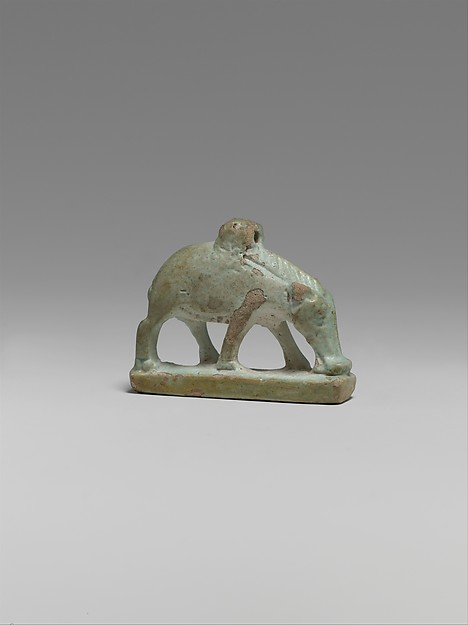
- MUSEUM Sow Amulet, Egypt, Late Period, 664-380 BCE . Metropolitan Museum of Art 17.194.2243, Gift of J. Pierpont Morgan, 1917.