Spirit Animal
Moth Spirit Animal
Moth spirit animal meaning: night, omen and annihilation. Traced to sources that exist: the death's-head hawkmoth named for the Fates and read as an omen in nineteenth-century Britain, the moth and candle of Attar's Conference of the Birds, the bogong moth harvested on GunaiKurnai Country, and a 2024 paper that overturns the moth-to-a-flame explanation.
The moth is read now as the butterfly's dark twin: transformation in the dark, helpless attraction to light, a death announcing itself. Almost none of that is Ted Andrews, whose 1993 keynote is fertility and relationships. The documented material is a Persian Sufi parable, a British omen moth named for a Fate, and a food harvested in the Australian Alps.
Moths and butterflies are the same order. Lepidoptera, one lineage, split by us rather than by nature into the day ones we call beautiful and the night ones we call something else. There is no clean taxonomic wall between them, the popular tests all leak, and the practical difference is that one flies while we are watching.
Which is exactly why the moth is worth a page of its own. Almost everything written about it is written against the butterfly. Same body plan, same metamorphosis, same wings, opposite reputation. Transformation becomes decay, rebirth becomes death, the soul rising becomes the soul in trouble. Very little of that is inherited from anywhere. It is a shadow the butterfly casts.
The material that genuinely exists is stranger and better.
The candle parable is nine hundred years old and it is not about temptation
If you have ever used the phrase moth to a flame, you are quoting a Persian argument about knowledge without knowing it.
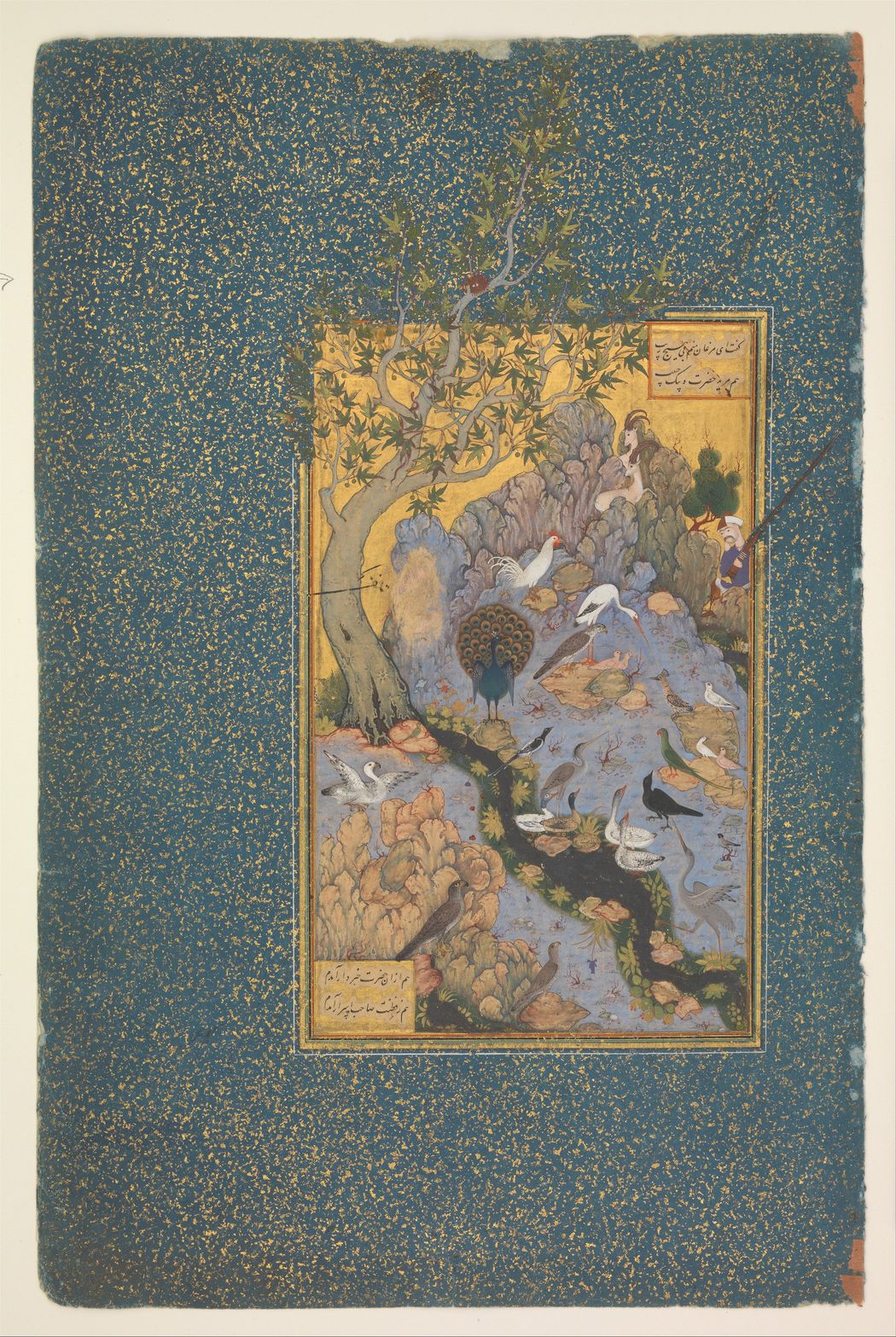
In Attar’s Conference of the Birds, written around 1177, the moths hold a council to work out what a candle is. The first flies over and comes back with a description. The second gets close enough to be singed and returns with better detail, a report of heat and light. The elder moth rejects both. The third flies straight in, burns, and is gone, and only that one, the elder says, understood the candle, and it can no longer explain anything to anybody.
That is not a warning about doomed attraction, which is how English usage takes it. It is a claim that some things cannot be known from outside and that the price of going in is that you do not come back to report. The Sufi term is fanaʾ, annihilation of the self. Goethe rebuilt the image in Selige Sehnsucht, and the line everyone quotes from it, die and become, is his compression of it.
Compare that to the modern moth keyword list and the loss is obvious. A parable about the cost of real knowledge got turned into a caution about bad relationships.
Nobody actually knows why moths come to your porch light, and the best answer is new
Here is the thing worth getting right, because almost every page on this bird gets it wrong with total confidence.
The old explanation, repeated everywhere, is that moths navigate by the moon, holding a constant angle to a light source effectively at infinity, and that a nearby bulb wrecks the geometry and spirals them in. It is a lovely story. It has never been well supported, and moths do not actually spiral in the way it predicts.
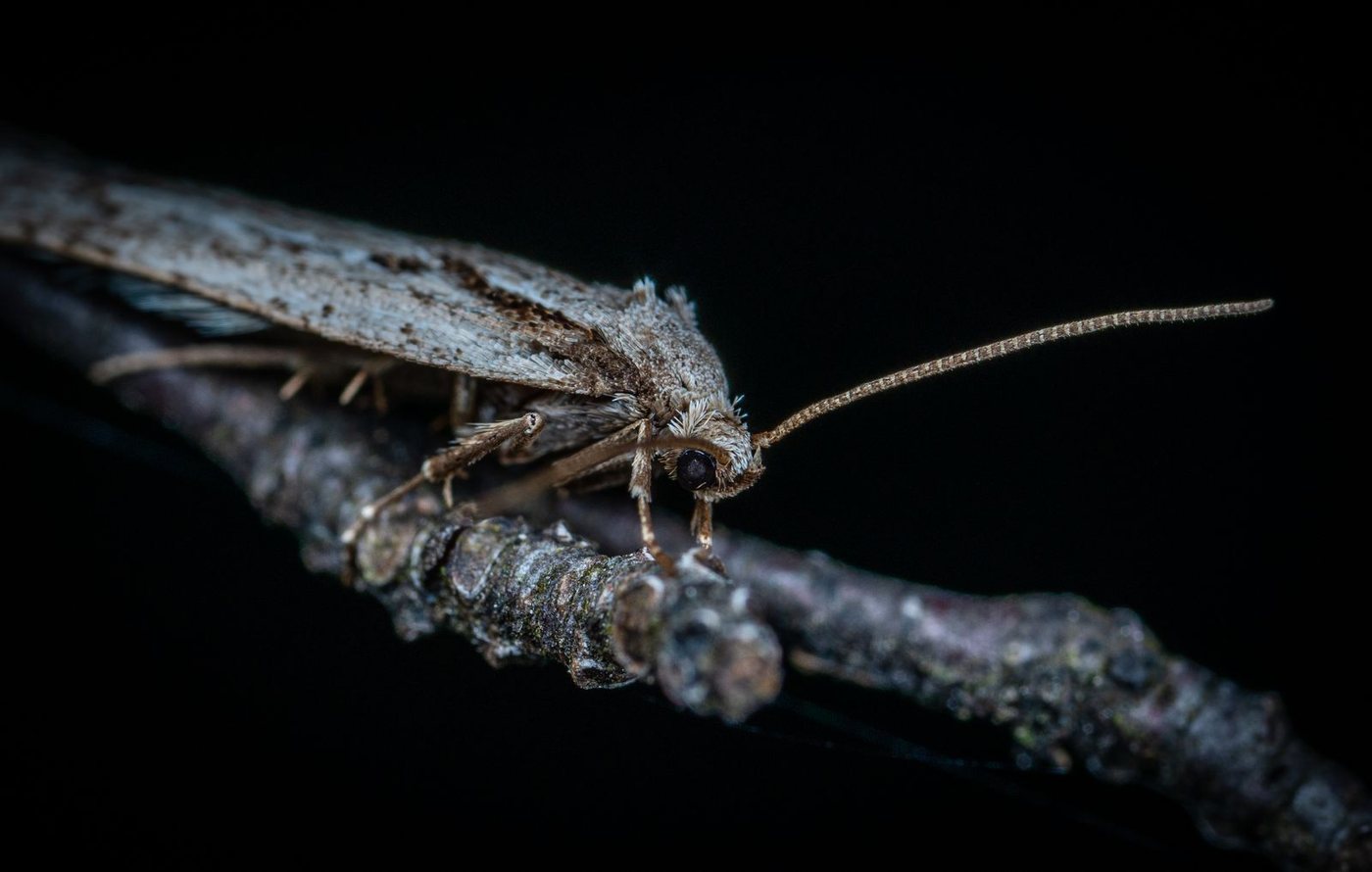
In January 2024, Samuel Fabian, Yash Sondhi and colleagues published high-speed motion capture of insects flying around lights, in the lab and in the field, in Nature Communications. What the three-dimensional reconstructions show is that the insects are not steering toward the light at all. They turn their backs to it. The dorsal light response, keeping the brightest hemisphere overhead, is how a flying insect knows which way is up, and it is old and deeply conserved. Point a bright source sideways or from below and the animal keeps rolling its back toward it, which produces flight paths perpendicular to the source, orbits, stalls and crashes. Not attraction. A horizon reference captured.
Two centuries of moral reading rest on the assumption that the moth wants the flame. On the current evidence it does not want the flame. It has lost the sky.
The moth with a skull on its back
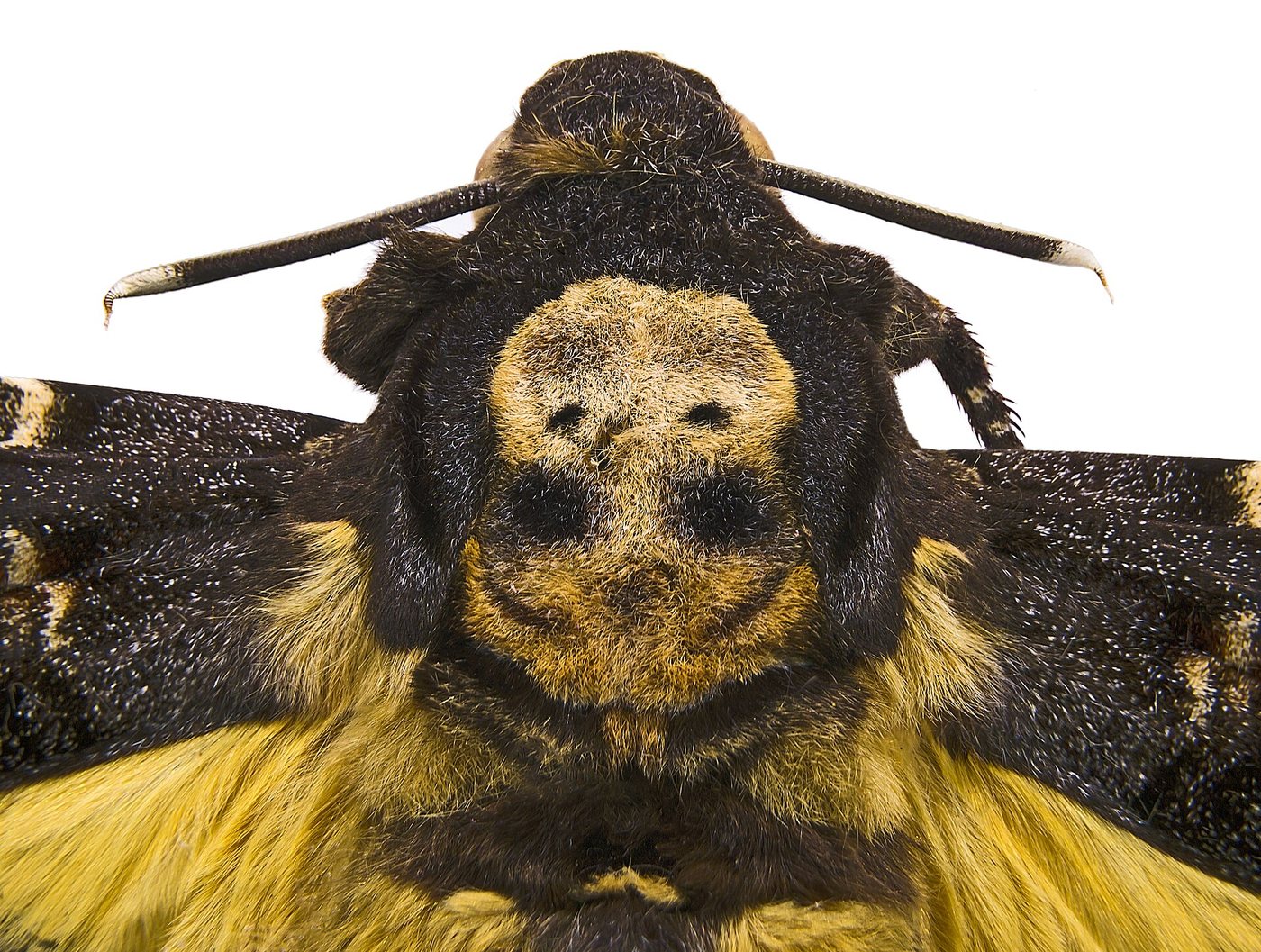
Acherontia atropos is a large hawkmoth with a pale skull-shaped mark on its thorax, a yellow and black banded abdomen, and the ability to squeak at you when handled by pushing air through the pharynx so the epipharynx vibrates. Linnaeus named the species in 1758 for Atropos, the eldest Fate, the one who cuts. Laspeyres later put it in Acherontia, from the underworld river Acheron. Its two relatives are lachesis, the Fate who measures the thread, and styx.
Nothing about that naming was neutral, and neither was the reception. Edward Newman, one of the serious Victorian lepidopterists, wrote in An Illustrated Natural History of British Moths (1869) that the effect of the sound was “to produce the most superstitious feelings among the uneducated, by whom it is always regarded with feelings of awe and terror.” It got blamed for plague, for failed harvests, for deaths in the house. A tale ran that it first came to Britain at the beheading of Charles I; the far duller explanation is that it followed the potato crop, its caterpillar’s food plant.
The context around that sentence is the best part, and nobody quotes it. Newman is in the middle of an argument about how the squeak is produced. Schroeter thought the moth rubbed its proboscis against something on the head. Huber and Rösel dissented and put it down to the thorax grinding against the abdomen. Newman notes, with visible irritation, that the insect had by then become common in Britain and that his excellent living entomologists still had not solved the problem. So the passage everyone cites as proof of Victorian superstition is actually a scientist complaining that his colleagues cannot explain a noise. The awe belonged to other people; he wanted a mechanism. He never got one in his lifetime, and the answer, air driven in and out past the epipharynx, came later.
Newman also records the honey raiding in plain terms, describing the moth as very fond of honey, creeping into the hives in the south of Europe and sucking honey out of the cells with its short thick trunk. That was known in 1869 and it is still the most interesting thing the animal does.
The film that made it famous was late to it. Holman Hunt painted one into The Hireling Shepherd in 1851, where the shepherd is showing it to the girl instead of watching the flock. Poe wrote a story around one in 1846. Buñuel and Dalí used it in 1929. The 1991 poster was the culmination of a long career.
And the real behaviour behind the reputation is better than the reputation. These moths break into honeybee colonies and drink the honey, and the current explanation for why they survive it is chemical: they carry compounds resembling the bees’ own scent, so the colony reads them as belonging there. The skull is on the outside. The actual trick is a forged identity.
The moths that were a season, not an omen
The other end of the moth’s record is nutrition, and it belongs to south-eastern Australia.
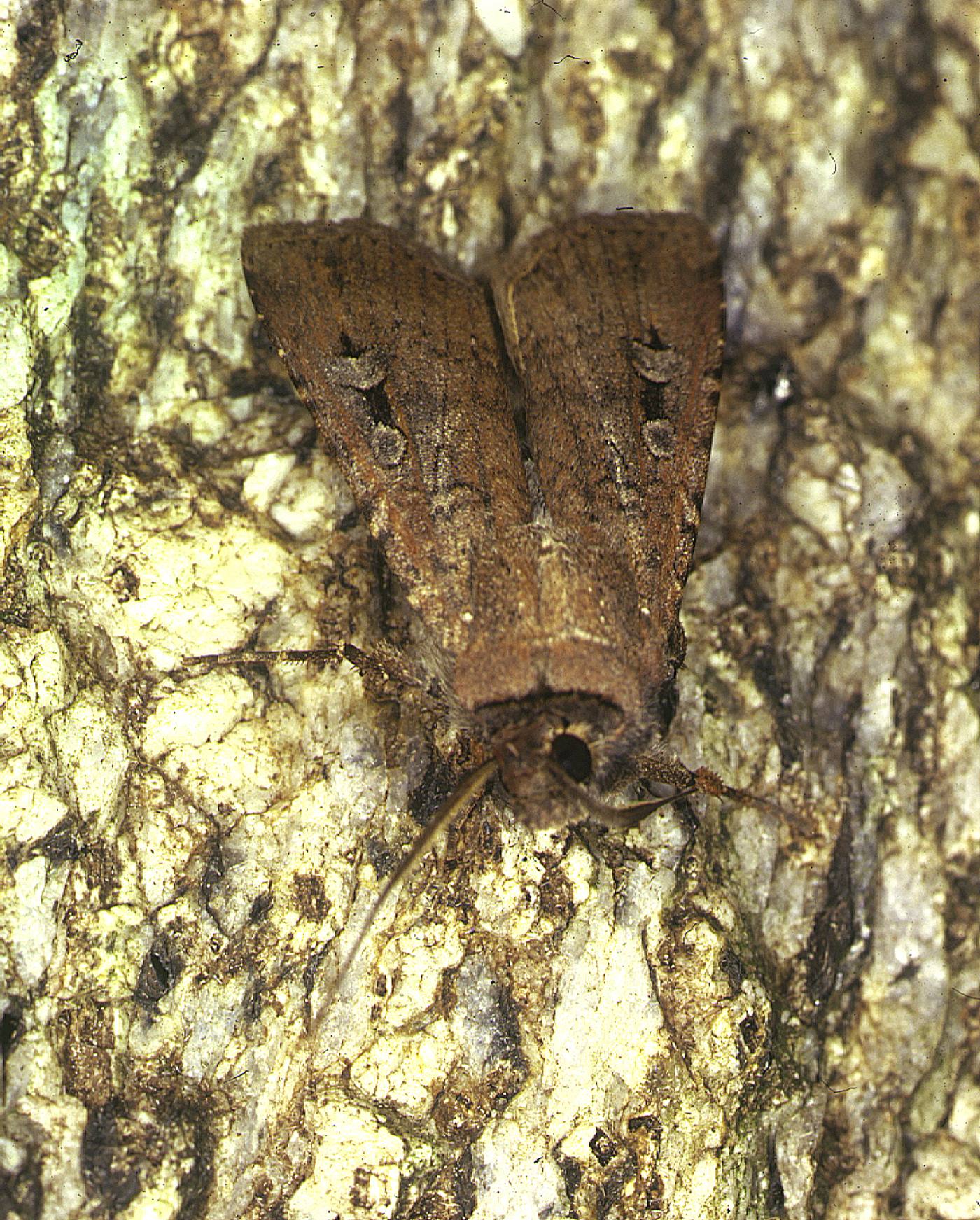
Bogong moths, Agrotis infusa, fly each spring from the plains to the Australian Alps and pack themselves into cool rock crevices in numbers that have to be seen to be credited. They arrive with heavy fat reserves. From the 1830s onward, colonial observers recorded clans and language groups converging on the high country for the season to harvest and cook them, and then, within about thirty years of contact, recorded those gatherings stopping.
For a long time the archaeology could not confirm any of it, because insects leave nothing behind. Then in 2020 a team including Birgitta Stephenson and Bruno David, working with the GunaiKurnai Land and Waters Aboriginal Corporation, published residue analysis of a grindstone from Cloggs Cave, on Krauatungalung country in the southern foothills of the Alps. The residues were ground and cooked bogong moths, roughly two thousand years old, and the paper describes it as the first conclusive archaeological evidence of insect food in Australia.
The GunaiKurnai had said so all along. The excavation was led by GunaiKurnai people. Both of those facts belong in any account of what this moth means.
The one with no mouth
A last piece, for anyone who arrived here because of the green one.
Actias luna, the luna moth, hatches from its cocoon without functional mouthparts. It has vestigial structures where the feeding apparatus should be and it never eats. Everything it will spend as an adult was banked by the caterpillar, and when that runs out, in about a week, it is finished. The whole adult stage is a courtship flight funded in advance.
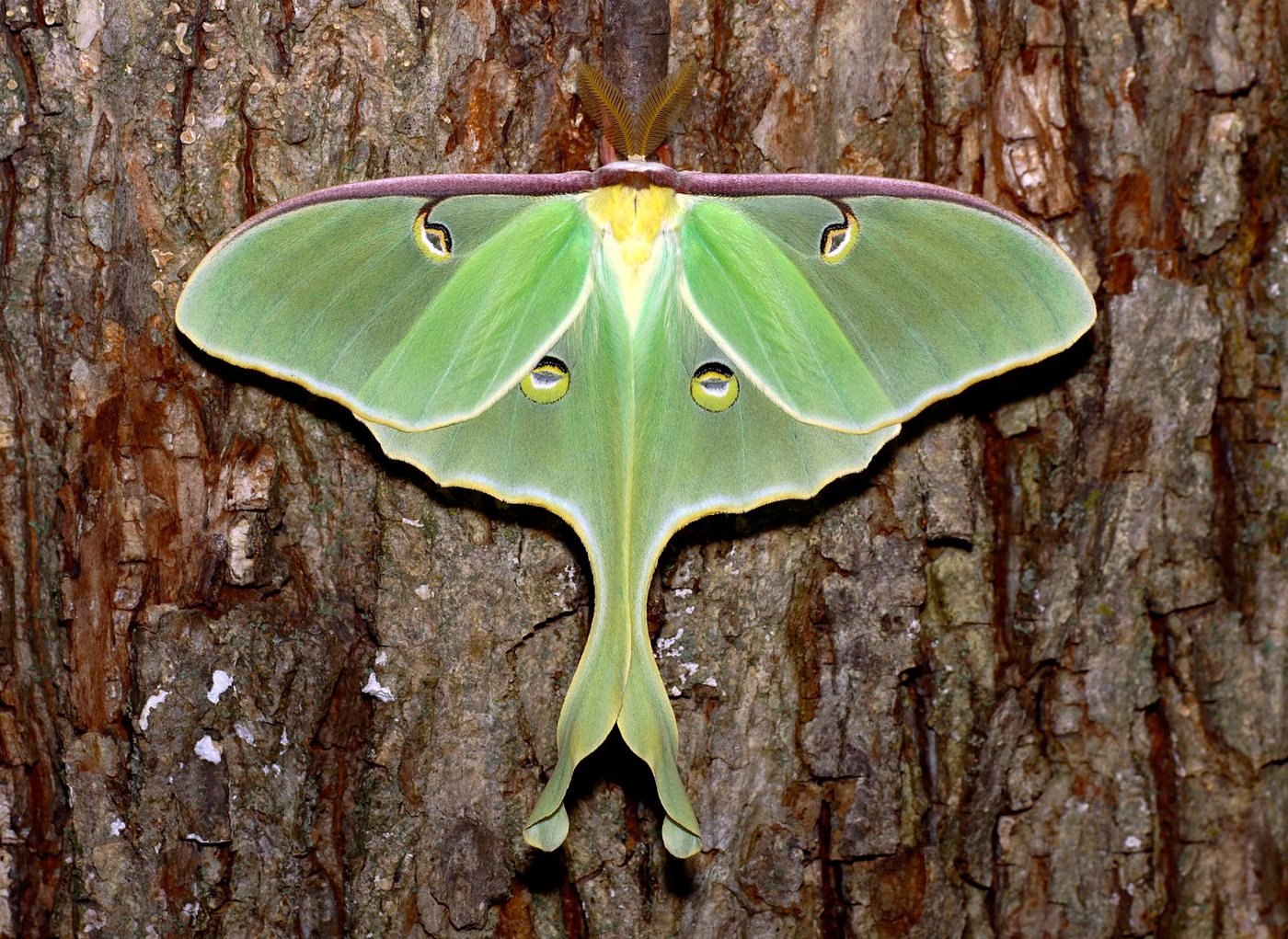
People reach for that as a symbol of brevity, and it works. It is worth noticing that it is the exact inverse of what the metamorphosis story usually implies. In the butterfly reading, the caterpillar is the humble stage and the adult is the arrival. In Actias luna the caterpillar does the entire job of living and the adult is the postscript, beautiful, mouthless, and running on what was saved.
Across traditions
Persian Sufi (Attar's moth and candle)
The oldest serious moth symbolism in the record is Persian and it is about self-annihilation, not transformation. In Farid al-Din Attar's Mantiq al-Tayr (The Conference of the Birds), composed around 1177, moths assemble to learn what the candle is. One flies close and comes back with a report. Another goes nearer and returns scorched, describing the heat. Neither is judged to know anything. The third flies into the flame and is consumed, and the moths' elder says that this one alone learned what the candle was, and can no longer tell.
The point is fanaʾ, the annihilation of the self in the divine, and it is the same argument the poem's frame makes: thirty birds cross seven valleys to find the Simurgh and discover the Simurgh is the thirty of them, si murgh, once nothing of them is left to be separate. The moth is not a symbol of being drawn to danger. It is a symbol of the cost of actually knowing something, as against describing it from a safe distance.
The image travelled. It is in Hafez, and Goethe took it into Selige Sehnsucht in the West-Eastern Divan, where the moth burning becomes stirb und werde, die and become. Most English moth-to-a-flame writing is downstream of that route without knowing it.
- PRIMARY Farid al-Din Attar, Mantiq al-Tayr (The Conference of the Birds) . Persian, composed c. 1177. Darbandi and Davis translation, Penguin Classics, 1984.
- MUSEUM Habiballah of Sava, "The Concourse of the Birds", folio 11r from a Mantiq al-Tayr . Iran, c. 1600. Metropolitan Museum of Art, 63.210.11, Fletcher Fund, 1963.
British and European (the death's-head hawkmoth as omen)
Acherontia atropos carries the most loaded name in entomology. Linnaeus described it in 1758 as Sphinx atropos, after Atropos, the Fate who cuts the thread of a life; Laspeyres moved it to the genus Acherontia in 1809, from Acheron, the underworld river. The moth also has a pale marking on its thorax that reads as a skull, and it can squeak audibly when handled, forcing air through the pharynx so that it vibrates the epipharynx. A large insect that wears a skull and makes a noise at you was never going to be read kindly.
The nineteenth-century record is explicit about the reaction. The entomologist Edward Newman, writing on British moths, described the effect as producing the most superstitious feelings among the uneducated, by whom it is always regarded with feelings of awe and terror. The moth was blamed for plague, crop failure and sudden death, and a legend held that it first appeared in Britain at the execution of Charles I, which the potato's arrival explains better.
It was in the visual record long before it was on a film poster. William Holman Hunt put one in the shepherd's hand in The Hireling Shepherd (1851). Poe built a story around a misidentified one in The Sphinx (1846). Buñuel and Dalí used it in Un Chien Andalou (1929). The 1991 poster for The Silence of the Lambs is the last stop on that line, not the first.
One real behaviour underwrites the dread. These moths raid honeybee colonies and drink the honey, and they get away with it chemically, carrying compounds that resemble the bees' own odour so the colony does not register an intruder. A thick cuticle handles the stings that do land.
- PRIMARY Carl Linnaeus, Systema Naturae, 10th edition . Stockholm, 1758. Original description as Sphinx atropos.
- PRIMARY Edward Newman, An Illustrated Natural History of British Moths . London, 1869, page 5. The awe-and-terror passage appears inside an unresolved argument about how the squeak is produced.
- MUSEUM William Holman Hunt, The Hireling Shepherd . 1851, Manchester Art Gallery. The shepherd is showing the girl a death's-head hawkmoth.
GunaiKurnai and the peoples of the Australian Alps (the bogong moth)
The moth tradition with the most substance behind it is Australian, and it is about food rather than omen. Every spring, bogong moths (Agrotis infusa) migrate from the plains of Queensland, New South Wales and Victoria to the Australian Alps, where they aggregate in enormous numbers in cool rock crevices through the summer. They arrive fat. Colonial writers from the 1830s onward described groups from several clans and language groups gathering in the high country for the season to harvest them.
Those accounts were long the only evidence, because insect remains do not survive in the archaeological record. That changed in 2020. A team led by Birgitta Stephenson and Bruno David, working with the GunaiKurnai Land and Waters Aboriginal Corporation, recovered a grindstone from Cloggs Cave in the southern foothills of the Alps, on the Country of the Krauatungalung clan of the GunaiKurnai. Microscopic residues on it were ground and cooked bogong moths, about two thousand years old. The paper reports it as the first conclusive archaeological evidence of insect food in Australia.
Two things follow that a spirit-animal page ought to say. The excavation was led by GunaiKurnai people rather than done to them, and the oral history came first and turned out to be right. And the moth is now listed as endangered, after the harvest gatherings themselves had already been broken within about thirty years of colonial contact.
- PEER-REVIEWED B. Stephenson, B. David et al. with GunaiKurnai Land and Waters Aboriginal Corporation, 2000 Year-old Bogong moth (Agrotis infusa) Aboriginal food remains, Australia . Scientific Reports 10, 22151, December 2020. Grindstone residues from Cloggs Cave, GunaiKurnai Country.
- PRIMARY GunaiKurnai Land and Waters Aboriginal Corporation, Bogong moth remnant find at Cloggs Cave . The community's own account of the excavation and the find.
Ted Andrews (1993), and why he is not the source this time
On most animals this site covers, the modern reading is Ted Andrews's Animal Speak (Llewellyn, 1993) in a thin disguise. The moth is the exception, and it is worth knowing.
Andrews gives the moth a keynote of sexual activity, fertility and increased relationships, built on the pheromone trails by which a male finds a female over long distances. He adds a folk item: moths persistently circling you mean a letter is coming, with the size of the moth indicating the size of the news. That is a coherent reading and it is nowhere on the internet's moth pages, which run on darkness, death, hidden transformation and helpless attraction to light.
So when a page tells you the moth means transformation through the dark, it is not repeating Andrews, and it is usually not repeating anything else either. It is producing the butterfly page with the lights off.
- REFERENCE Ted Andrews, Animal Speak: The Spiritual & Magical Powers of Creatures Great and Small . Llewellyn, 1993. Keynote for the moth: sexual activity, fertility, increased relationships.
Working with the Moth
If you want a regular practice rather than a one-time read, an oracle deck is the standard tool: you draw a card and sit with whatever animal comes up. Our ranked guide to spirit animal oracle decks compares the field.
Sources
- PRIMARY Farid al-Din Attar, The Conference of the Birds . c. 1177. Darbandi and Davis trans., Penguin Classics, 1984.
- PRIMARY Carl Linnaeus, Systema Naturae, 10th edition . Stockholm, 1758.
- PRIMARY Edward Newman, An Illustrated Natural History of British Moths . London, 1869, page 5.
- PEER-REVIEWED S. T. Fabian, Y. Sondhi, P. E. Allen, J. C. Theobald and H. Lin, Why flying insects gather at artificial light . Nature Communications 15, 689, 30 January 2024. Insects tilt the dorsum toward light rather than steering into it.
- PEER-REVIEWED B. Stephenson, B. David et al., 2000 Year-old Bogong moth (Agrotis infusa) Aboriginal food remains, Australia . Scientific Reports 10, 22151, 2020.
- MUSEUM Habiballah of Sava, The Concourse of the Birds, Metropolitan Museum of Art 63.210.11 . Iran, c. 1600.
- REFERENCE Ted Andrews, Animal Speak . Llewellyn, 1993.