Spirit Animal
Vulture Spirit Animal
Vulture spirit animal meaning: purification, rebirth and protection. Traced from the modern purification-and-rebirth reading back through Ted Andrews's Animal Speak to Egypt's Nekhbet and Mut, Zoroastrian dakhma excarnation, Tibetan sky burial (jhator), and the Aztec vulture day-sign Cozcacuauhtli.
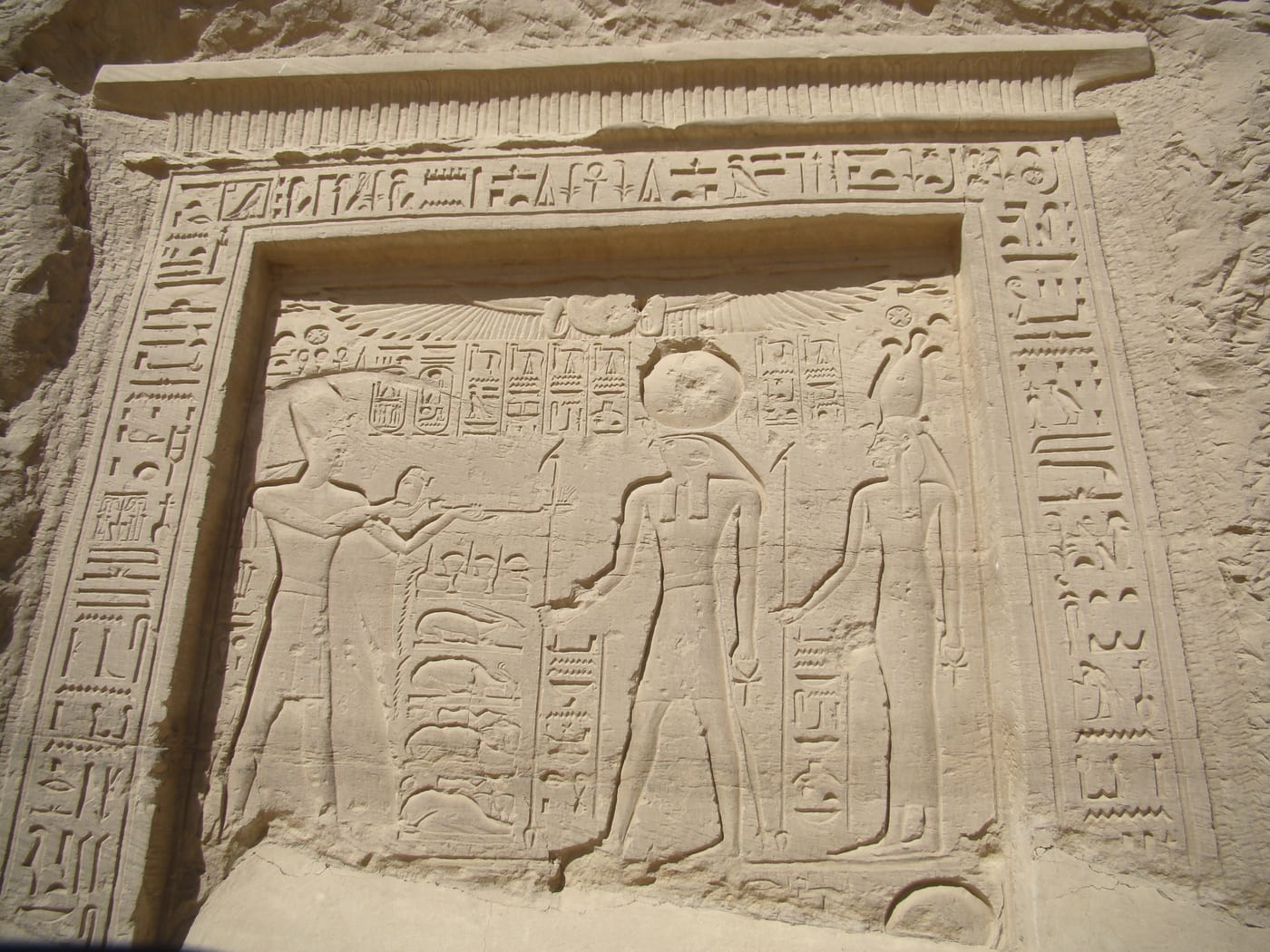
In modern American 'spirit animal' usage, the vulture signals purification, death-and-rebirth, and a patient, resourceful new vision, a reading that traces most directly to Ted Andrews's Animal Speak (Llewellyn, 1993). The older record is far richer: Egypt's Nekhbet and Mut made the vulture a protector and mother-goddess; Zoroastrian dakhma and Tibetan jhator gave the bird an entire architecture of respectful death; and the Aztec day-sign Cozcacuauhtli read the vulture as decay turned into wisdom.
An Egyptian queen wore one on her head. A Zoroastrian family in Yazd built an entire tower for one. A Tibetan monastery calls the whole ceremony “giving alms to the birds.” An Aztec calendar priest named an entire thirteen-day span after one. None of these people thought the vulture was disgusting. They thought it was doing something none of them could do themselves: taking what death left behind and turning it into nothing left to fear.
The modern “vulture spirit animal” reading gets close to that, purification, rebirth, new vision, but it arrives there from a single 1993 paperback, not from the traditions that actually spent centuries thinking about the bird.
A bird four civilizations took seriously, on purpose
Start with what the vulture actually does. It doesn’t kill. It cleans up after killing has already happened, and it does the job so efficiently and so safely (a vulture’s gut can neutralize anthrax, botulism, and cholera bacteria that would kill almost anything else that touched the same carcass) that societies which watched it closely came to depend on it rather than recoil from it. That dependency, not squeamishness, is the actual through-line in the record.

Egypt made the vulture a goddess twice over, once as Nekhbet, protector of the crown, once as Mut, mother of the Theban triad. Persia and the Zoroastrian communities that still practice excarnation today built the bird an entire architecture, the dakhma, so that a corpse could return to the world without touching earth, fire, or water. Tibet built a whole funerary theology around the same act under a different name, framing the vulture’s meal as the deceased’s last act of generosity rather than an indignity.
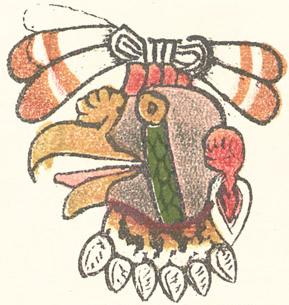
Then there is Mesoamerica, which reached the same conclusion by a completely separate route. The Aztec day-sign Cozcacuauhtli didn’t treat the vulture as an omen of death at all. It treated the bird as a symbol of old age and hard-won wisdom, the specific wisdom of something that has already survived decomposition once.
Four traditions, four unconnected reasons to respect the same bird. None of them required a paperback to get there.
What’s actually new in 1993
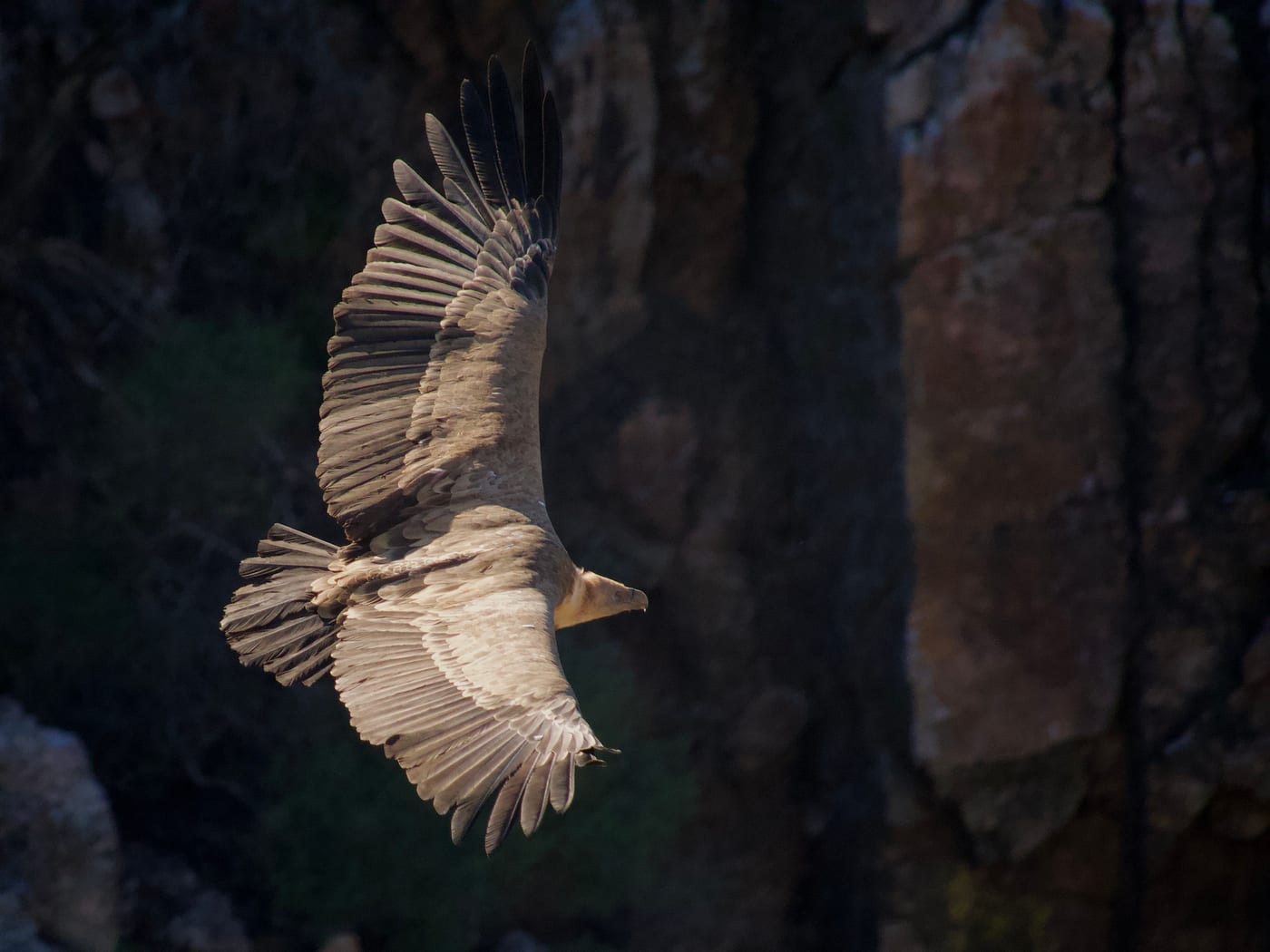
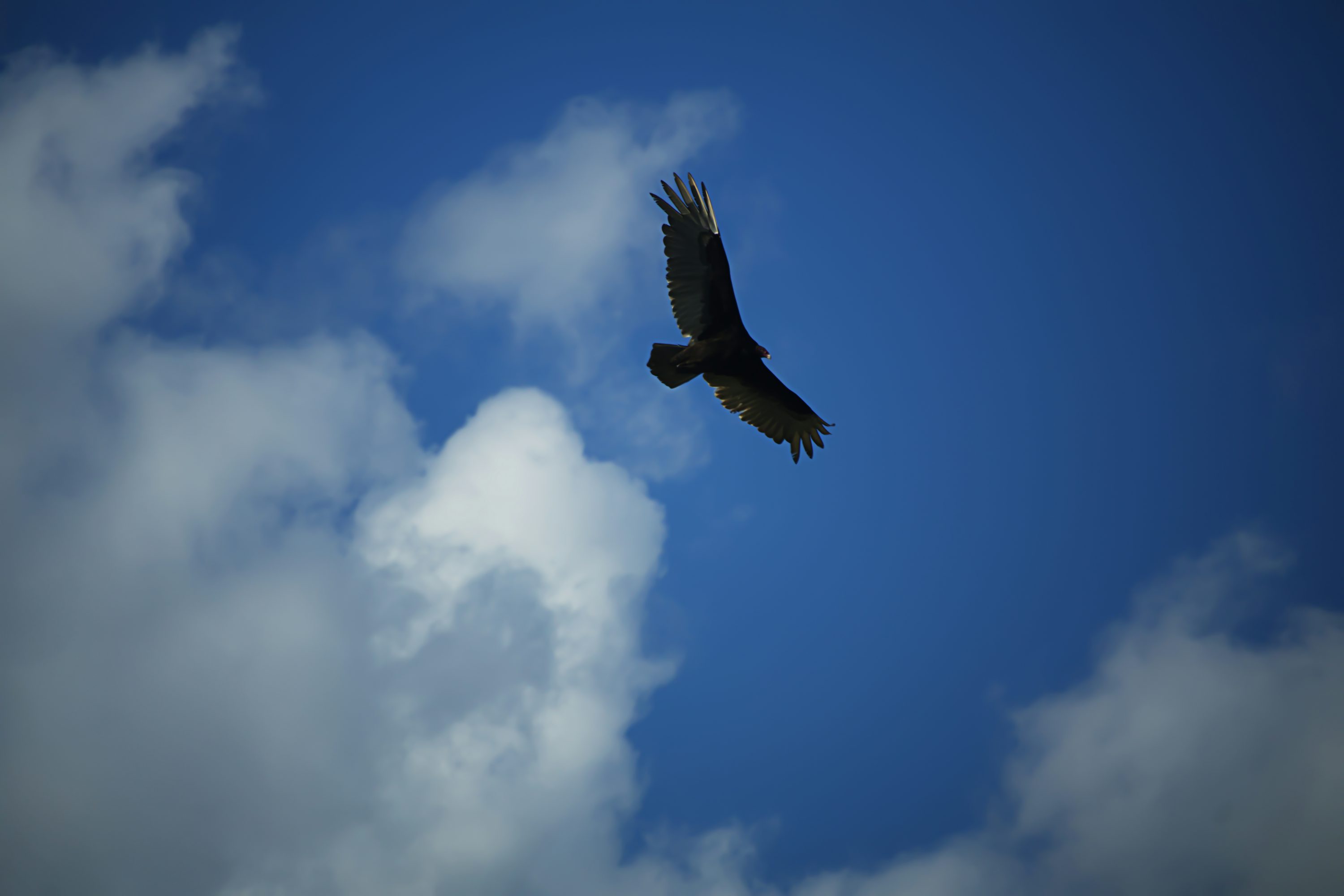
Ted Andrews didn’t invent respect for the vulture. He compressed four traditions’ worth of it in Animal Speak into one portable keynote, “Purification, Death and Rebirth, New Vision,” and added an observation of his own: a vulture can ride a thermal for hours without flapping once, which he read as a lesson in rising above the material world instead of fighting through it. That’s a real behavior and a fair extension of it. It just isn’t Nekhbet, and it isn’t jhator, and calling it either one flattens four centuries-deep traditions into a single greeting-card line.
Know which reading you’re actually reaching for. The Andrews synthesis is a fine everyday shorthand. The traditions underneath it are sharper, older, and each answerable to an actual named source.
Across traditions
Ancient Egyptian (Nekhbet and Mut)
Nekhbet was the patron goddess of Nekheb, the modern El Kab, and by the unification of Egypt she stood alongside the cobra goddess Wadjet of the Delta city Buto as one of the "Two Ladies" who protected the king. Richard Wilkinson's The Complete Gods and Goddesses of Ancient Egypt (Thames & Hudson, 2003, pp. 213-214) identifies the species behind her iconography as the griffon vulture, following Alan Gardiner's reading, and describes her standard pose: hovering above the royal image, wings spread, talons closed around the shen ring of encircling protection. She is invoked repeatedly through the Pyramid Texts, in R.O. Faulkner's standard 1969 translation, as a maternal figure who shields the king's passage into the afterlife, and she carries the epithet ḥḏt Nḫn, "the White One of Nekhen," tying her directly to the White Crown of Upper Egypt.
The vulture headdress belonged just as firmly to Mut, whose name is the Egyptian word for "mother" and whose main temple stood at Karnak. Classical writers who tried to explain Egyptian symbol-lore repeated a specific, mistaken belief about why: that vultures had no males at all. Horapollo's Hieroglyphica (5th century CE), Book I.11, in Alexander Turner Cory's 1840 English translation, states that Egyptians used the vulture to mean "a mother," "because in this race of creatures there is no male," and describes a female vulture conceiving by opening herself to the north wind for five days. It is bad ornithology and functioning theology at once. The belief made the vulture a natural emblem of divine, self-sufficient motherhood, which is exactly the role Mut and Nekhbet both hold.
- PEER-REVIEWED Richard H. Wilkinson, The Complete Gods and Goddesses of Ancient Egypt . Thames & Hudson, 2003, pp. 213-214.
- EDITION R.O. Faulkner, The Ancient Egyptian Pyramid Texts . Oxford University Press, 1969.
- REFERENCE Alan Gardiner, Egyptian Grammar: Being an Introduction to the Study of Hieroglyphs . 3rd ed., Griffith Institute, 1957. Sign G1.
- PRIMARY Horapollo, Hieroglyphica, Book I.11 . Alexander Turner Cory trans., London, 1840.
Zoroastrian (Persia)
Herodotus is the earliest outside witness. Writing around 440 BCE, he reports in the Histories 1.140 that Persian custom, one the Magi practiced, in his words, "beyond doubt, without any concealment," left a dead man's body to be torn by a bird of prey or a dog before it went into the ground. That single passage is the earliest surviving reference to what became, over a millennium later, an entire architecture: the dakhma, a raised platform where corpses were laid out for excarnation rather than buried, cremated, or given to water.
Mary Boyce's Zoroastrians: Their Religious Beliefs and Practices (Routledge & Kegan Paul, 1979) sets out the doctrine behind it: earth, fire, and water are each sacred in Zoroastrianism, and a decaying corpse would pollute any of them, so exposure to vultures and other carrion birds kept the dead from contaminating the living world. "Tower of Silence" is a 19th-century British colonial coinage, not a translation of dakhma; the towers at Yazd and on Mumbai's Malabar Hill are the best-documented survivors, though active use in Mumbai has declined sharply since the 1990s, when the veterinary drug diclofenac collapsed South Asia's vulture population by over 95 percent, a mechanism confirmed by J. Lindsay Oaks and colleagues in Nature in 2004.
- PRIMARY Herodotus, Histories 1.140 . A.D. Godley trans., Loeb Classical Library, 1920.
- PEER-REVIEWED Mary Boyce, Zoroastrians: Their Religious Beliefs and Practices . Routledge & Kegan Paul, 1979.
- PEER-REVIEWED J. Lindsay Oaks et al., Diclofenac residues as the cause of vulture population decline in Pakistan . Nature 427, 2004, pp. 630-633.
Tibetan Buddhist (jhator)
Jhator, literally "giving alms to the birds," is the everyday Tibetan name for what English calls sky burial: a body cut and offered on an exposed platform to Himalayan griffon vultures, in regions where the ground is too rocky or frozen for burial and fuel too scarce for cremation. R. MaMing and colleagues, publishing in Vulture News in 2018, document the practice's ecology across the Qinghai-Tibet Plateau and its dependence on functioning wild vulture populations, the same fragile dependency that closed most of Mumbai's towers.
The Buddhist framing is generosity, not disposal. Offering the body to sustain other living beings is read as a final act of dana, and the whole ritual doubles as a lesson on impermanence for the mourners who watch it. That framing runs directly opposite the pop-culture instinct to read any vulture as an omen of doom. In jhator, the vulture is closer to a psychopomp performing a kindness than a scavenger performing a warning.
- PEER-REVIEWED R. MaMing, L. Lee, X. Yang, and P. Buzzard, Vultures and sky burials on the Qinghai-Tibet Plateau . Vulture News 71(1), 2018, pp. 22-35.
Mesoamerican (Aztec/Mexica)
Cozcacuauhtli is the sixteenth of the twenty day-signs in the tonalpohualli, the 260-day sacred count kept across central Mexico before the conquest. The name combines cōzcatl (a jewel or necklace) and cuāuhtli (eagle or great bird of prey); most translators render it simply "vulture," and its likeliest referent among Mesoamerican naturalists is the king vulture, whose bare orange-and-black head shows up clearly wherever the sign is painted. It appears among the day-glyphs of the Codex Borgia and the Codex Magliabechiano, both pre-conquest or early colonial pictorial manuscripts.
Elizabeth Hill Boone's Cycles of Time and Meaning in the Mexican Books of Fate (University of Texas Press, 2007), the standard modern study of these divinatory almanacs, reads the Vulture trecena, the thirteen-day span Cozcacuauhtli opens, through associations of old age, accumulated wisdom, and a long life that has already outlasted decay once. Sources differ on exactly which deity presides over the day itself, and that disagreement is worth naming rather than papering over. What isn't disputed is the underlying logic: a bird that lives by consuming what has already died reads, in this tradition as in Egypt's and Tibet's, as an emblem of decomposition turning back into continuation.
- PEER-REVIEWED Elizabeth Hill Boone, Cycles of Time and Meaning in the Mexican Books of Fate . University of Texas Press, 2007.
- PRIMARY Codex Borgia . Pre-conquest pictorial manuscript, Vatican Library.
- PRIMARY Codex Magliabechiano . Early colonial pictorial manuscript, c. 1529-1553, Biblioteca Nazionale Centrale, Florence.
Ted Andrews (1993, the pop-concept's source)
The modern "vulture spirit animal" reading, purification, death-and-rebirth, patient new vision, is most directly Ted Andrews's Animal Speak (Llewellyn, September 1993). Andrews's keynote for the vulture is "Purification, Death and Rebirth, New Vision," and he leans on the bird's real soaring behavior (a vulture can ride thermals for hours without a single wingbeat) to argue for what he calls a "levitation" reading: rising above the material world rather than staying grounded in it. It is a synthesis, not an inherited doctrine, built from natural history plus a loose gesture toward the older excarnation traditions above without naming any of them directly. Most pages that call the vulture a sign of transformation are repeating Andrews, whether they credit him or not.
- REFERENCE Ted Andrews, Animal Speak: The Spiritual & Magical Powers of Creatures Great and Small . Llewellyn, September 1993.
Working with the Vulture
If you want a regular practice rather than a one-time read, an oracle deck is the standard tool: you draw a card and sit with whatever animal comes up. Our ranked guide to spirit animal oracle decks compares the field.
Sources
- PEER-REVIEWED Richard H. Wilkinson, The Complete Gods and Goddesses of Ancient Egypt . Thames & Hudson, 2003, pp. 213-214.
- EDITION R.O. Faulkner, The Ancient Egyptian Pyramid Texts . Oxford University Press, 1969.
- REFERENCE Alan Gardiner, Egyptian Grammar . 3rd ed., Griffith Institute, 1957. Sign G1.
- PRIMARY Horapollo, Hieroglyphica, Book I.11 . Alexander Turner Cory trans., London, 1840.
- PRIMARY Herodotus, Histories 1.140 . A.D. Godley trans., Loeb Classical Library, 1920.
- PEER-REVIEWED Mary Boyce, Zoroastrians: Their Religious Beliefs and Practices . Routledge & Kegan Paul, 1979.
- PEER-REVIEWED J. Lindsay Oaks et al., Diclofenac residues as the cause of vulture population decline in Pakistan . Nature 427, 2004, pp. 630-633.
- PEER-REVIEWED R. MaMing, L. Lee, X. Yang, and P. Buzzard, Vultures and sky burials on the Qinghai-Tibet Plateau . Vulture News 71(1), 2018, pp. 22-35.
- PEER-REVIEWED Elizabeth Hill Boone, Cycles of Time and Meaning in the Mexican Books of Fate . University of Texas Press, 2007.
- PRIMARY Codex Magliabechiano . Early colonial pictorial manuscript, c. 1529-1553, Biblioteca Nazionale Centrale, Florence.
- REFERENCE Ted Andrews, Animal Speak . Llewellyn, September 1993.