Spirit Animal
Cougar Spirit Animal
Cougar spirit animal meaning: power, decisiveness and solitude. Traced from the modern power-and-decisiveness reading back through Ted Andrews's Animal Speak to the Cherokee night-vision story recorded by James Mooney, the contested puma plan of Inca Cusco, and the naming history that gave one cat over forty English names.
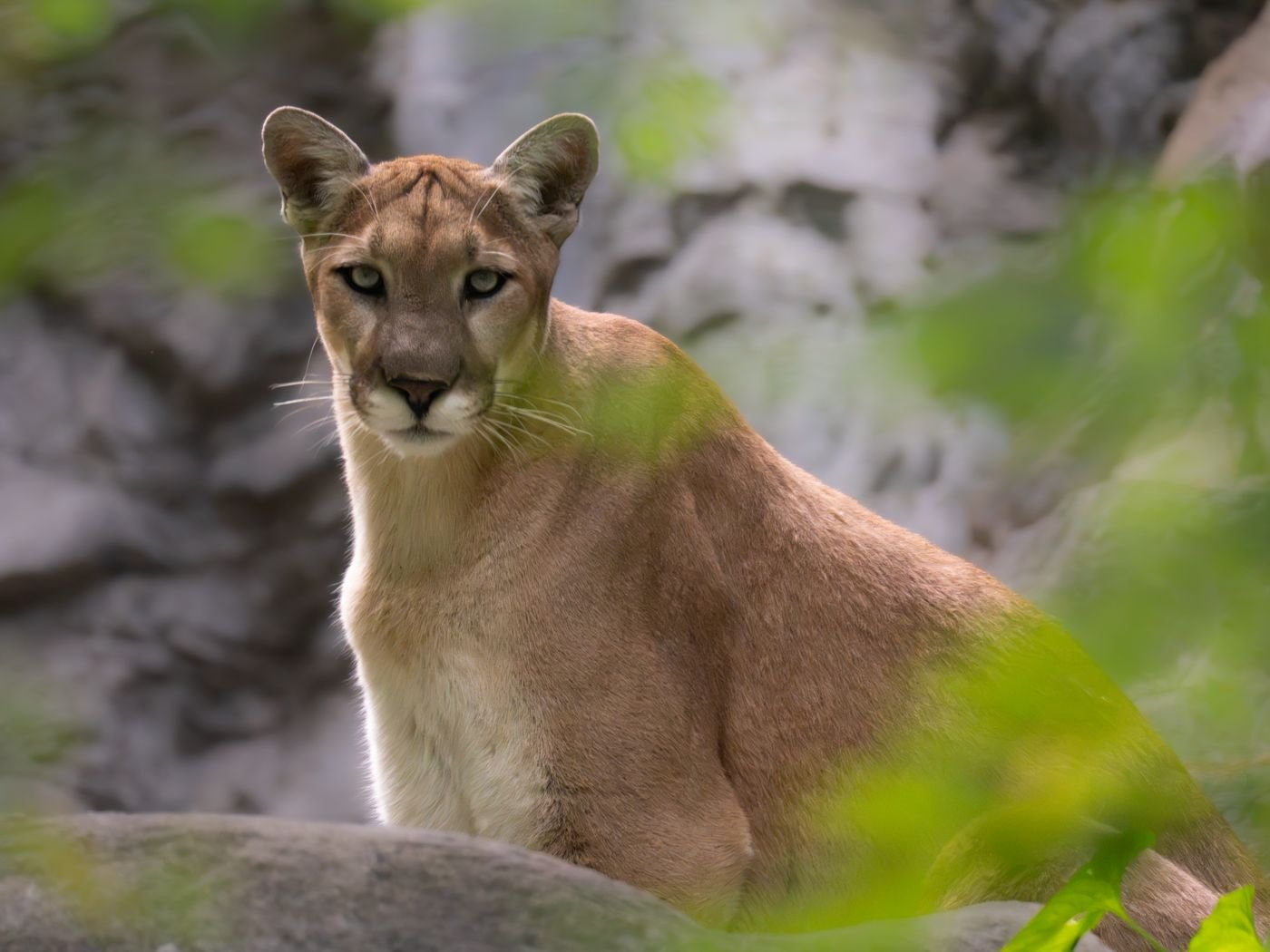
In current spirit-animal writing the cougar means coming into your own power, decisiveness and leadership, a reading whose keynote is Ted Andrews's Animal Speak (Llewellyn, 1993). The older record is thinner than most pages admit. Puma concolor holds the Guinness record for the mammal with the most names, over forty in English, and that naming history is the better story.
Start with the name, because the name is the whole problem.
Cougar, puma, mountain lion, panther, painter, catamount, screamer, ghost cat, mountain screamer, deer tiger, red tiger, Mexican lion. One species. Guinness World Records keeps an entry for the mammal with the most names, and this is the holder: over forty in English alone. No other mammal is close.
That matters for a symbolism page more than it might seem. A symbol usually accretes around a stable name. This animal never had one. Every group that met it reached for a comparison it already had, called it a false deer or a mountain cat or a kind of lion, and moved on. The meanings that got attached are correspondingly scattered, and a lot of what gets published about the cougar’s spiritual significance is filling that gap with invention.
Forty names and not one of them a description
Follow the words and you get a small map of contact.
Cougar comes into English in 1774, through French, from a word Portuguese speakers picked up in Brazil, probably Tupi, possibly meaning something close to false deer. Puma arrives in 1777 from Spanish, from Quechua. Those two names travel from opposite ends of South America and end up describing the same animal in the same language within three years of each other.
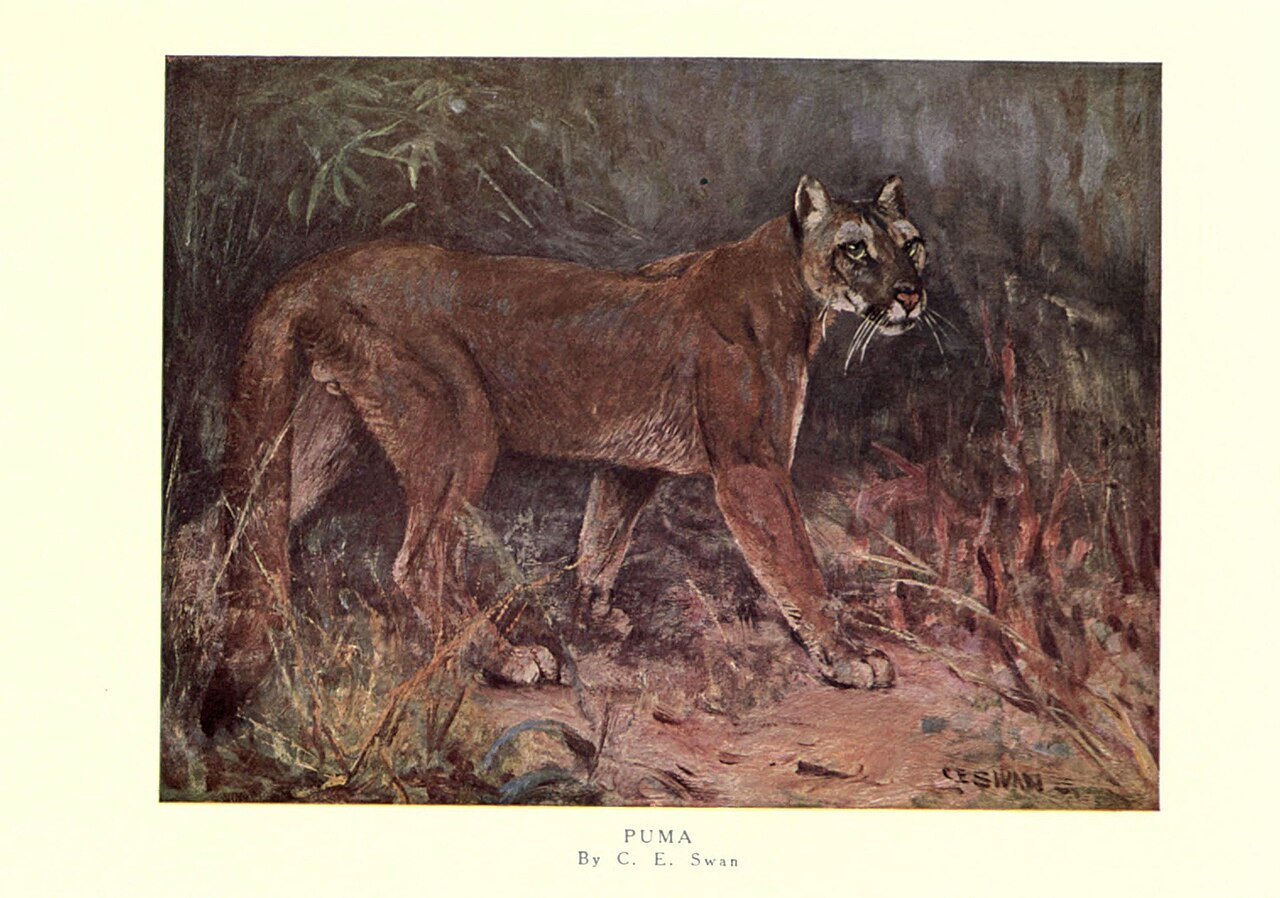
Catamount is older than either, a squeeze of cat of the mountain, in English by 1664. Panther is older still and far vaguer: a Greek and Latin word for a spotted cat, in English since the thirteenth century, applied here by settlers who needed a word and grabbed the nearest grand one. Painter is that word after a few generations of southern American speech. Mountain lion is the youngest of the common ones, first written down in 1858, and it gets two things wrong in three syllables. The animal lives from the Yukon to Patagonia, in swamp and desert and rainforest as readily as in mountains, and it cannot roar. It has the wrong hyoid apparatus for it. What it makes instead is a scream, which is where several of the other names came from.
Only the binomial declines to interpret. Concolor, one colour. That is the coat, and nothing else.
The scream is worth a sentence of its own, because several of those names come out of it and because people who have heard one tend to lead with it. A cougar cannot roar. Roaring in the big cats depends on a particular hyoid arrangement that Panthera has and Puma does not. What this animal produces instead is a high, carrying wail that a good many nineteenth-century American settlers described as a woman screaming, and the folklore of the death omen that later attached to the sound is at least sitting on top of something real. It is a genuinely unpleasant noise to hear in the dark.
The Cusco puma is a genuine argument, not a fact
Almost every page that reaches for ancient significance lands on the same claim: that the Inca laid out Cusco in the shape of a puma, with Sacsayhuamán as its head.
There is real scholarship behind it. John Rowe made the case in Ñawpa Pacha in 1967, reading two sixteenth-century Spanish chroniclers, Juan de Betanzos and Pedro Sarmiento de Gamboa, who both compare the city to a feline. Rowe was a serious Andeanist and the argument is not frivolous.
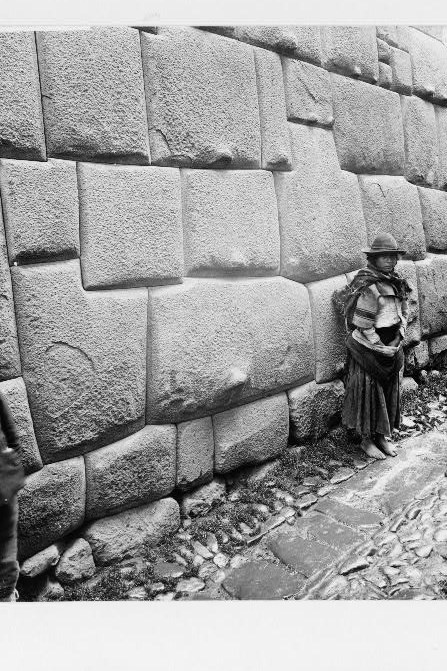
But in 1993 Monica Barnes and Daniel Slive published a direct challenge in Revista Andina, and it is the piece nobody quotes. Their point is that sixteenth-century Europeans were in the habit of drawing maps in which a country or a city takes the outline of a person, an animal or a household object. Betanzos and Sarmiento, on this reading, were not recording an Inca plan. They were applying a European descriptive convention. Nobody in that century saw Cusco from above.
I have no way to settle it here and I am not going to pretend otherwise. What can be said flatly is that puma is a Quechua word, that the animal was significant in Andean thought, and that the city-plan claim is a live dispute rather than a piece of settled ancient wisdom. A page that asserts it in one confident sentence is not being careless about a detail. It is skipping the entire argument.
The one North American story with a name on it
Search the phrase “Native American cougar meaning” and you will get paragraphs about the Apache, the Hualapai, the Ojibwe and the Cherokee, none of them citing a collector, a narrator, a date or a book. Some of that may rest on genuine ethnography. I could not find the sources, so this page will not repeat it.
What can be followed is the Cherokee account James Mooney printed as the opening item of Myths of the Cherokee, published in 1900 as part of the Nineteenth Annual Report of the Bureau of American Ethnology. At their making, the animals and plants are told to keep watch and stay awake seven nights. Most fail. By the seventh night only the owl, the panther and one or two others are still awake, and those few are given the power to see and move in the dark, and to hunt the animals that have to sleep.
Read that next to “coming into your own power” and the difference is not decoration. The Cherokee story is about an ability earned by endurance in a specific test, and it explains something concrete: why the panther and the owl belong to the same category of night-hunting creature. It is an argument about the order of the world, not about the reader’s career.
Twenty-odd cats in a swamp, and eight from Texas
The best-documented thing that ever happened to this species is not symbolic at all.
By the 1990s the Florida population, then classed as the subspecies Puma concolor coryi, was down to a few dozen animals in the southern swamps and in visible trouble. Inbreeding showed up in the bodies: kinked tails, heart defects, undescended testicles, poor sperm quality. The population was heading for the exit.
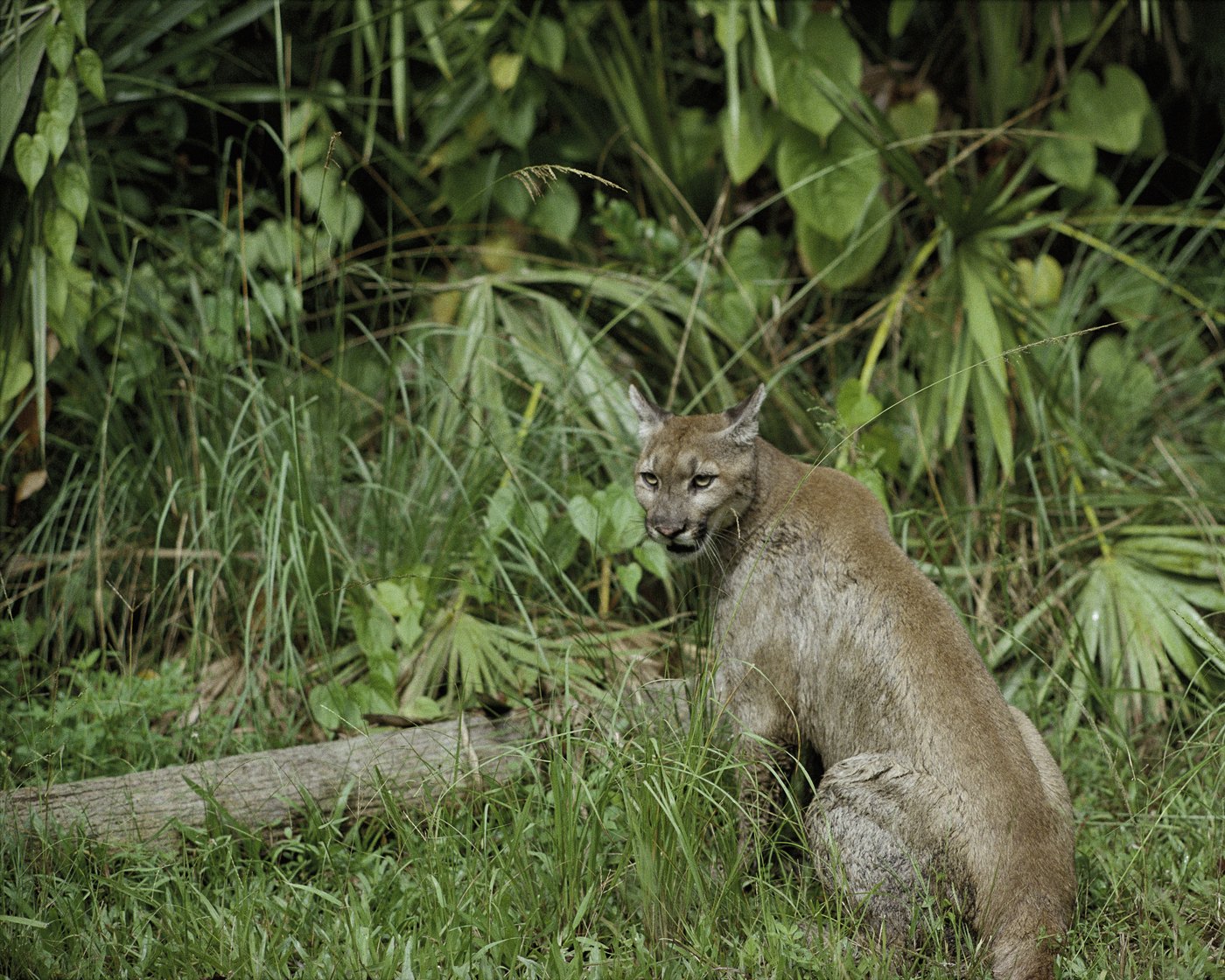
In 1995 managers translocated eight female pumas from Texas and let them breed into the remnant group. Warren Johnson and colleagues published the outcome in Science in 2010: panther numbers roughly tripled, genetic heterozygosity doubled, survival and fitness measures improved, and the inbreeding markers declined sharply. The Florida Fish and Wildlife Conservation Commission now puts the population at roughly 120 to 230 adults. It remains the textbook case of genetic rescue in a wild vertebrate, and it happened because eight cats were put in a truck.
Set that beside the taxonomy and something quietly deflating emerges. Since 2017 the Cat Classification Task Force has recognised only two subspecies across the entire Americas, and Florida’s animals fall inside the North and Central American one. The thing that saved the Florida panther was, in part, the fact that it was never as separate as its name suggested.
The counter-case sits a thousand miles north. On 23 January 2018 the US Fish and Wildlife Service announced that it was removing the eastern cougar from the federal endangered species list, effective the following month, on the grounds that the animal was extinct. The last records the Service accepts are from Maine in 1938 and New Brunswick in 1932. Its own announcement calls the listing a lingering anomaly, since the subspecies had probably gone before the Endangered Species Act existed to protect it. Between 2011 and 2015 no state or province produced evidence of a population, and hundreds of public sighting reports produced nothing either.
So within a single species you get both endings. Eight cats in a truck in one place; a name struck off a list in the other, for an animal that had been gone for eighty years and that current taxonomy would not have counted as separate anyway. Neither outcome had anything to do with what the cougar means.
Where “coming into your own power” comes from
Andrews, 1993. That is the keynote, in those words, in Animal Speak, and it is why so many pages open with a paragraph about stepping into leadership. His framing is about decision: a cougar showing up means a choice is waiting and should be made fast and hard, because the animal leaps at its opportunities.
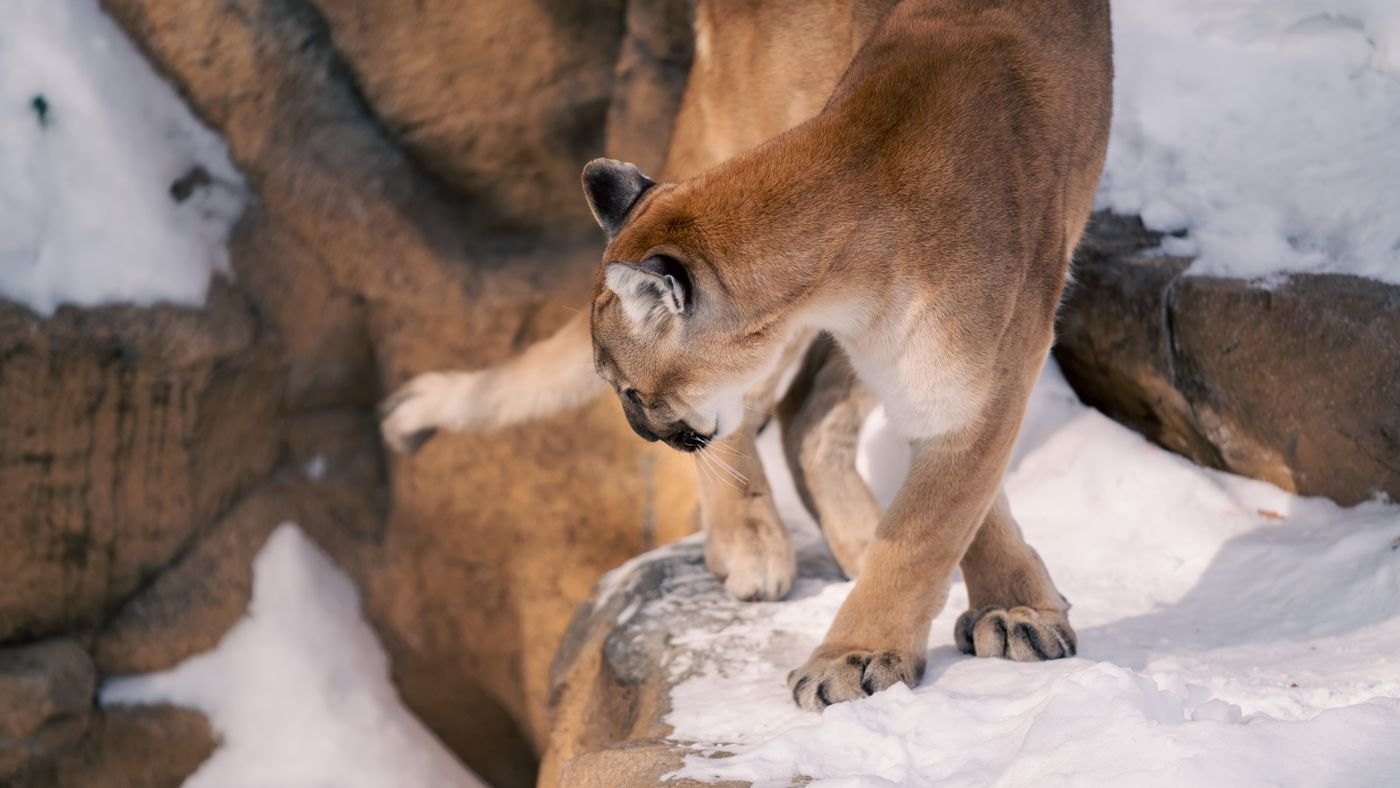
The reading is defensible on the animal’s own terms. A cougar does not run prey down over distance the way wolves do. It stalks, closes, and commits once, from cover, usually onto the neck or shoulders of something considerably larger. A hunt is one decision executed at full effort, and a failed charge is simply over.
So the keynote is not made up. It was written by a specific person in a specific book in September 1993, and everything downstream is a copy. What was added afterwards, the vague reverence, the ancient peoples with no names attached, the city plan stated as fact, is the part worth being suspicious of. The animal has forty names because nobody could agree on what to call it. It would be strange if everyone agreed on what it means.
Across traditions
Cherokee (as recorded by James Mooney, 1900)
The one widely cited North American story about this animal that can be followed to a named source is the Cherokee account of how certain creatures got their night sight. In the origin narrative James Mooney published as the first item in Myths of the Cherokee, the animals and plants are told at their making to keep watch and stay awake for seven nights. By the seventh night, only the owl, the panther and one or two others are still awake, and to those the power is given to see and move in the dark and to prey on the animals that must sleep.
Mooney collected in the 1880s and 1890s among the Eastern Band in North Carolina and later in the Cherokee Nation in Indian Territory, and his volume appeared as part one of the Nineteenth Annual Report of the Bureau of American Ethnology. The panther in that story is not a symbol of personal empowerment. It is one of a small handful of beings that passed an endurance test and were paid in a specific ability, and the same story is the reason the owl and the panther are grouped together in Cherokee thought at all.
Beyond this, a great deal of what circulates online is unsourced. Pages routinely assert that the Apache and Hualapai read the cougar's cry as a death omen, that Algonquian and Ojibwe peoples placed it in the underworld, and that the Cherokee held it sacred, all without naming a collector, a narrator, a date or a text. Those claims may well rest on real ethnography. This page does not repeat them as fact, because the sources were not found.
- PRIMARY James Mooney, Myths of the Cherokee . Nineteenth Annual Report of the Bureau of American Ethnology, Part 1. Government Printing Office, Washington, 1900. Story 1, How the World Was Made.
- ARCHIVE Myths of the Cherokee, full text . Digitised copy of the 1900 report.
Inca Cusco (a city plan that is genuinely disputed)
The claim that Inca Cusco was laid out in the shape of a puma, with the fortress of Sacsayhuamán as its head, is repeated on nearly every travel page about the city and on most cougar-symbolism pages. It has a real scholarly source. John Howland Rowe argued for the puma outline in What Kind of a Settlement Was Inca Cuzco?, published in Ñawpa Pacha in 1967, working from two sixteenth-century Spanish chroniclers, Juan de Betanzos and Pedro Sarmiento de Gamboa, who compared the city to a feline.
It also has a serious challenge that almost nobody repeats. In 1993 Monica Barnes and Daniel Slive published El puma de Cuzco: ¿plano de la ciudad Inga o noción europea? in Revista Andina, arguing that Betanzos and Sarmiento may have been working inside a European mapping convention of the period, in which countries and cities were drawn in the shape of people, animals and household objects. On that reading the puma is a Spanish habit of description applied to an Inca city, not an Inca design recovered by Spaniards. Nobody in the sixteenth century saw Cusco from the air.
What is not in dispute is that the puma mattered in Andean thought, that puma is a Quechua word, and that it entered English through Spanish in 1777. The specific claim about the city plan is contested, and a page that states it flatly is skipping thirty years of argument.
- PEER-REVIEWED John H. Rowe, What Kind of a Settlement Was Inca Cuzco? . Ñawpa Pacha 5, no. 1 (1967), pp. 59-76.
- PEER-REVIEWED Monica Barnes and Daniel Slive, El puma de Cuzco: ¿plano de la ciudad Inga o noción europea? . Revista Andina, año 11, no. 1 (1993), pp. 79-102.
- PRIMARY Juan de Betanzos, Suma y narración de los Incas (1551) and Pedro Sarmiento de Gamboa, Historia de los Incas (1572) . The two chronicle sources on which the puma reading rests.
The naming record (Tupi, Quechua, and a Linnaean binomial)
This animal carries more common names than any other mammal, and Guinness World Records holds the entry: the puma has over forty in English alone. The names arrive from different directions and none of them describes the same thing.
Cougar reaches English in 1774 by way of French couguar, Buffon's adaptation of a word Portuguese speakers had picked up in Brazil as çuçuarana, probably from Tupi. Puma arrives three years later, in 1777, from Spanish, from Quechua. Catamount is a contraction of cat of the mountain and is in English use by 1664. Panther is much older and much looser, a Greek and Latin word for a spotted cat that was in English by the thirteenth century and got attached to this animal because European settlers needed a word. Painter is the southern American pronunciation of it. Mountain lion is first recorded in writing in 1858 and is doubly wrong, since the animal is not confined to mountains and cannot roar.
The scientific name is the only one that made no interpretive claim at all. The binomial authority is recorded as Linnaeus in 1771, and concolor means one colour. It is a note about the coat.
- REFERENCE Guinness World Records, mammal with the most names . The puma, Puma concolor, with over forty names in English alone.
- REFERENCE Online Etymology Dictionary, cougar . 1774, from French couguar, from a Portuguese rendering of a Tupi word.
- REFERENCE Online Etymology Dictionary, puma . 1777, from Spanish puma, from Quechua.
Ted Andrews (1993, the pop-concept's source)
The modern reading is Animal Speak (Llewellyn, 1993), where the keynote for the cougar is coming into your own power. Andrews frames the animal around decision: if a cougar has shown up, a choice is waiting and should be made quickly and strongly, because a cougar leaps at its opportunities.
That is a coherent reading and it fits the animal's hunting style, which is stalk and single explosive charge rather than pursuit. It is also the reason so many pages say the same four words in the same order. When a cougar page tells you this is about stepping into leadership and then adds an unattributed line about Native American reverence, the first half is Andrews and the second half is usually nothing.
- REFERENCE Ted Andrews, Animal Speak: The Spiritual & Magical Powers of Creatures Great and Small . Llewellyn, 1993. Keynote for the cougar: coming into your own power.
Working with the Cougar
If you want a regular practice rather than a one-time read, an oracle deck is the standard tool: you draw a card and sit with whatever animal comes up. Our ranked guide to spirit animal oracle decks compares the field.
Sources
- PRIMARY James Mooney, Myths of the Cherokee . Bureau of American Ethnology, 19th Annual Report, Part 1, 1900.
- PRIMARY Juan de Betanzos and Pedro Sarmiento de Gamboa, chronicles of 1551 and 1572
- PEER-REVIEWED John H. Rowe, What Kind of a Settlement Was Inca Cuzco? . Ñawpa Pacha 5, no. 1 (1967).
- PEER-REVIEWED Monica Barnes and Daniel Slive, El puma de Cuzco . Revista Andina 11, no. 1 (1993), pp. 79-102.
- PEER-REVIEWED Warren E. Johnson et al., Genetic Restoration of the Florida Panther . Science 329 (2010), pp. 1641-1645.
- REFERENCE Florida Fish and Wildlife Conservation Commission, Florida panther . Approximately 120 to 230 adult panthers in the population.
- REFERENCE Guinness World Records, mammal with the most names
- PRIMARY U.S. Fish and Wildlife Service, Long-Extinct Eastern Cougar to Be Removed from Endangered Species List . Announced 23 January 2018, effective 22 February 2018. Last accepted records: Maine 1938, New Brunswick 1932.
- REFERENCE Online Etymology Dictionary, cougar and puma
- REFERENCE Ted Andrews, Animal Speak . Llewellyn, 1993.