Spirit Animal
Raccoon Spirit Animal
Raccoon spirit animal meaning: curiosity, adaptability and resourcefulness. Traced from the modern curiosity-and-disguise reading back through Ted Andrews's Animal Speak to the Powhatan and Nahuatl hand-etymologies, a Cherokee trickster tale recorded by James Mooney, the Passamaquoddy and Penobscot Lox-as-raccoon material collected by Charles Godfrey Leland, and the Abenaki raccoon-trickster Azeban.
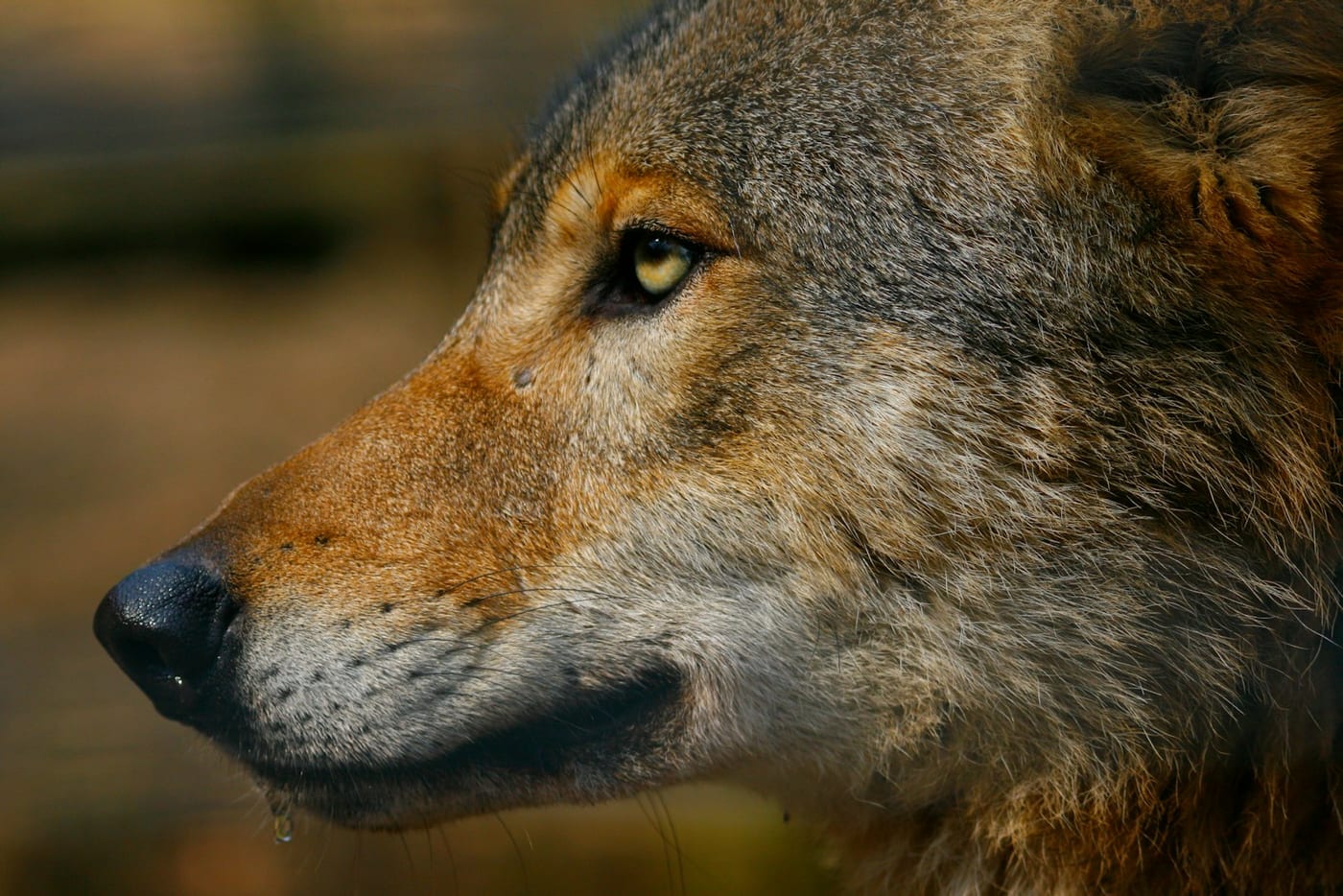
In modern American "spirit animal" usage, the raccoon signals curiosity, adaptability, resourcefulness, and a knack for getting into things it shouldn't. That reading descends most directly from Ted Andrews's Animal Speak (Llewellyn, 1993), which keyed the raccoon to dexterity and disguise. Two older names carry the same idea from opposite directions and independently: the Powhatan (Virginia Algonquian) word behind English "raccoon" means roughly "he scratches with the hands," first set down by John Smith in 1608; the Nahuatl word behind Spanish "mapache" means "one who takes everything in its hands." Indigenous storytelling treats the animal as an actual trickster, not a metaphor. A Cherokee tale recorded by ethnographer James Mooney in 1900 has Raccoon con a Wolf twice in one afternoon. Charles Godfrey Leland's 1884 Passamaquoddy and Penobscot material has the shapeshifter Lox take raccoon form to get the better of a bear. And Azeban, a dedicated raccoon-trickster, runs through Abenaki oral tradition on his own account.
John Smith spent his first year in the Virginia colony being generally miserable and occasionally observant, and one of the things he wrote down, in the account he published in London in 1608, was that Chief Powhatan kept himself “couered with a great Couering of Rahaughcums.” That word, badly transliterated by an Englishman who had no idea what he was hearing, is the ancestor of “raccoon.” It comes from a Powhatan verb meaning roughly “he scratches with the hands.” Two thousand miles southwest, Nahuatl speakers in central Mexico had already landed on the same idea from a completely different direction: their word for the animal, mapachtli, comes from a verb meaning “to seize, to grasp.” Neither language ever compared notes with the other. Both looked at the same animal and picked out the same body part.
That is a better opening fact about the raccoon than anything involving its trash-can reputation, and almost no spirit-animal page mentions it.
Two names, one observation
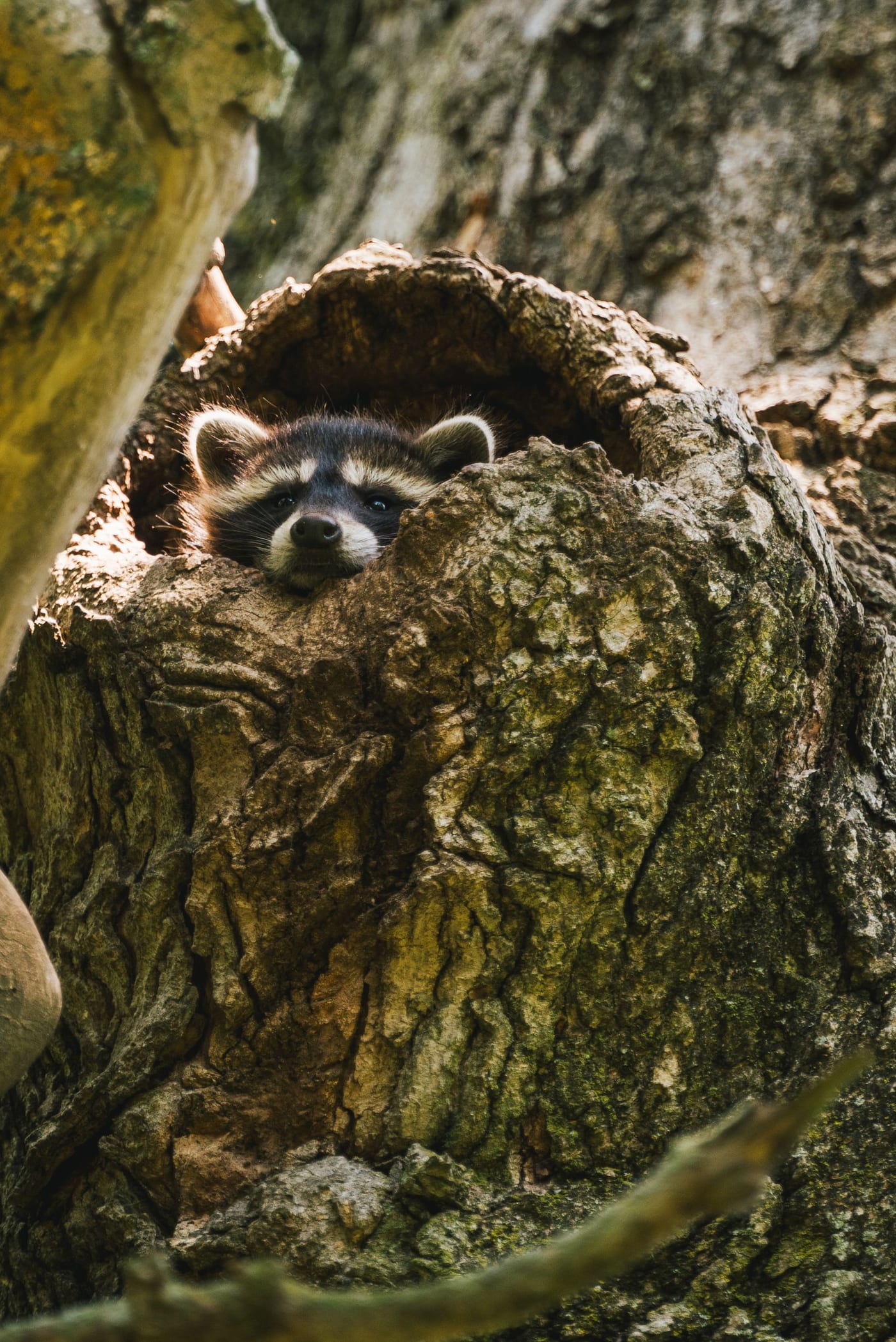
The Powhatan word surfaces in English first as “Rahaughcums” in Smith’s 1608 A Trve Relation, then wanders through a century of competing spellings, “rahaugcum,” “arocoun,” “raccoone,” before the double-c form wins out in the 1700s. Robert Barnhart’s etymological dictionary traces the word to arahkunem, “he scratches with the hands,” a description that fits either the animal’s climbing claw marks or its habit of manipulating food and shellfish with its front paws before eating.
Mexican Spanish took an entirely separate route to the same conclusion. Nahuatl māpachin (Frances Karttunen’s academic dictionary glosses it “raccoon; thief, by extension”) comes from māpachoa, “to seize, lay hold of.” Spanish adopted it as mapache, still the everyday word for raccoon from Mexico through much of Central and South America. Nobody appears to have told either group of namers to focus on the hands. Watching the animal was apparently enough.
The Cherokee raccoon: two tricks on one wolf
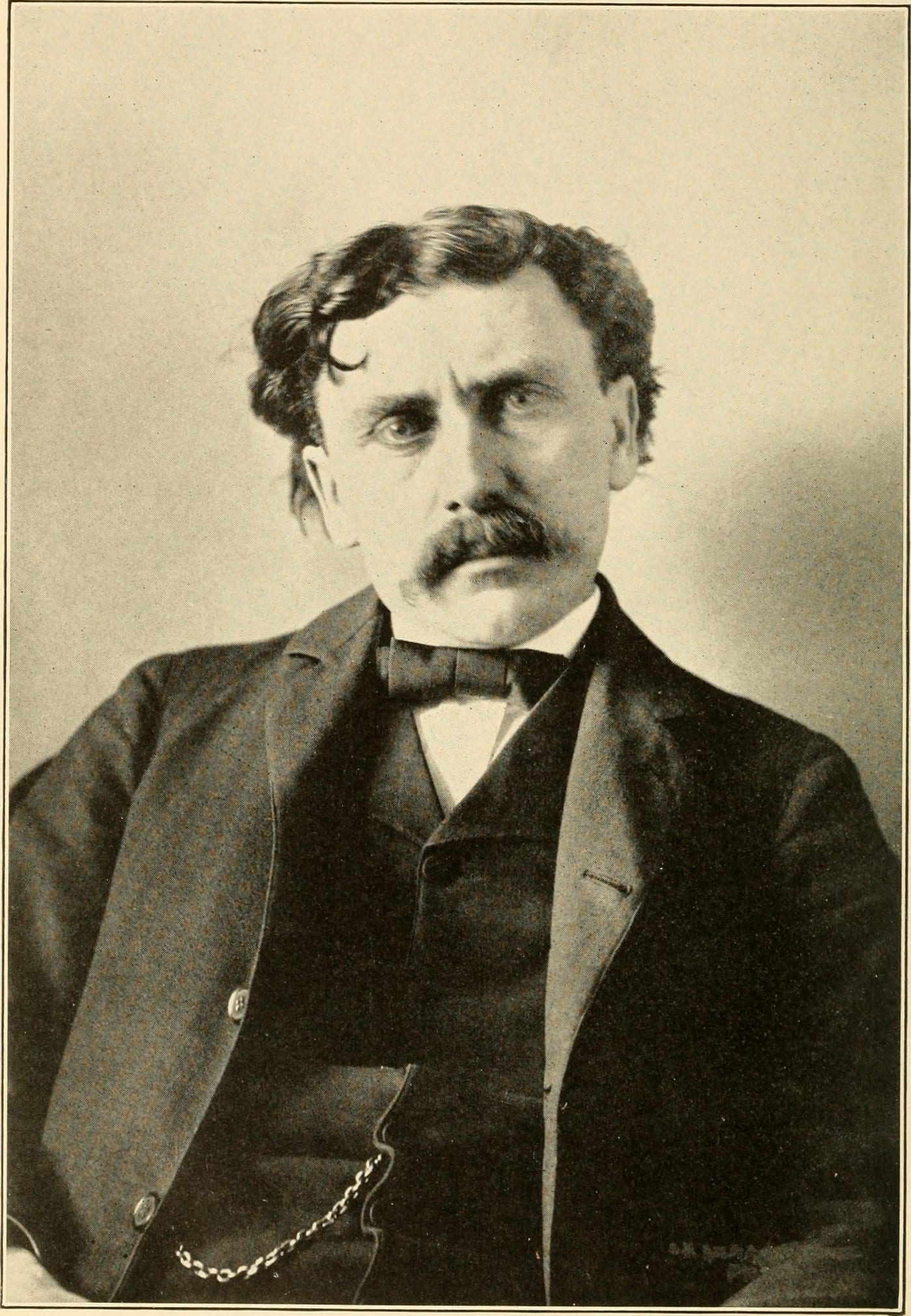
Mooney’s Myths of the Cherokee runs 126 stories deep, and tale 41 is one of the short, mean, effective ones. A Raccoon needles a Wolf until the Wolf loses his temper and gives chase. The Raccoon climbs a tree over a river and stretches out on a branch. The Wolf arrives, sees the Raccoon’s reflection in the water below, and jumps at it, nearly drowning himself in the process. Soaked and humiliated, he falls asleep on the bank to dry off, and while he sleeps the Raccoon climbs down and plasters his eyes shut. A passing bird agrees to peck the Wolf’s eyes clean in exchange for directions to a deposit of red paint, which is how, in this telling, the redbird became red. The Raccoon gets no reward at all. He tricked the Wolf twice in an afternoon and that was apparently satisfaction enough. Mooney recorded the tale from Cornelius Boudinot, a Cherokee Nation informant at Tahlequah, and noted it as a variant that departs from the more widespread Cherokee account of the redbird’s origin (the Sun’s daughter, transformed).
Lox becomes a raccoon: the Passamaquoddy and Penobscot material
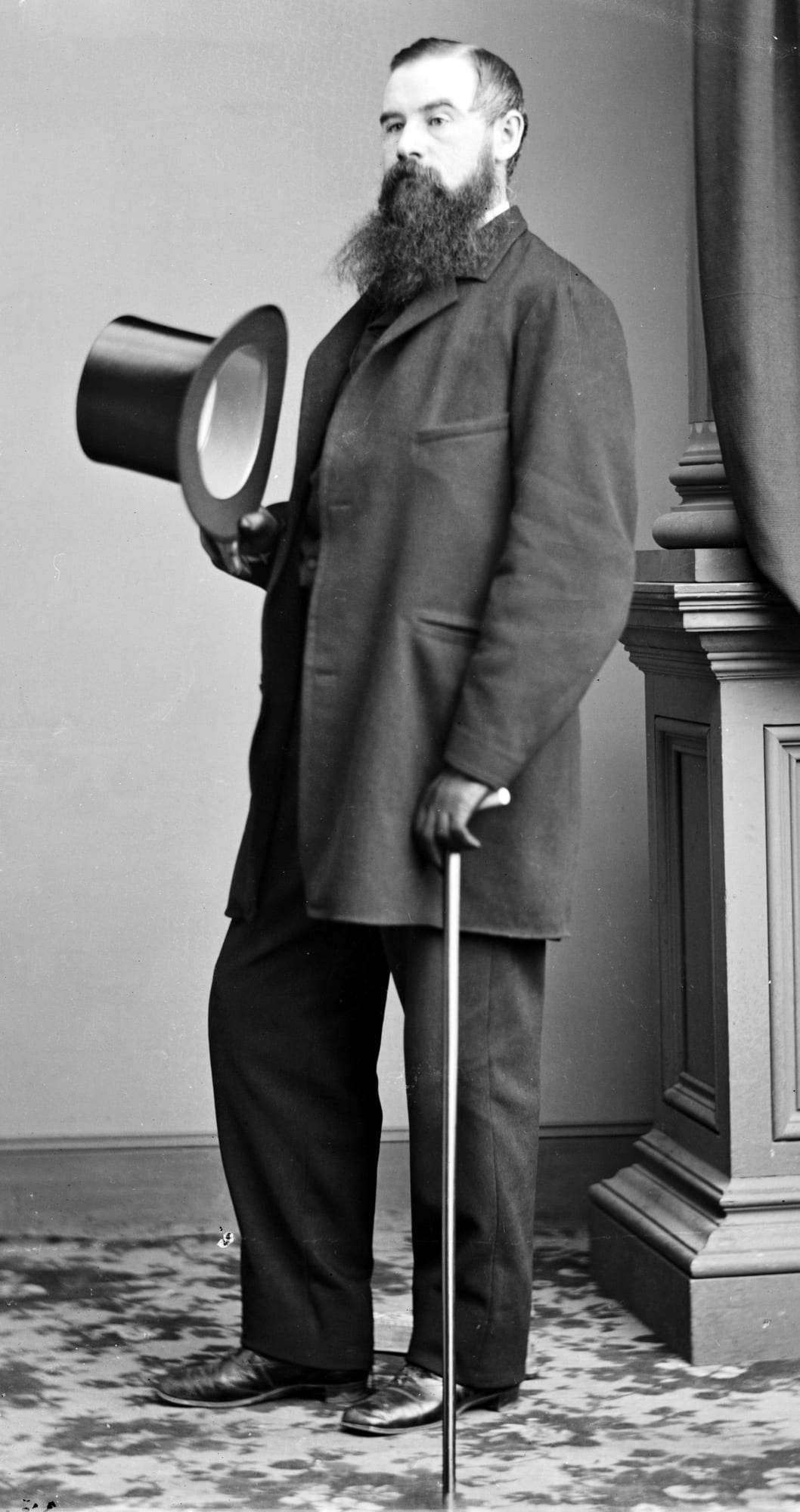
Further up the coast, the raccoon belongs to somebody else’s story entirely. Leland’s Algonquin Legends of New England (1884), drawn from Passamaquoddy and Penobscot narrators he credits individually rather than lumping together, centers a shapeshifting trickster named Lox, who takes the form of a wolverine, a badger, a lynx, a man, or, in one chapter, a raccoon. “How Master Lox, as a Raccoon, killed the Bear and the Black Cats, and performed other Notable Feats of Skill” sits inside a section Leland titled “The Merry Tales of Lox, the Mischief-Maker.” The raccoon isn’t Lox’s default shape or his most important one. It’s one costume among several, worn specifically when the situation calls for cleverness over force. That distinction matters: this is not the same figure as the Cherokee raccoon or the dedicated raccoon-trickster found further north, and folding all three into one generic “Native American raccoon spirit” erases exactly the kind of regional specificity that makes any of it worth reading in the first place.
Azeban, the Abenaki raccoon
Move north again, into Abenaki territory, and the raccoon stops being a costume and becomes its own character. Azeban is a minor trickster spirit who shows up across many separate Abenaki tales rather than living inside one fixed story, documented in Christopher Fee and Jeffrey Webb’s academic folklore encyclopedia (ABC-CLIO, 2016). He’s consistently foolish rather than dangerous. In the best-known episode he comes across a waterfall, decides he can out-shout it, and hollers himself right off the ledge and into the water. The tales work as cautionary comedy aimed at children: don’t be greedy, don’t boast past your ability, know your limits. Joseph and James Bruchac’s 2004 picture book Raccoon’s Last Race retells the best-known Azeban story for a general audience: Raccoon starts out the fastest animal alive and forfeits the gift permanently after he breaks a promise made to a boulder he raced and beat.
What the modern spirit-animal raccoon inherits
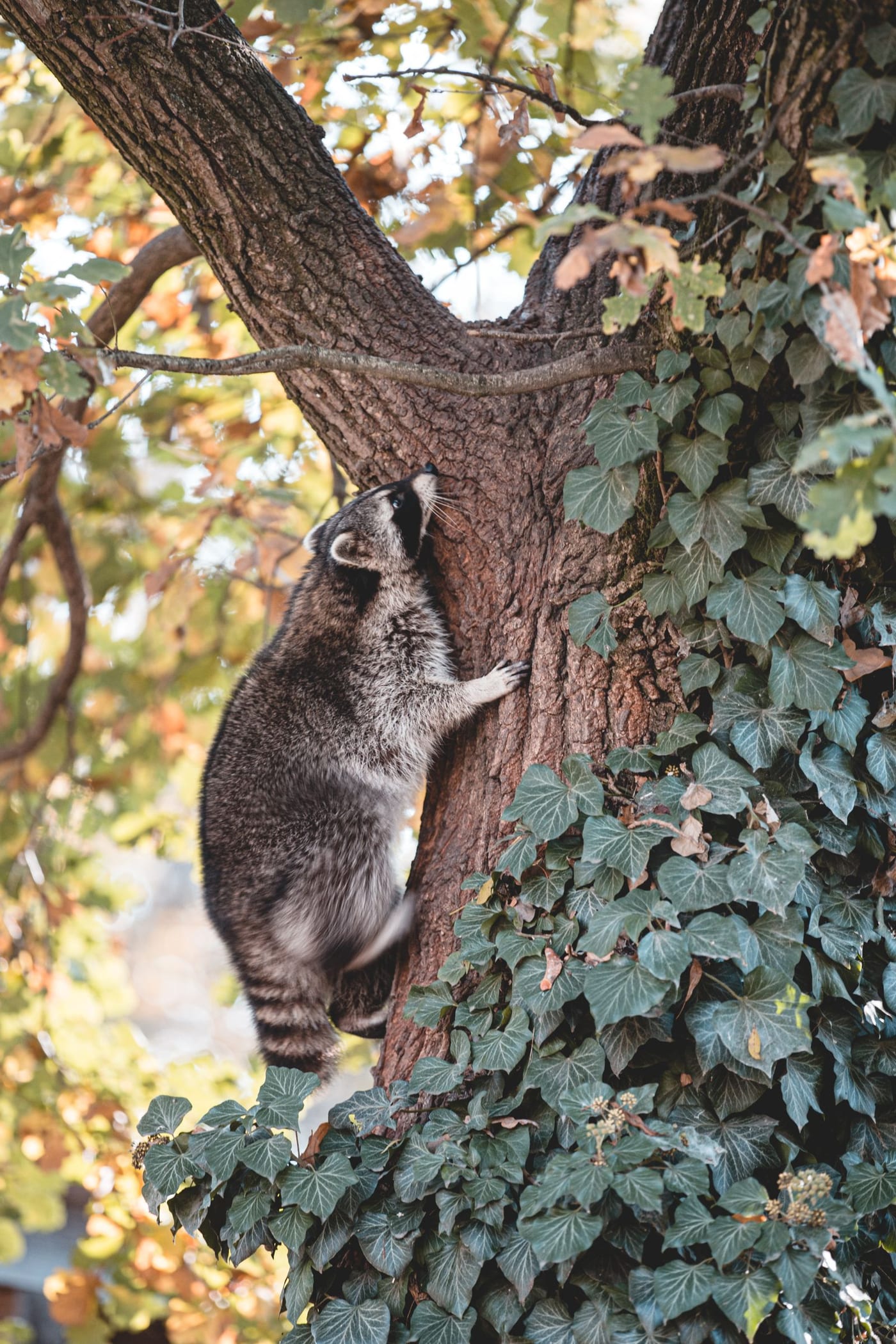
None of the four traditions below are where Ted Andrews got his raccoon. His 1993 Animal Speak keynote, dexterity and disguise, comes from the animal itself: paws sensitive and articulate enough to open a latch or a jar, a black facial mask that reads, to a writer working in a self-help register, as an invitation to think about masks, secrecy, and timing in one’s own life. It’s a reasonable reading of a genuinely distinctive animal. It is also, provably, one paperback’s synthesis rather than an inherited tradition, and every popular raccoon spirit-animal page since 1993 is working from Andrews whether it says so or not.
The real inheritance is scattered and specific. A Cherokee storyteller in Tahlequah gave Mooney a raccoon who tricks a wolf twice for no reward but the satisfaction of it. A Passamaquoddy or Penobscot narrator gave Leland a shapeshifter who puts on the raccoon like a coat when cunning is the tool the moment calls for. Somewhere in Abenaki territory, a dedicated raccoon-trickster named Azeban has been falling into waterfalls and losing races to boulders for at least as long as anyone’s been writing the stories down. And two unrelated peoples, one on the Virginia coast and one in central Mexico, looked at the same animal centuries apart and named it for its hands. That’s a fuller picture than “curious and resourceful.” It’s just not the one that fits on a keychain.
Across traditions
Etymology (Powhatan and Nahuatl)
Two languages, an ocean and a continent apart, named this animal after the same body part. In 1608, John Smith wrote up his first year in the Virginia colony as A Trve Relation of Such Occurrences and Accidents of Noate as Hath Hapned in Virginia, and in it he describes the paramount chief Powhatan as "couered with a great Couering of Rahaughcums," the earliest recorded English spelling of the word. The source is a Virginia Algonquian (Powhatan) word reconstructed as arahkun, which the Barnhart Dictionary of Etymology traces to arahkunem, "he scratches with the hands," a reference either to the claw marks the animal leaves climbing trees or to the way it works food and shellfish with its front paws. Spelling stayed unsettled for a century (rahaugcum, arocoun, raccoone all appear before the eighteenth century standardized on the double-c form).
Independently, the Nahuatl language of central Mexico arrived at the identical idea. Frances Karttunen's An Analytical Dictionary of Nahuatl gives the Classical Nahuatl entry māpachin, glossed "raccoon; thief (by extension)," rooted in māpachoa, "to seize, lay hold of, grasp with the hands." Spanish borrowed it as mapache, still the standard word for raccoon across Mexico and much of Latin America. Two unconnected naming traditions looked at the same animal and picked out the same feature: not the mask, not the ringed tail, but the hands.
- PRIMARY John Smith, A Trve Relation of Such Occurrences and Accidents of Noate as Hath Hapned in Virginia . London, 1608.
- REFERENCE Robert K. Barnhart and Sol Steinmetz (eds.), The Barnhart Dictionary of Etymology . H.W. Wilson, 1988.
- PEER-REVIEWED Frances Karttunen, An Analytical Dictionary of Nahuatl . University of Oklahoma Press, 1992.
Cherokee
James Mooney lived among the Eastern Band Cherokee in North Carolina through the 1880s and 1890s as an ethnographer for the Smithsonian's Bureau of American Ethnology, and published the resulting collection as Myths of the Cherokee in the Bureau's 19th Annual Report (1900). Tale 41, "How the Redbird Got His Color," was obtained from Cornelius Boudinot, a mixed-blood Cherokee informant at Tahlequah in the Cherokee Nation (present-day Oklahoma), and Mooney notes it differs from the standard Cherokee myth in which the redbird is the Sun's transformed daughter.
The story itself is a small, mean, funny piece of trickster engineering. A Raccoon insults a Wolf until the Wolf chases him up a tree over a river. The Wolf spots the Raccoon's reflection in the water, leaps at it, and nearly drowns. While the soaked Wolf sleeps off the indignity on the bank, the Raccoon climbs down and plasters his eyes shut with dung. A passing bird pecks the Wolf's eyes clean in exchange for directions to a vein of red paint, and that, incidentally, is why redbirds are red. The Raccoon himself gets nothing out of the arrangement except having humiliated the Wolf twice in one sitting, which appears to be the entire point.
- PRIMARY James Mooney, Myths of the Cherokee . 19th Annual Report of the Bureau of American Ethnology, Smithsonian Institution, 1900. Tale 41, "How the Redbird Got His Color."
Passamaquoddy and Penobscot (Wabanaki)
Charles Godfrey Leland collected The Algonquin Legends of New England (1884) from named Passamaquoddy and Penobscot narrators in Maine, a methodology he was unusually explicit about for his era: he wrote that he could give the aboriginal authority for nearly every tale in the book, and the authorities section credits individuals including Tomah Josephs, the Passamaquoddy governor at Peter Dana's Point, who also supplied a birch-bark scraping used as the book's frontispiece.
The raccoon in this material is not its own fixed character. It is one of several forms taken by Lox, a shapeshifting trickster who also appears as a wolverine, a badger, a lynx, or a man depending on the tale. One chapter is titled "How Master Lox, as a Raccoon, killed the Bear and the Black Cats, and performed other Notable Feats of Skill," grouped with the rest of Leland's material under "The Merry Tales of Lox, the Mischief-Maker." The raccoon shape here is a costume Lox wears when cunning, rather than strength, is the tool the situation calls for. It is worth being precise about which peoples this belongs to: Leland's book covers Micmac, Passamaquoddy, and Penobscot material together, and the Lox cycle specifically comes through his Passamaquoddy and Penobscot narrators.
- PRIMARY Charles Godfrey Leland, The Algonquin Legends of New England: or, Myths and Folk Lore of the Micmac, Passamaquoddy, and Penobscot Tribes . Houghton, Mifflin and Company, 1884. "How Master Lox, as a Raccoon, killed the Bear and the Black Cats."
Abenaki
Azeban (also spelled Azban or Asban), "the Raccoon," is a distinct figure in Abenaki oral tradition: a minor trickster spirit rather than a shapeshifter borrowing the animal's form. Christopher Fee and Jeffrey Webb's academic reference work American Myths, Legends, and Tall Tales: An Encyclopedia of American Folklore (ABC-CLIO, 2016) catalogs Azeban as a recurring figure woven into many separate Abenaki tales at a storyteller's discretion rather than tied to one fixed narrative. Unlike some other nations' animal tricksters, Azeban is consistently mischievous and foolish rather than dangerous: in one widely told episode he hears a waterfall and, certain he can out-shout it, hollers until he loses his footing and falls in.
The tales function as cautionary comedy for children, aimed at greed, boastfulness, and not knowing your own limits. Joseph and James Bruchac's picture-book retelling Raccoon's Last Race: A Traditional Abenaki Story (Dial Books for Young Readers, 2004) is how the Azeban material most often reaches general readers today: Raccoon starts out the fastest animal alive and loses that gift permanently after breaking a promise made to a boulder he raced and beat.
- PEER-REVIEWED Christopher R. Fee and Jeffrey B. Webb, American Myths, Legends, and Tall Tales: An Encyclopedia of American Folklore . ABC-CLIO, 2016. Entry: "Azeban."
- REFERENCE Joseph Bruchac and James Bruchac, Raccoon's Last Race: A Traditional Abenaki Story . Dial Books for Young Readers, 2004.
Ted Andrews (1993, the pop-concept's source)
Ted Andrews's Animal Speak (Llewellyn, September 1993) gave the raccoon its modern personal-totem keynote: dexterity and disguise. The dexterity half comes straight from the animal's front paws, which are dexterous enough to open latches, jars, and door handles. The disguise half comes from the facial mask, which Andrews reads as an invitation to work with masks, secrecy, and the strategic reveal or concealment of information in one's own life. Neither half is drawn from the Cherokee, Wabanaki, or Abenaki material above; Andrews's raccoon is built from the living animal's own body, dressed in the same self-help register he applied to every entry in the book.
- REFERENCE Ted Andrews, Animal Speak: The Spiritual & Magical Powers of Creatures Great and Small . Llewellyn, September 1993.
Working with the Raccoon
If you want a regular practice rather than a one-time read, an oracle deck is the standard tool: you draw a card and sit with whatever animal comes up. Our ranked guide to spirit animal oracle decks compares the field.
Sources
- PRIMARY John Smith, A Trve Relation of Such Occurrences and Accidents of Noate as Hath Hapned in Virginia . London, 1608.
- REFERENCE Robert K. Barnhart and Sol Steinmetz (eds.), The Barnhart Dictionary of Etymology . H.W. Wilson, 1988.
- PEER-REVIEWED Frances Karttunen, An Analytical Dictionary of Nahuatl . University of Oklahoma Press, 1992.
- PRIMARY James Mooney, Myths of the Cherokee . 19th Annual Report of the Bureau of American Ethnology, 1900.
- PRIMARY Charles Godfrey Leland, The Algonquin Legends of New England . Houghton, Mifflin and Company, 1884.
- PEER-REVIEWED Christopher R. Fee and Jeffrey B. Webb, American Myths, Legends, and Tall Tales: An Encyclopedia of American Folklore . ABC-CLIO, 2016.
- REFERENCE Joseph Bruchac and James Bruchac, Raccoon's Last Race: A Traditional Abenaki Story . Dial Books for Young Readers, 2004.
- REFERENCE Ted Andrews, Animal Speak . Llewellyn, September 1993.