Spirit Animal
Rat Spirit Animal
Rat spirit animal meaning: cunning, priority and adaptability. Traced to sources that exist: the 217 BCE bamboo daybook that pairs the rat with the first earthly branch, Ganesha's mouse and when it actually appears, the Karni Mata temple at Deshnoke, and the 2018 PNAS paper that argued the Black Death was not spread by rats.
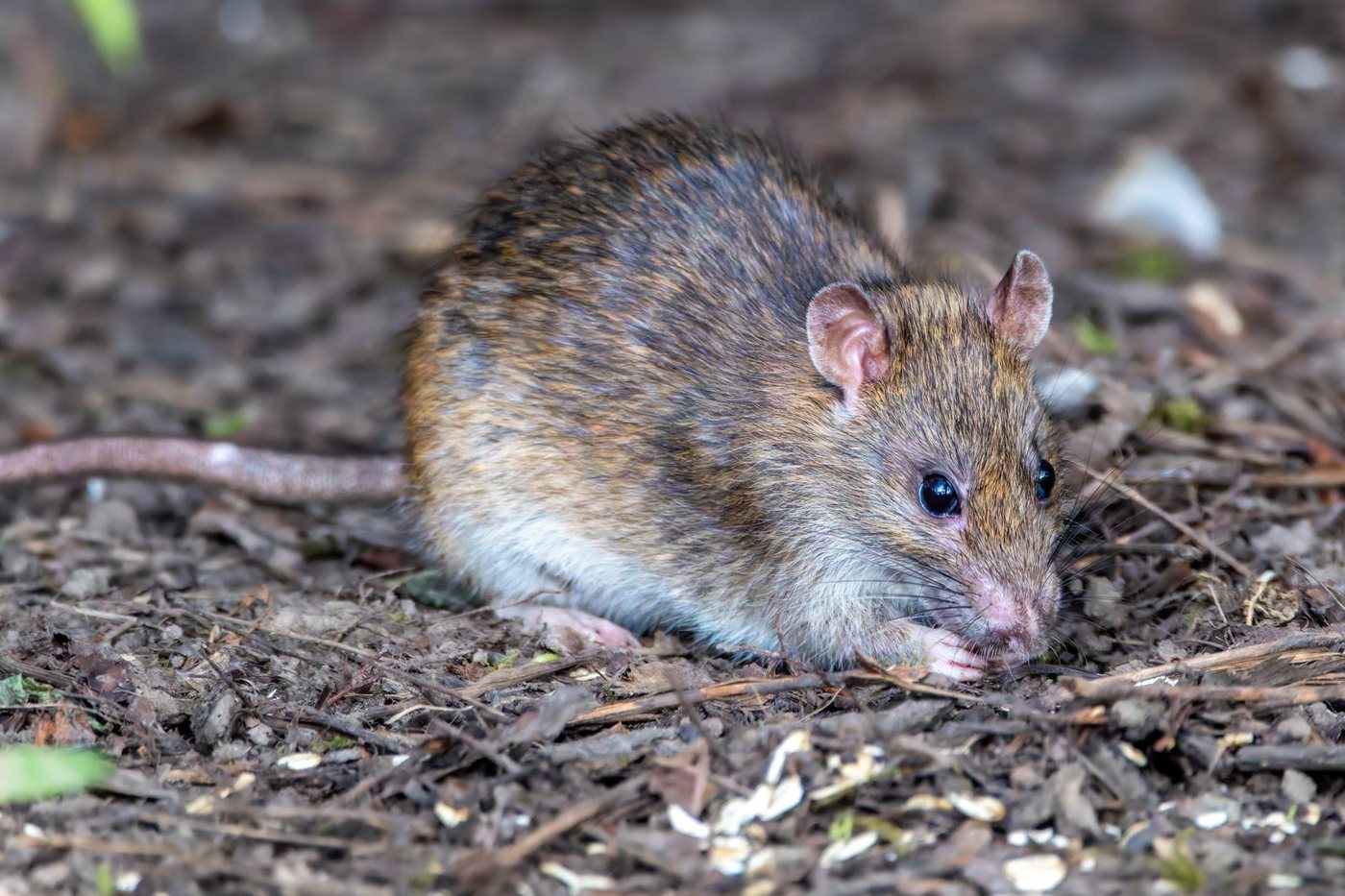
The rat is read as cunning, resourcefulness, and getting there first, and unlike most animals on this site that reading has a documented anchor: the rat opens the Chinese zodiac, and the pairing of rat with the first earthly branch is attested on bamboo slips buried in 217 BCE. The other durable traditions are Hindu, where the mouse or rat carries Ganesha, and the Karni Mata temple at Deshnoke, where the rats are ancestors.
The rat is first. That is the fact everything else on this page hangs off, and the reason it is first has nothing to do with the story you have been told.
Roughly a fifth of the world runs a twelve-year animal cycle in which the rat opens the sequence. The explanation that always comes attached is the Jade Emperor’s race: twelve animals swim a river, the rat cadges a lift on the ox’s back and springs off at the bank to finish ahead of it. It is a good story and it explains the order neatly, which is exactly what should make you suspicious of it.
Neat explanations for old arrangements are usually written after the arrangement. This one is no exception, and the version underneath is better anyway, because it tells you what these twelve animals were originally for.
Why does the rat come first in the Chinese zodiac?
Because it was assigned to a branch that was already first.
The twelve earthly branches, zi, chou, yin and the rest, are a counting sequence, and they appear as an ordered set in Shang oracle-bone record-keeping around 1200 BCE, centuries before any animal is attached to them. They order time. The animals came later and were mapped onto a list that already had a fixed beginning.
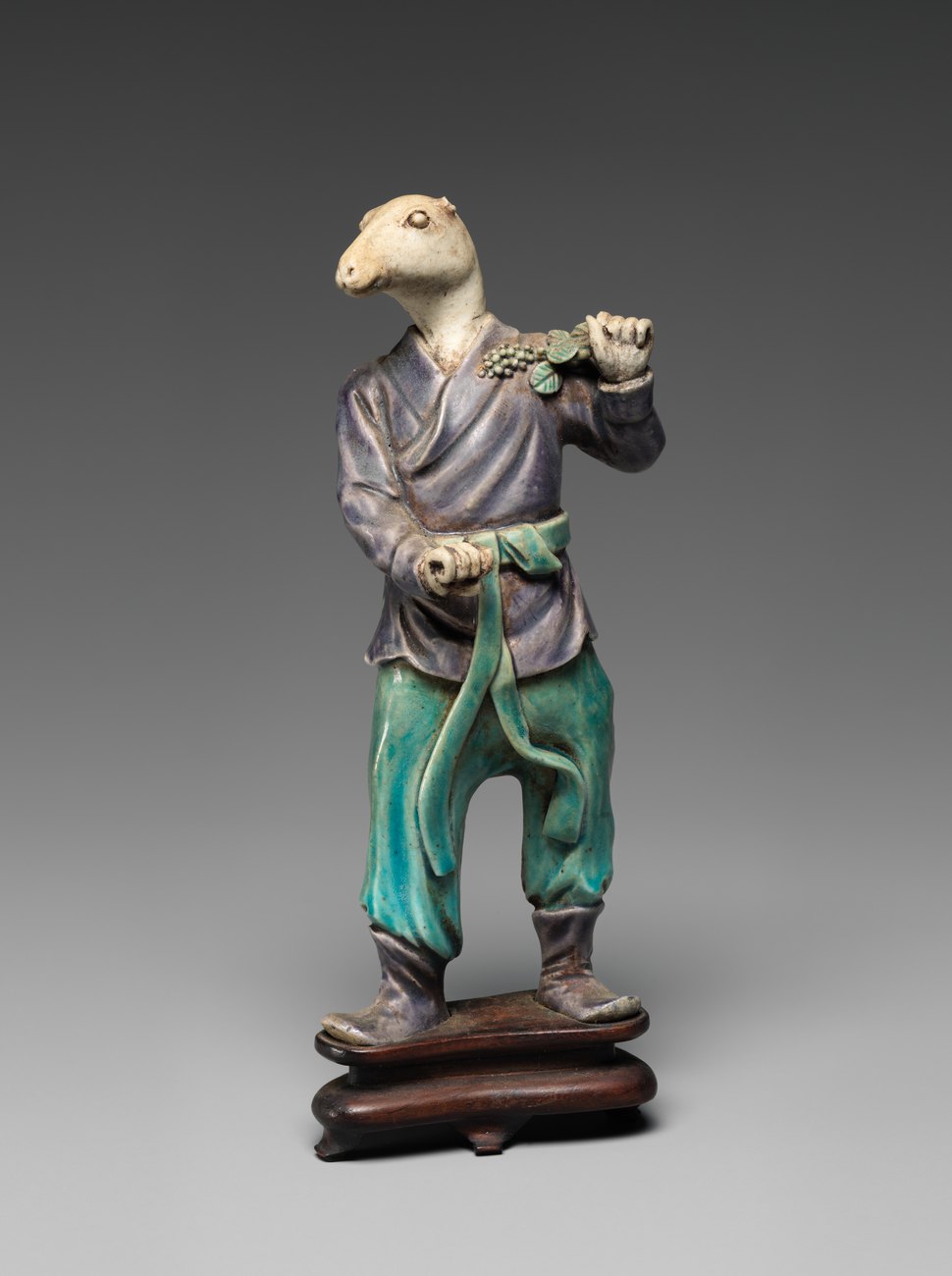
The earliest surviving evidence for the mapping is a bundle of bamboo slips. In 1975, archaeologists opened a Qin-dynasty tomb at Shuihudi in Yunmeng, Hubei, sealed in 217 BCE. Among the texts was a rishu, a daybook: the practical almanac of its period, covering which days are safe for travel, marriage, planting, illness and the recovery of stolen goods. One section deals with thieves, and it uses the branch of the day to describe the culprit. Each branch carries an animal. Zi is the rat.
That is the oldest use of this system anyone has in hand, and it is not a birth-year horoscope. It is a police tool. The idea that your zodiac animal describes your personality is real and widely held, but it is a much later use of a much older device, and the race story is a folk explanation for an order that the daybooks already treat as settled.
Wang Chong’s Lunheng, in the first century CE, gives the first complete twelve-animal list paired with the branches. Everything popular about the rat’s cleverness descends from an order fixed before any of that was written down.
What is the mouse doing under Ganesha?
Ganesha rides a mouse, or a rat. Sanskrit uses mūṣaka and mūṣika and does not draw the sharp line English does, which is why translations disagree and why both animals turn up in the same sentence on the same website.
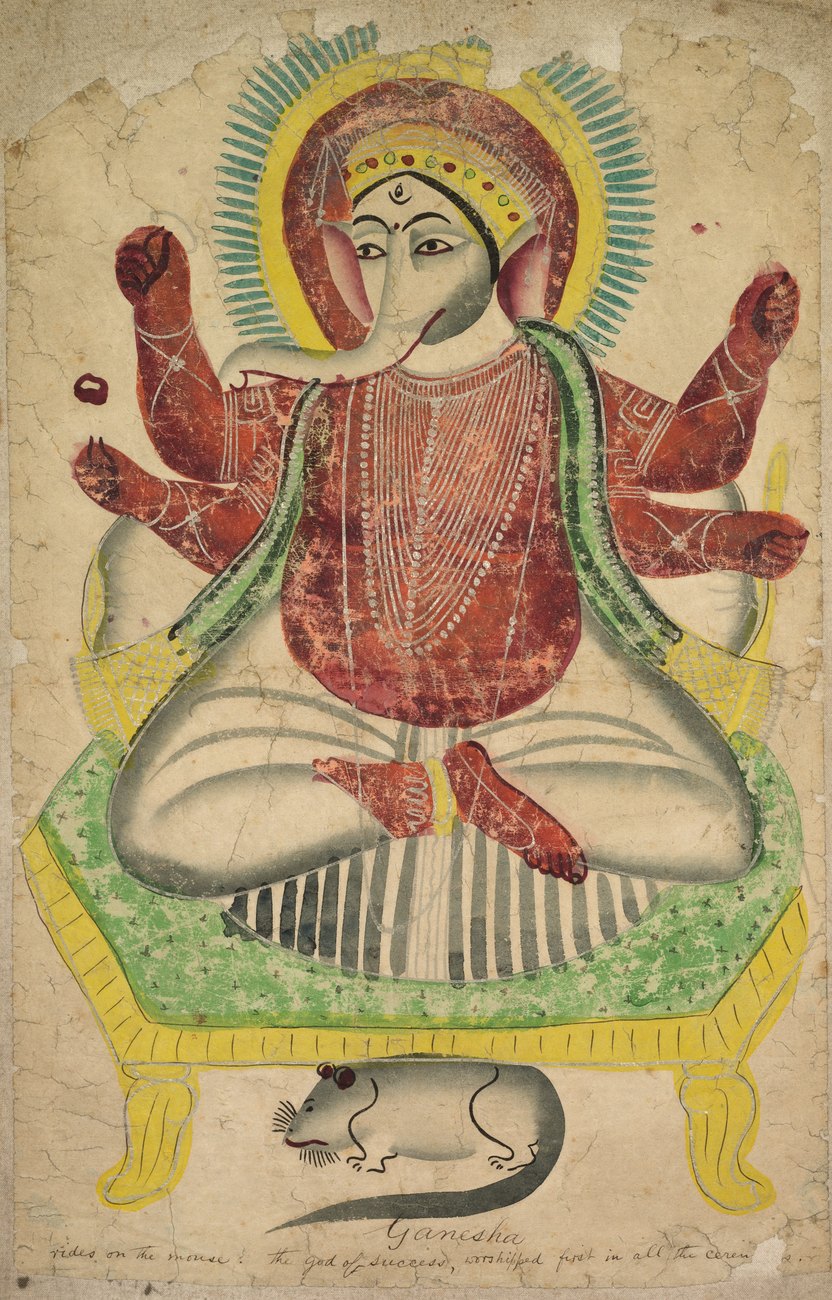
The epithets are old: Mūṣakavāhana, mouse-mount, and Ākhuketana, rat-banner, both in the Ganesha Sahasranama. The Mudgala Purana puts him on the mouse in five of his eight incarnations. But the earliest images of Ganesha have no mount at all, and the rat only becomes his principal vehicle in central and western Indian sculpture from about the seventh century, tucked in at his feet.
The interpretations pull in opposite directions and it is worth knowing which one you are being handed. The common reading in the tradition is negative: the mouse is tamoguṇa, inertia, or plain appetite, and the point is that the god has it under control. Krishan takes the Sanskrit root mūṣ, to steal, and reads the rat as the destroyer of stored grain, which makes Ganesha’s mastery of it a literal statement about obstacles rather than a metaphorical one. Martin-Dubost prefers the flattering version: the rat gets everywhere, into the most hidden places, and so does the god.
If you grew up near a granary, the theft reading is not much of a stretch. A rat in a store does not eat a season’s grain; it fouls what it does not eat, and the loss is out of all proportion to the animal. An obstacle god sitting on top of one is a very direct piece of agricultural theology.
Rat or mouse?
Both, in most of the languages this page has been quoting, which is why the sources look like they contradict each other.
Sanskrit mūṣaka and mūṣika cover the small gnawing rodent without forcing the split English insists on, so Ganesha’s mount is translated as a mouse in one book and a rat in the next, by translators who are reading the same word. The Chinese character 鼠 does the same job: it takes in rats and mice together, which means the first sign of the zodiac is as fairly rendered Year of the Mouse as Year of the Rat.
English is the odd one here. Rat and mouse have been separate words in it since Old English, and the separation carries a moral charge that the other languages do not supply: a mouse in a children’s book is charming, a rat in the same book is a villain, and nothing about the animals justifies the difference. Rattus and Mus are genuinely different genera, so the distinction is real in zoology. It is just not the distinction the older texts were making.
Worth holding on to when you read that some tradition regards the rat as sacred. Sometimes it does. Sometimes a translator picked a word.
Are the rats at Karni Mata really worshipped?
They are fed, protected, and identified as specific dead people, which is a stronger claim than worship.
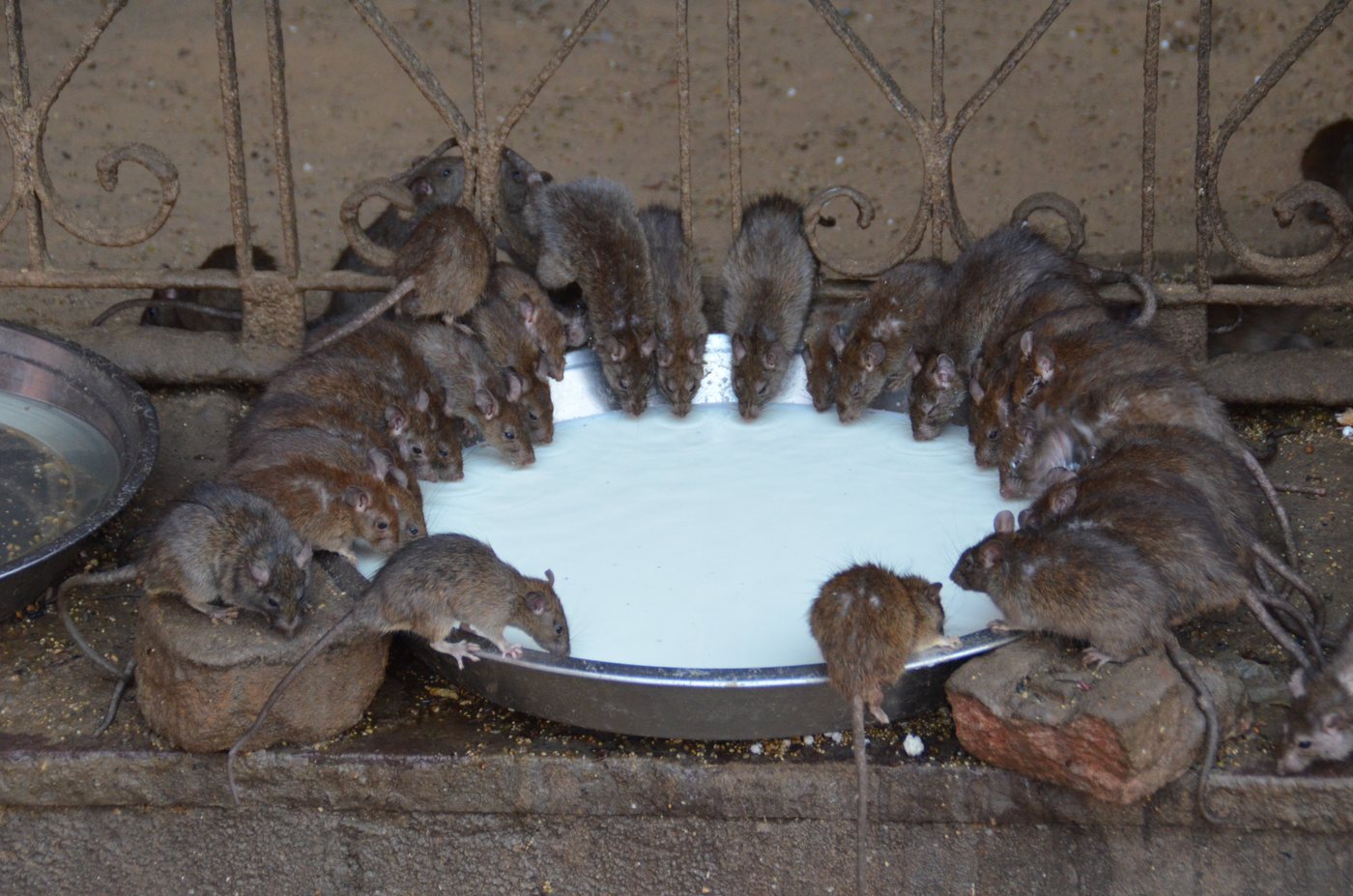
Karni Mata was a fourteenth-century Charan woman regarded as an incarnation of Durga. The temple at Deshnoke, near Bikaner, houses the rats her devotees call kabbas and hold to be Charans awaiting their next human birth. A white rat is the auspicious one.
Two things to keep at arm’s length. The population figure that appears in every travel article, twenty thousand, is an estimate that gets repeated rather than a count, and the current temple building is largely twentieth-century work, so its marble frontage is not evidence of medieval continuity. The practice is genuinely old; the architecture is not the proof of it.
Did rats really cause the Black Death?
This is the interesting one, because the field changed its mind recently and then argued about it.
In February 2018 a group led by Katharine Dean and Boris Schmid published in PNAS a model of nine European plague outbreaks, testing three transmission routes against the mortality curves: pneumonic spread, rodent spread, and human ectoparasites, meaning body lice and human fleas. The ectoparasite model fitted better in most of the outbreaks. Read plainly, the paper says the Second Pandemic moved from person to person through the parasites people were already carrying, and that the rat was largely a bystander.
Six months later Sang Woo Park, Jonathan Dushoff, David Earn, Hendrik Poinar and Benjamin Bolker published a rebuttal in the same journal: the mathematics, they argued, only weakly supports that conclusion. Dean’s group replied, granted limitations around mixed routes and incubation periods, and held their position. So the question is live. Anyone telling you it is settled, in either direction, has read one of the three papers.
One thing is not in dispute and does not depend on any model. The brown rat, Rattus norvegicus, is not Norwegian and is not native to Europe. Its origin sits in northern China and Mongolia; it reached eastern Europe in the early eighteenth century and had spread through every European country by 1800. The Black Death was in the 1340s. Whatever carried it, it was not the animal in the photograph at the top of this page.
The rat that was domesticated on purpose
There is one more turn, and it is the only case of its kind.
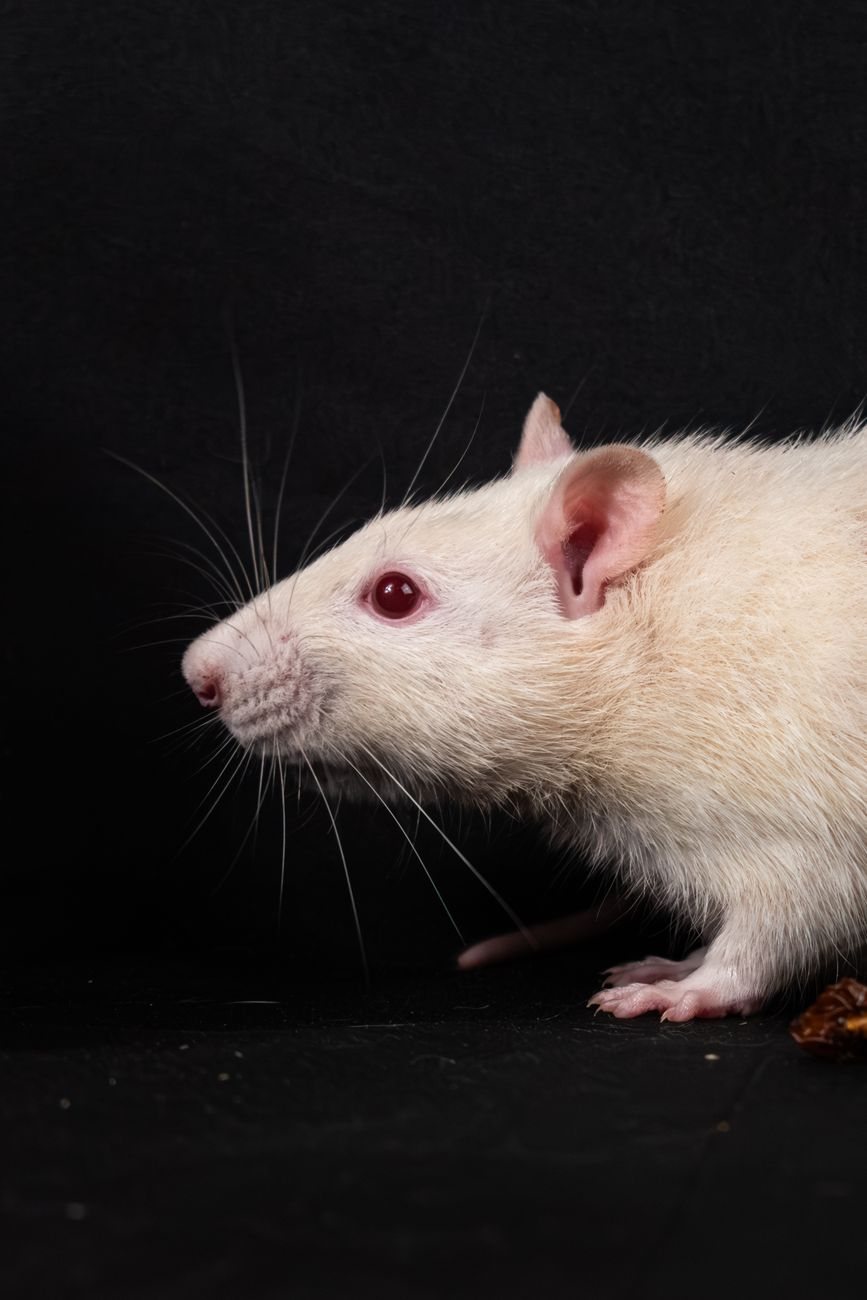
Every other domestic animal was taken on for a reason you could eat, wear, ride or sell. The rat was taken on to be studied, and it got there by a route nobody would have designed.
Brown rats were caught in enormous numbers in eighteenth-century Britain to be killed by terriers in pits for money. Catchers kept back the odd-coloured ones, albino and hooded, and bred them, and that is where the white rat comes from. An albino was taken into a laboratory in 1828 for a study on fasting. The Wistar Institute in Philadelphia, founded in 1906, built the first standardised strain under Henry Herbert Donaldson, Milton Greenman and Helen Dean King, and more than half of all laboratory rat strains descend from that one colony.
So the animal blamed for the worst mortality event in European history, on evidence that is currently being argued over, is also the animal that a very large share of modern medicine was worked out on. The rat has been first for longer than the zodiac has, and it did not need a race.
Across traditions
Early Chinese (the Shuihudi daybook and the first branch)
The received story is that the twelve animals raced, that the rat rode the ox and jumped off at the finish, and that this is why it comes first. The story is late and undated in any early source. What is actually attested is drier and more interesting.
In 1975 a Qin-dynasty tomb at Shuihudi in Yunmeng, Hubei, sealed in 217 BCE, yielded a set of bamboo slips including a rishu, a daybook: a working almanac for choosing days, for travel, illness, marriage, farming and lost property. One section, on thieves, uses the twelve earthly branches to infer what a culprit looks like, and it pairs each branch with an animal. Zi, the first branch, is the rat. A comparable daybook from a Qin tomb at Fangmatan in Gansu, excavated in 1986, carries the same kind of material.
Two things follow. First, the rat's priority is not a race result; the branches were already an ordered sequence in Shang oracle-bone record-keeping, long before any animal was attached to them, and the rat is first because it was assigned to the branch that was already first. Second, the earliest surviving use of these pairings is not a birth-year personality system at all. It is a table for describing a burglar.
- PRIMARY Shuihudi Qin bamboo slips, Rishu (Daybook) . Excavated 1975, Yunmeng, Hubei, from a tomb sealed 217 BCE. The 'Daozhe' (thief) section pairs the twelve earthly branches with animals; zi is the rat. Standard English treatment: Harper and Kalinowski, eds., Books of Fate and Popular Culture in Early China, Brill, 2017.
- PRIMARY Fangmatan Qin bamboo slips, Rishu A and B . Excavated April 1986, Tianshui, Gansu. Daybooks of comparable date carrying related branch-animal material.
- PRIMARY Wang Chong, Lunheng, chapter 14 . 1st century CE. The earliest complete twelve-animal listing paired with the earthly branches. Alfred Forke trans., Kelly and Walsh, 1907 to 1911; revised Paragon, 1962.
Hindu (Ganesha's mushika)
Ganesha's mount is a mouse or a rat, called mūṣaka or mūṣika, and English writing on the subject switches between the two words freely because Sanskrit does not force the distinction the way English does. He carries the epithets Mūṣakavāhana, mouse-mount, and Ākhuketana, rat-banner, both of which appear in the Ganesha Sahasranama. The Mudgala Purana gives him eight incarnations and puts him on the mouse in five of them; the Ganesha Purana, the Matsya Purana and the Brahmananda Purana also carry the mouse.
The chronology is the part usually skipped. The earliest images of Ganesha have no vahana at all. Martin-Dubost dates the rat's arrival as the principal vehicle in the sculpture of central and western India to the seventh century, always placed close to the god's feet, which is precisely where you still find it.
Interpretation splits, and the split is instructive. Grimes observes that most readings of the mouse are negative: it stands for tamoguṇa and for desire, the thing the god has mastered rather than the thing he resembles. Krishan builds on the Sanskrit root mūṣ, to steal or rob, and argues that Ganesha's mastery of the rat expresses his function as Vigneshvara, lord of obstacles, since the rat is the archetypal destroyer of a stored crop. Martin-Dubost reads it the other way: the rat gets into the most secret places, and so does the god. A farmer would find Krishan's version easier to recognise.
- PRIMARY Ganesha Sahasranama . Source of the epithets Mūṣakavāhana (mouse-mount) and Ākhuketana (rat-banner).
- PRIMARY Mudgala Purana; Ganesha Purana; Matsya Purana . The Puranic sources that assign the mouse as vehicle across Ganesha's incarnations.
- REFERENCE Paul Martin-Dubost, Gaņeśa: The Enchanter of the Three Worlds . Project for Indian Cultural Studies, 1997. Dates the rat's appearance as principal vehicle in central and western Indian sculpture to the 7th century.
- MUSEUM Ganesh, Cleveland Museum of Art 2003.98 . Kalighat painting, Kolkata, c. 1890. Gum tempera, graphite and tin on paper. The mouse is drawn beneath the throne.
Rajasthan (Karni Mata at Deshnoke)
The temple of Karni Mata at Deshnoke, south of Bikaner in Rajasthan, is the one place where rats are not a symbol of anything. They live in the building, they are fed, and they are called kabbas. Devotees hold them to be the returning dead of the Charan community, who are born as rats between human lives; a white one is taken as especially auspicious. Karni Mata herself was a fourteenth-century figure of the Charan caste, regarded as an incarnation of Durga, and the temple stands at the site associated with her.
Handle the popular details carefully. The figure repeated everywhere, twenty thousand rats, is a visitor-guide estimate rather than a count, and the origin narrative, in which Karni Mata confronts Yama over the death of a boy and secures the rebirth of her people as rats, circulates in several versions. The present temple building is substantially a twentieth-century construction, which is worth knowing before reading its marble façade as medieval.
What is not in doubt is that this is a live practice with an identifiable community behind it, not a piece of folklore recovered from a text.
- REFERENCE Karni Mata Temple, Deshnoke, Bikaner district, Rajasthan . Living temple; the rats are called kabbas and are held to be reborn members of the Charan community. Visitor estimates of the rat population are not counts and should not be quoted as data.
European (the plague, and the argument about it)
The rat's worst press is the Black Death, and the attribution is under active dispute among people who study it.
In February 2018 Katharine Dean, Boris Schmid, Nils Chr. Stenseth and colleagues published in PNAS a modelling study of nine European plague outbreaks. They compared three transmission routes, pneumonic, rodent-borne, and human ectoparasite (body lice and human fleas), and reported that the human ectoparasite model fitted the mortality curves better in most of the outbreaks. The implication is that the Second Pandemic largely moved person to person, through the parasites people already carried, rather than through rats.
The paper did not go unchallenged. Six months later Sang Woo Park, Jonathan Dushoff, David Earn, Hendrik Poinar and Benjamin Bolker published a rebuttal in the same journal arguing that the mathematical support for the ectoparasite route was weak, and Dean and colleagues replied, conceding limitations around mixed transmission routes and incubation periods while maintaining that the ectoparasite route remains plausible. The honest summary is that the question is open, not that rats have been cleared.
One separate fact does not depend on the modelling at all. The brown rat, Rattus norvegicus, is the rat most people picture, and it originated in northern China and Mongolia. It reached eastern Europe in the early eighteenth century and was in every European country by 1800, roughly four hundred years after the Black Death. Whatever spread plague in the 1340s, it was not this animal.
- PEER-REVIEWED K. R. Dean, F. Krauer, L. Walløe, O. C. Lingjærde, B. Bramanti, N. C. Stenseth and B. V. Schmid, Human ectoparasites and the spread of plague in Europe during the Second Pandemic . PNAS 115(6), 1304 to 1309, 6 February 2018. Nine outbreaks modelled; the human ectoparasite model fits the mortality curves better than pneumonic or rodent models.
- PEER-REVIEWED S. W. Park, J. Dushoff, D. J. D. Earn, H. Poinar and B. M. Bolker, Human ectoparasite transmission of the plague during the Second Pandemic is only weakly supported by proposed mathematical models . PNAS, August 2018. The rebuttal; Dean et al. replied in the same issue.
- PEER-REVIEWED Brown rat demography and origin . Genome Research 29(5), 762. Places the brown rat's pre-commensal structure in eastern Asia before its westward expansion.
Working with the Rat
If you want a regular practice rather than a one-time read, an oracle deck is the standard tool: you draw a card and sit with whatever animal comes up. Our ranked guide to spirit animal oracle decks compares the field.
Sources
- PRIMARY Shuihudi Qin bamboo slips, Rishu (Daybook) . Tomb sealed 217 BCE, Yunmeng, Hubei. Branch-animal pairings in the thief section; zi is the rat.
- PRIMARY Wang Chong, Lunheng, chapter 14 . 1st century CE. Earliest complete twelve-animal listing.
- PRIMARY Ganesha Sahasranama; Mudgala Purana; Ganesha Purana . Sanskrit sources for the mouse or rat as Ganesha's vehicle.
- PEER-REVIEWED K. R. Dean et al., Human ectoparasites and the spread of plague in Europe during the Second Pandemic . PNAS 115(6), 1304 to 1309, 2018.
- PEER-REVIEWED S. W. Park et al., Human ectoparasite transmission of the plague during the Second Pandemic is only weakly supported by proposed mathematical models . PNAS, 2018. The rebuttal.
- MUSEUM Ganesh, Cleveland Museum of Art 2003.98 . Kalighat, c. 1890.
- MUSEUM Zodiac figure: rat, Metropolitan Museum of Art 1992.100.1 . Jingdezhen porcelain, late 17th to early 18th century.
- REFERENCE Paul Martin-Dubost, Gaņeśa: The Enchanter of the Three Worlds . Project for Indian Cultural Studies, 1997.