Spirit Animal
Squirrel Spirit Animal
Squirrel spirit animal meaning: preparation, thrift and resourcefulness. Traced from the modern preparation-and-thrift reading back through Ted Andrews's Animal Speak to Ratatoskr in the Norse Eddas and the ambivalent industry-and-greed squirrel of medieval European bestiaries.
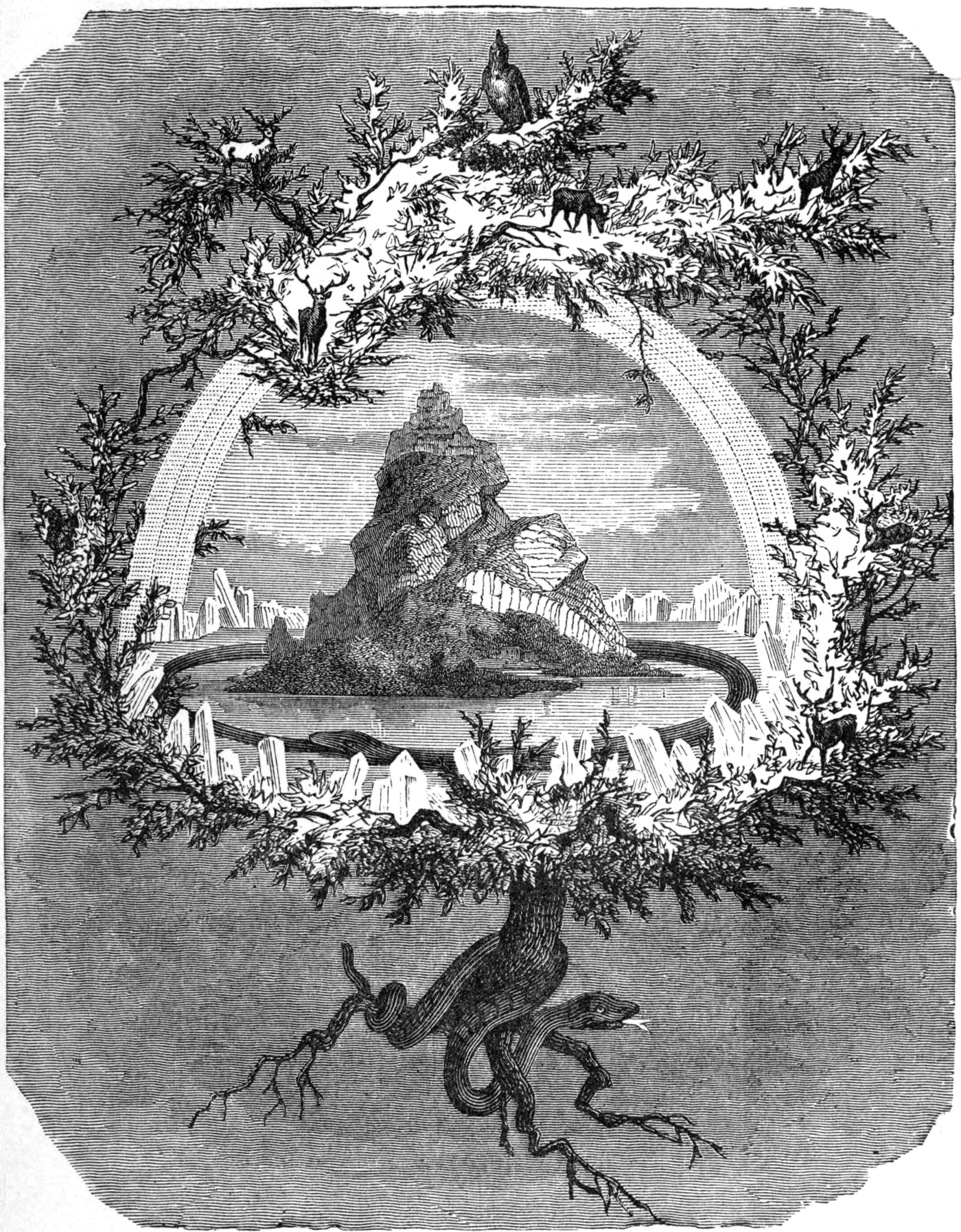
In modern American "spirit animal" usage, the squirrel signals preparation, thrift, resourcefulness, and the discipline to store energy for a lean season without losing the capacity for play. That reading comes mostly from Ted Andrews's Animal Speak (Llewellyn, 1993), which draws on centuries of natural-history observation rather than on any single mythology. The one squirrel with real theological weight is Ratatoskr, named once in the Poetic Edda's Grímnismál (stanza 32): a squirrel who runs the Norse world-tree Yggdrasil carrying words between an eagle at the crown and the serpent Níðhöggr at the roots. Snorri Sturluson's later Prose Edda recasts that plain errand-running as deliberate gossip-stirring. Medieval European bestiaries, working from Pliny the Elder, read the squirrel differently again: a small animal whose foresight and hoarding made it a model of thrift, and just as often a symbol of grasping greed.
Codex Regius, the single manuscript that preserves most of the Poetic Edda, gives Ratatoskr one sentence. A squirrel runs the ash tree Yggdrasil. It carries the eagle’s words down to the serpent Níðhöggr. That’s the whole stanza, six lines, no adjectives wasted on the animal’s character. Everything people now assume about a scheming, gossip-hungry squirrel darting between an eagle and a dragon comes from somewhere else: Snorri Sturluson, writing prose a few decades later, who decided the squirrel wasn’t just delivering the mail. He was reading it first.
That gap between what the poem says and what the prose adds is the whole story of how a small, unglamorous animal ends up meaning three or four unrelated things depending on which book you open.
What the Poetic Edda actually says
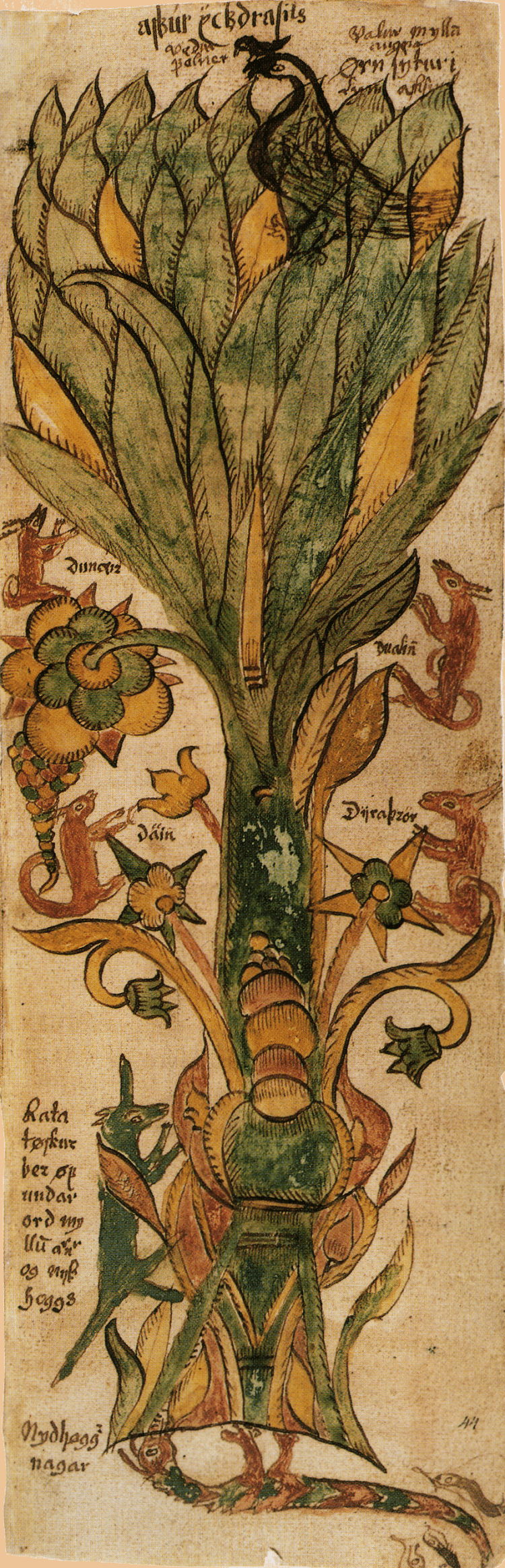
Grímnismál is a catalog poem. Odin, in disguise as Grímnir, recites the geography and inhabitants of the Norse cosmos to a captive audience, and stanza 32 is one line in that inventory: an eagle sits at the top of Yggdrasil, a hawk sits between its eyes, four stags graze its branches, a serpent gnaws its roots, and a squirrel named Ratatoskr runs the trunk carrying the eagle’s words down to that serpent. The Old Norse names the squirrel plainly: Ratatoskr heitir íkorni, “Ratatoskr is the squirrel called.” Nothing about temperament. Nothing about intent. He is infrastructure, the messenger service connecting two ends of the tree that otherwise never speak.
Rudolf Simek’s Dictionary of Northern Mythology, still the standard scholarly reference for this material in English, reads the squirrel as likely nothing more than an embellishing detail added to round out the mythological picture of the world-ash. Not a moral. Not a warning. A detail.
Snorri adds the motive
Snorri Sturluson wrote his Prose Edda roughly a generation after the poems that fed it were composed, as a handbook for poets who needed to understand mythological kennings they no longer had context for. In Gylfaginning, chapter 16, he retells the Ratatoskr stanza and adds something the verse never claimed: the squirrel carries öfundarorð, envious or malicious words, and does it on purpose, stirring resentment between the eagle above and Níðhöggr below. That’s the squirrel most retellings inherit now, an eager little troublemaker keeping a blood feud alive out of what reads like simple appetite for drama.

Whether that reading is Snorri’s own invention or an oral elaboration he inherited and simply wrote down first is not fully settled, and Simek’s caution against over-reading the stanza applies here too. What’s certain is the timeline: plain messenger in the verse, deliberate gossip in the prose that came after. Anyone repeating “the squirrel spreads gossip in Norse myth” as if it were the oldest layer of the tradition has the order backward.
A completely separate squirrel, in the same centuries
While Icelandic scribes were copying Eddic poetry, monks and scholars elsewhere in medieval Europe were writing about squirrels too, and their squirrel has nothing to do with Yggdrasil. It descends from Pliny the Elder’s Natural History, compiled in the first century CE, which claims squirrels sense a coming storm and block up the windward side of their den in advance, using their own bushy tail as a kind of built-in roof. Alexander Neckam picked that up in his twelfth-century De naturis rerum and pushed it further: the squirrel, he wrote, will raise its tail like a sail and ride a scrap of bark across water, an image of natural ingenuity Neckam explicitly holds up as something humans, for all their supposed reason, usually fail to match.
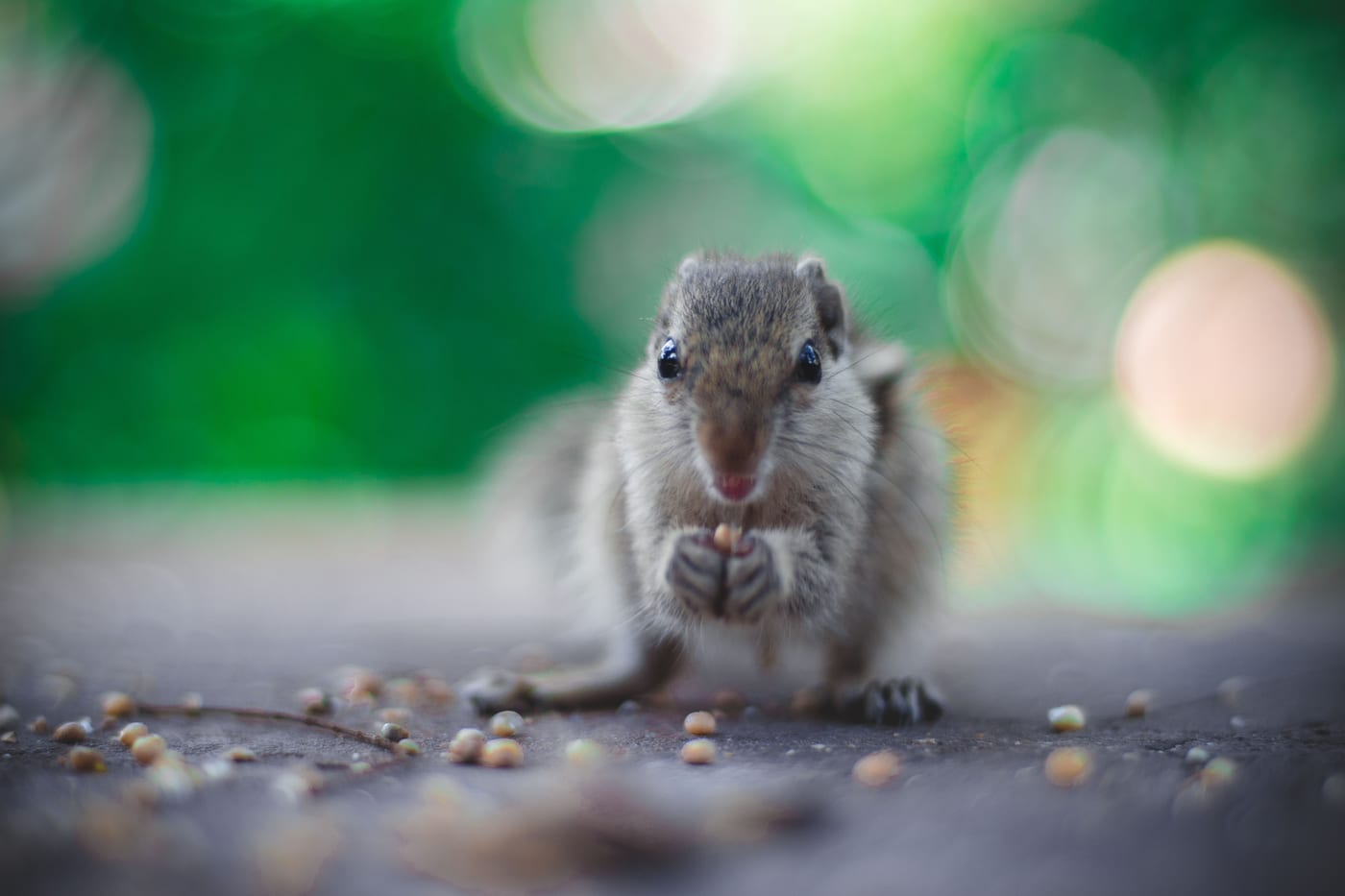
Thomas of Cantimpré’s Liber de natura rerum, compiled a few decades after Neckam, adds less moralizing and more field notes: coat variations, tree-to-tree movement, seasonal nut-gathering. Taken together, the bestiary tradition is not tidy. The same body of writing that praises the squirrel’s foresight and thrift also uses it, elsewhere, as a figure for grasping covetousness. It’s an animal medieval readers watched closely enough to disagree about.
That the animal was genuinely present in daily life, not just in manuscripts, shows up in the Luttrell Psalter, an English illuminated psalter from the 1320s and 1330s whose margins are full of ordinary scenes alongside religious ones. One page shows a lady with a pet squirrel on a leash. Someone kept this animal close enough to draw it accurately, tail and all, in the same book that carries the Book of Psalms.
The modern reading, and where it actually comes from
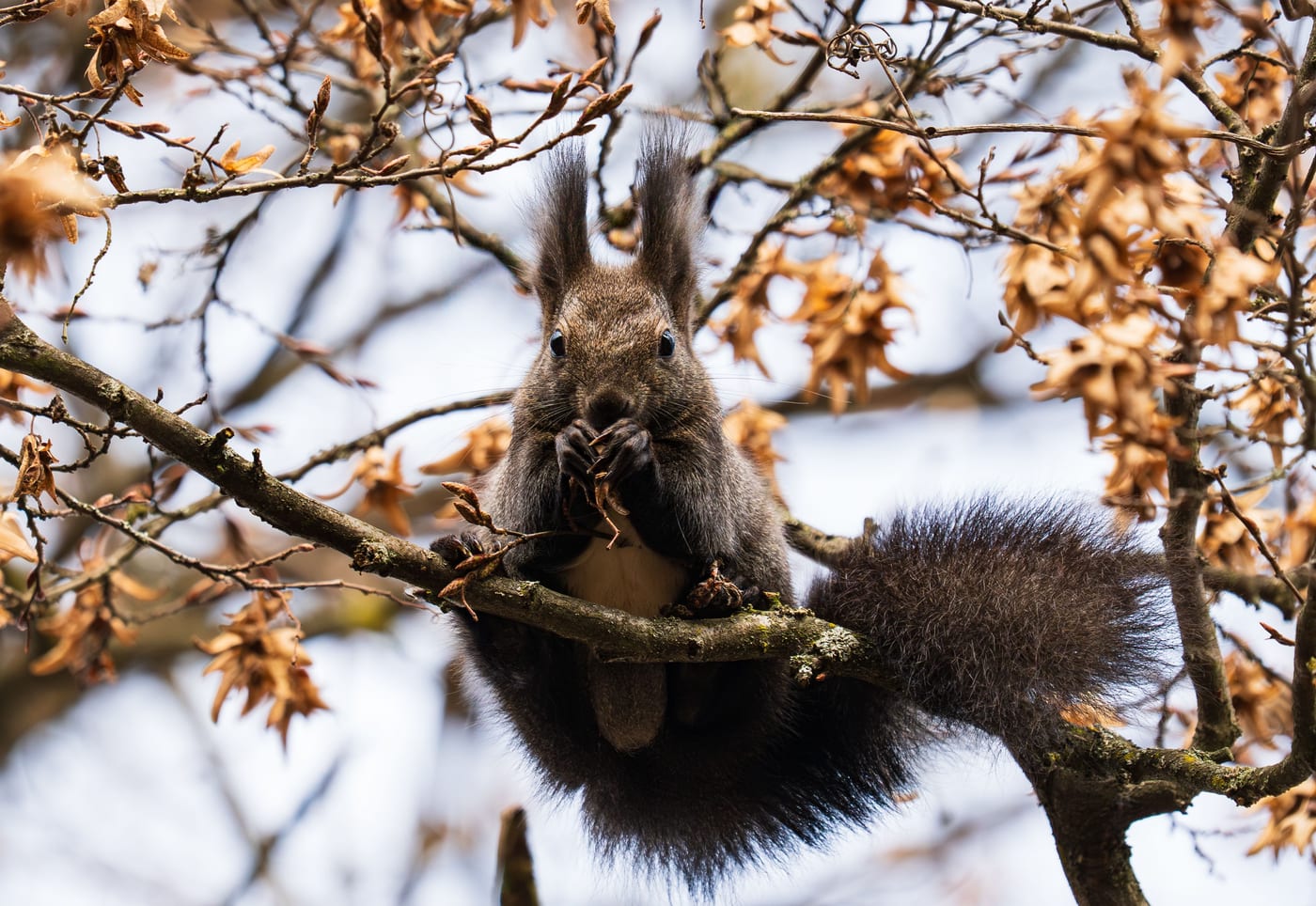
Ted Andrews’s Animal Speak, published by Llewellyn in September 1993, is where most current “squirrel spirit animal” writing actually originates, whether the source gets named or not. Andrews’s squirrel isn’t Ratatoskr and it isn’t the ambivalent bestiary hoarder. It’s a lesson in balance: gather enough to be ready for a lean season, but don’t let the gathering crowd out play, because the animal itself never stops doing both. That’s the reading behind almost every “preparation, thrift, resourcefulness” squirrel article online now, minus the citation.
None of these three squirrels needed the others to exist. Ratatoskr runs a cosmic tree carrying words nobody asked him to editorialize. The bestiary squirrel gets moralized twice, once as a model of foresight and once as a symbol of greed, sometimes on the same page. Andrews’s squirrel just wants you to get your winter stores in order without forgetting to have some fun doing it. Three different centuries, three different jobs for the same small animal.
Across traditions
Norse (Grímnismál and the Prose Edda)
Ratatoskr is named exactly once in the surviving Poetic Edda, in Grímnismál, stanza 32, preserved in the Codex Regius manuscript (Copenhagen, GKS 2365 4to, c. 1270). The Old Norse reads: "Ratatoskr heitir íkorni, er renna skal at aski Yggdrasils; arnar orð hann skal ofan bera ok segja Niðhöggvi niðr." Henry Adams Bellows's 1923 English translation renders it: "Ratatosk is the squirrel who there shall run / On the ash-tree Yggdrasil; / From above the words of the eagle he bears, / And tells them to Nithhogg beneath." That is the entire stanza. No motive, no mischief, no personality. The squirrel runs, and it carries words.
The elaboration comes later, from Snorri Sturluson's Prose Edda (Gylfaginning, chapter 16, written c. 1220). There, the figure High describes the squirrel running up and down the ash carrying öfundarorð, envious or malicious words, between the eagle and Níðhöggr, actively provoking both. Rudolf Simek's Dictionary of Northern Mythology treats this characterization as probably Snorri's own addition rather than inherited tradition, noting the squirrel likely served the older poem only as an embellishing detail in the picture of the cosmic ash. The gossip-monger squirrel, in other words, is a 13th-century prose writer's flourish on a 13th-century-or-older verse that never said anything of the kind.
- PRIMARY Grímnismál, stanza 32 (Poetic Edda) . Bellows trans., The Poetic Edda, American-Scandinavian Foundation, 1923; Larrington trans., Oxford World's Classics, rev. ed. 2014.
- PRIMARY Snorri Sturluson, Edda (Gylfaginning, ch. 16) . Faulkes trans., Everyman, 1987.
- PEER-REVIEWED Rudolf Simek, Dictionary of Northern Mythology . Angela Hall trans., D.S. Brewer / Boydell & Brewer, 1993.
Medieval European (bestiary tradition)
Independent of the Norse material, medieval Europe had its own squirrel, built on Roman natural history rather than mythology. Pliny the Elder's Natural History (Book 8) claims squirrels "foresee a storm, and stop up their holes to windward in advance, opening doorways on the other side; moreover their own exceptionally bushy tail serves them as a covering." That single passage seeded centuries of squirrel-as-forecaster and squirrel-as-planner writing.
Alexander Neckam's De naturis rerum (c. 1180-1217, Book 2.124) goes further, describing the squirrel using its raised tail as a sail to cross water on a piece of bark, and holding it up as an example of natural cleverness that humans, for all their reason, routinely fail to match. Thomas of Cantimpré's Liber de natura rerum (c. 1230-1245) adds naturalistic detail on coat color and tree-to-tree movement without much moralizing. Across the tradition the symbolic reading is genuinely split: sometimes the squirrel stands for industry, foresight, and thrifty caution; sometimes, in the same body of texts, for grasping covetousness. The Luttrell Psalter (British Library, Add MS 42130, c. 1325-1340), illuminated for the Lincolnshire landowner Sir Geoffrey Luttrell, includes a marginal image on folio 33r of a lady with a pet squirrel on a leash, a detail that shows the animal was kept, watched, and drawn by people who lived alongside it, not only moralized about from a manuscript desk.
- PRIMARY Pliny the Elder, Natural History, Book 8 . Rackham trans., Loeb Classical Library 353, Harvard University Press, 1940.
- PRIMARY Alexander Neckam, De naturis rerum, 2.124 . Wright ed., Rolls Series, 1863.
- PRIMARY Thomas of Cantimpré, Liber de natura rerum . Boese ed., Walter de Gruyter, 1973.
- ARCHIVE Luttrell Psalter, British Library Add MS 42130, fol. 33r . c. 1325-1340.
Ted Andrews (1993, the pop-concept's source)
Andrews's squirrel is not the Eddic messenger and not the moralized bestiary hoarder, though it borrows the bestiary's basic observation. Animal Speak reads the squirrel as a lesson in balancing gathering against giving, preparation against overwork, and stresses that as busy as the animal is, it still finds time to chase, leap, and roll in the leaves. That pairing, disciplined preparation plus real playfulness, is the reading nearly every popular squirrel-spirit-animal page repeats, usually without naming where it came from.
- REFERENCE Ted Andrews, Animal Speak: The Spiritual & Magical Powers of Creatures Great and Small . Llewellyn, September 1993.
Working with the Squirrel
If you want a regular practice rather than a one-time read, an oracle deck is the standard tool: you draw a card and sit with whatever animal comes up. Our ranked guide to spirit animal oracle decks compares the field.
Sources
- PRIMARY Grímnismál, stanza 32 (Poetic Edda) . Bellows trans., American-Scandinavian Foundation, 1923.
- EDITION The Poetic Edda . Larrington trans., Oxford World's Classics, rev. ed. 2014.
- PRIMARY Snorri Sturluson, Edda (Gylfaginning) . Faulkes trans., Everyman, 1987.
- PEER-REVIEWED Rudolf Simek, Dictionary of Northern Mythology . Angela Hall trans., D.S. Brewer / Boydell & Brewer, 1993.
- PRIMARY Pliny the Elder, Natural History, Book 8 . Rackham trans., Loeb Classical Library 353, Harvard University Press, 1940.
- PRIMARY Alexander Neckam, De naturis rerum . Wright ed., Rolls Series, 1863.
- PRIMARY Thomas of Cantimpré, Liber de natura rerum . Boese ed., Walter de Gruyter, 1973.
- ARCHIVE Luttrell Psalter, British Library Add MS 42130 . c. 1325-1340.
- REFERENCE Ted Andrews, Animal Speak . Llewellyn, September 1993.